The Camera That Was On
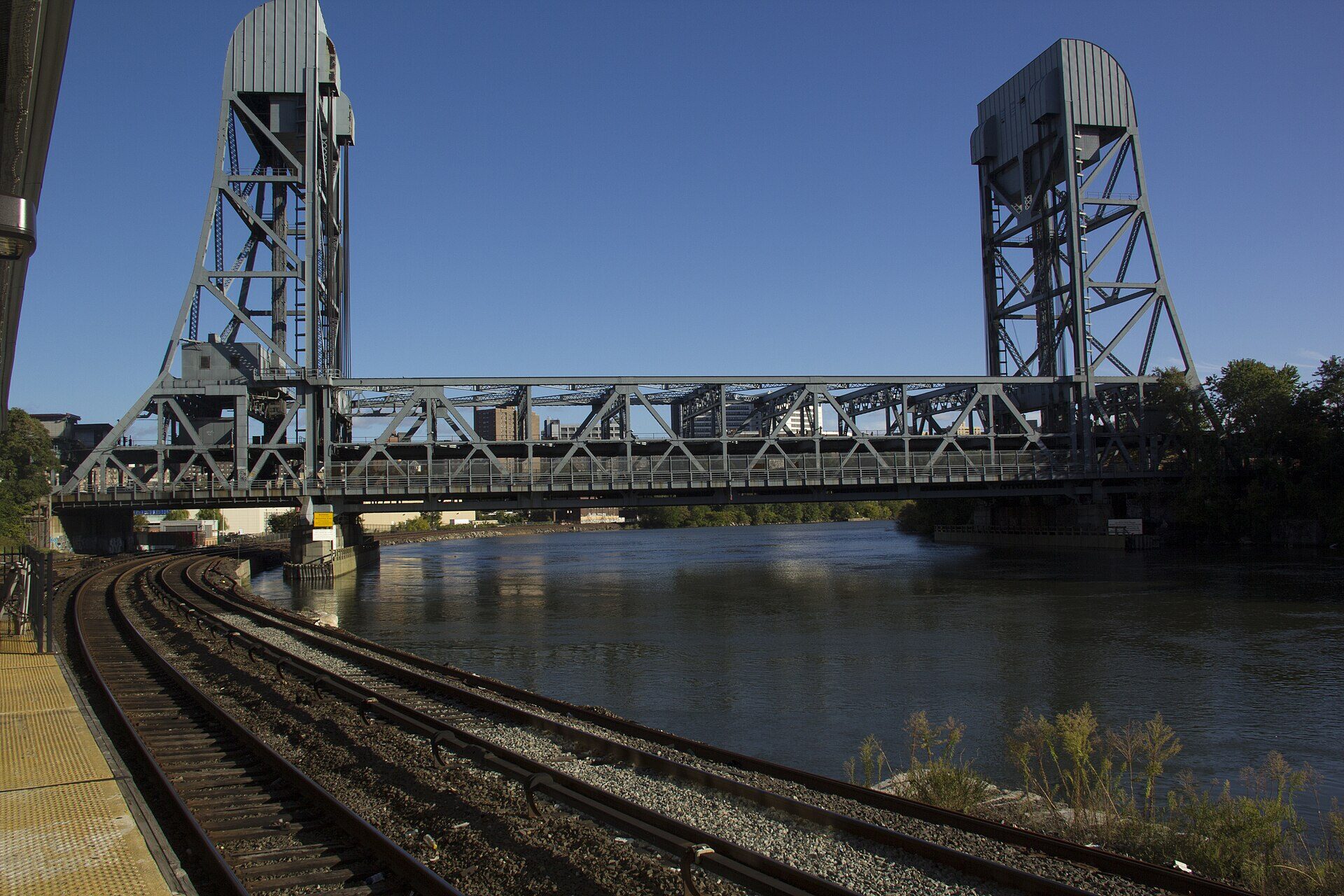
On Thursday afternoon in Marble Hill, at the top of Manhattan where the island runs out, a man was sitting in a parked car with his five-year-old son in the back seat. School had just let out. Two men in plain clothes walked up to the driver’s window with their guns drawn. A few seconds later an ICE officer fired seven rounds, and the man was hit in the neck.
Almost everything that is now in dispute about those seconds was recorded by somebody. The question this week — the one that matters far beyond this one family — is who owns the recordings, and which of them anyone outside the government will ever see.
What the cameras saw
There were at least three sets of cameras pointed at that street.
The New York Police Department had surveillance cameras on the block. Commissioner Jessica Tisch said they show a plainclothes federal officer approaching the driver’s side door with his gun drawn, and then the car driving out of frame — but they did not capture the shooting itself. The department recovered at least seven shell casings.
ABC News obtained further surveillance footage and reported what it does and does not show. The Department of Homeland Security has said the man “weaponized his vehicle” and smashed it into ICE vehicles, and that officers fired because they believed their lives and the public’s were in danger. ABC reported plainly that the footage it obtained does not show that alleged incident. What the video it describes does show is the two officers approaching the parked car with guns drawn, and one of them punching and breaking the driver’s side window, before the car pulls away.
Then there are the cameras the government owns. Asked about the shooting on Friday, Homeland Security Secretary Markwayne Mullin said the officers were wearing body cameras and that the cameras were on. He did not commit to releasing the footage. He said the FBI and Homeland Security Investigations are both investigating. Gov. Kathy Hochul said she had asked that any body camera footage be released “so we can establish the facts and get to the truth.”
So the one recording made by the agency whose officer fired — the recording that would settle what happened at that window — exists, by the agency’s own account, and is not public. Everything the public knows instead comes from cameras that belonged to somebody else: a police department that says it had no involvement, a business’s security camera, the phones of people on the street.
That is not a complaint. It is the instruction. If you see an enforcement stop, the record is whatever bystanders keep. Write down the date, the time and the exact place. Write down what you saw, in your own words, the same day. If you can record safely, record. Then get it to a lawyer, not only to a social feed, because a post disappears into a timeline and a dated note handed to a lawyer becomes evidence. The page at know your rights sets out what you may and may not do while watching a stop, and report an ICE sighting is where to send what you saw.
What a judge did, and what it does not do
On Friday, the day after the shooting, the man’s attorneys filed a petition for habeas corpus. ABC News reported that a federal judge, J. Paul Oetken of the Southern District of New York, ordered the government not to deport him, and not to move him outside the Southern District of New York, the Eastern District of New York or the District of New Jersey, while the judge considers the petition. The order stays in place, ABC reported, “unless and until it is vacated or modified by the judge.”
This page did not read that order. It read two newsrooms’ accounts of it, and it is telling you which, because the difference matters when you are deciding what to rely on.
Now the part that matters more than the headline: that order protects one man. It is temporary. It is not a ruling that the arrest was unlawful, it does not stop removals generally, and it changes nothing about anyone else’s case. If you read “judge blocks deportation” this weekend and felt something loosen in your chest, that feeling is not evidence about your own situation. This is not a prediction about you.
What is transferable is the mechanics. A habeas petition is filed in the district where a person is being held, not where their family lives. A federal prosecutor said this man was booked into the federal jail in Brooklyn on Friday after being brought from ICE custody in Newark, New Jersey — two states in two days. Every such transfer can move the courthouse. That is why, if someone in your household is taken, the single most useful thing you can do is write down the facility and the date every time you check, and keep the list. Start at find someone detained. “Released” or “not in our system” is a fact about an agency’s records on that day, not a fact about the person, so check again tomorrow and write that down too.
And nobody may charge you a fee to add anyone to a case like this one.
The storm, and the question nobody answered
While that was happening in New York, Hurricane Isaias came ashore on the Gulf Coast on Friday night. By 4 a.m. Central time on Saturday the National Hurricane Center had downgraded it to a post-tropical cyclone near Montgomery, Alabama, and discontinued every warning: “There are no watches or warnings in effect.”
Read that carefully, because a lifted warning is the most misread sentence in a storm. The same advisory still forecasts 4 to 8 inches of rain across southern Alabama, the Florida Panhandle and southwest Georgia, with localized totals up to 15 inches, considerable flash flooding, and a continuing tornado risk through Saturday afternoon across parts of Georgia and the Carolinas. The wind has gone; the water has not. Do not drive into water when you cannot see how deep it is.
A family without status asks one question at a shelter door that its neighbours do not, and here is the whole honest answer. The American Red Cross states on its own website that it does not require identification to enter a Red Cross shelter — “just their name and where they were living before the disaster” — and that its food and shelter are free. That is the operator’s rule about its own doors. The government’s posture is the part nobody would state: the Associated Press reported on Friday that the Department of Homeland Security “would not give The Associated Press a clear answer” on whether it would suspend non-criminal immigration enforcement in the states Isaias hit, pointing instead to a statement about FEMA’s preparations. Before Hurricane Irma in 2017 the same agency had said immigration status “is not and will not be a factor” in rescues. It has said nothing like that this time, and the reassuring quotations recirculating this weekend are from earlier administrations. The full advisory and the shelter rule are in the feed entry at the top of the front page.
What does not depend on any of that: if officials order your area to evacuate, go. Water does not ask anyone’s status, and drowning cannot be undone.
What has not changed
TPS for Haiti and Syria has been terminated since July 27, 2026, and the work permits tied to it expired the same day. Nothing in this week’s news gave anyone that status back, and no court, city council or agency has restored it.
And the sentence this page will keep repeating, because people act on it: losing TPS is not a deportation order. Most people who lost status do not have a judge’s order of removal. A minority do — and if a judge has already ordered your removal, that order did not go away, and it is this week’s question for a lawyer, not next month’s. You can check your own case for free, in one call, at the immigration court’s automated line, 1-800-898-7180, by A-number. If you have never had an immigration court case, you will find nothing there, and that is an answer too.
Five things to finish this week
- Make the list of facilities. If anyone in your household is detained, open a notebook and write the facility, the date and the time on every single check at find someone detained. A transfer changes which court can help.
- Write down what you witness. Date, time, exact corner, what you saw, in your own words, the same day — then to a lawyer, through report an ICE sighting.
- Check your own case. One free call to 1-800-898-7180 tells you whether a judge has ever ordered anything in your name. Stop guessing from a speech or a headline.
- Finish the family plan. Who collects the children, who can speak for you, where the papers are, and a copy kept somewhere that is not your home: make a family plan.
- Copy your papers before the next emergency, not during it. Photograph every document, keep copies with someone outside your household, and take questions to free legal help, never to anyone offering to fix your case for a fee.
A camera was on in Marble Hill on Thursday. Whether anyone outside the government ever sees what it recorded is not something a family can control. The notebook on your kitchen table is.
Sources
- ABC News, Oct. 9, 2026 — 'New surveillance footage shows ICE confrontation in NYC street before shooting,' by Aaron Katersky, Meredith Deliso, Darren Reynolds, Jack Moore, Ivan Pereira and Luke Barr, published 21:29 UTC. Read in full from the raw page through the Yahoo syndication after the publisher's own page could not be reached. The source for Judge J. Paul Oetken's order and its districts, the habeas petition's claims, the booking at the federal jail in Brooklyn, Marcos Charles's account, Secretary Mullin's statement that the body cameras were on, Gov. Hochul's request, and the finding that the surveillance footage ABC obtained does not show the alleged ramming
- NPR / WLRN, Oct. 10, 2026 — 'Outrage after ICE shoots NYC driver with 5-year-old in backseat; judge blocks removal,' by Steve Kastenbaum with Scott Simon, published 7:40 a.m. EDT. Read for the summary only; the radio transcript was not posted at the time of reading. The second newsroom for the fact that a judge blocked the removal
- National Hurricane Center, Post-Tropical Cyclone Isaias Public Advisory Number 15, 400 AM CDT Sat Oct 10 2026, AL092026, Forecaster Blake. Read in full. The source for the discontinued warnings, the position near Montgomery, the rainfall and flooding forecast, the tornado risk, and the handover to the Weather Prediction Center
- The Associated Press, Oct. 9, 2026 — 'The Latest: Hurricane Isaias strengthens to Category 3 ahead of expected Friday evening landfall,' published 13:33 UTC, updated Oct. 10 01:45 UTC. Read in full from the raw page of a syndication partner. The source for the Department of Homeland Security declining to say whether it would suspend non-criminal immigration enforcement, and for the agency's 2017 statement before Hurricane Irma
- American Red Cross — the organisation's own page stating that it does not require identification to enter a Red Cross shelter and that its food and shelter are provided at no cost
- USCIS — Temporary Protected Status: the Haiti and Syria designations are terminated, effective July 27, 2026. Page stamp 09/09/2026; not re-fetched this run, and recorded as not checked rather than unchanged
- Executive Office for Immigration Review — the automated case information line, 1-800-898-7180, and the online case status page: the free way to check whether an immigration judge has ever ordered anything in your own case
Community discussion
Comments are moderated before they appear. Never share your A-number, address, or case details here, and never trust legal advice from comments — talk to a licensed attorney (free help here). Comments are provided by GraphComment (EU-hosted, GDPR-compliant) and are optional.