The Country on the Order
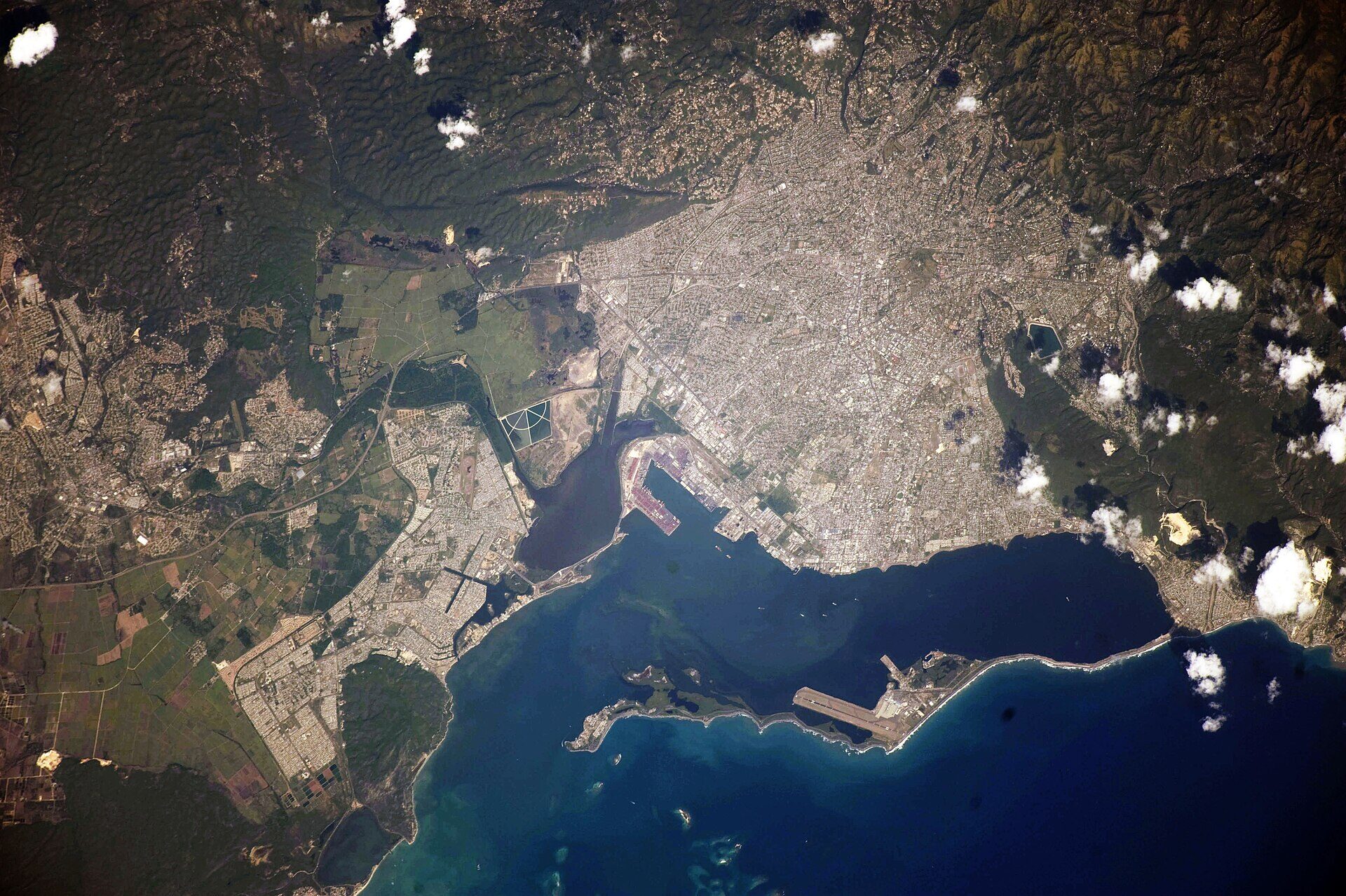
On Tuesday afternoon a plane from the United States landed at Norman Manley International Airport in Kingston, and 22 people walked off it. None of them was Jamaican.
Jamaica had never taken a flight like that before. It is now on a list that has been growing all year: countries that have agreed to receive people the United States removes to somewhere that is not their own country.
Before anything else, the thing that is true for almost everyone reading this: nobody has to leave the country, and losing TPS is still not a deportation order. Most people whose Temporary Protected Status ended on July 27 do not have an immigration judge’s order telling them to leave. This article is not a prediction about you.
But a minority of people do hold such an order, and for them one question has quietly become a real one this year: which country does my order actually name? That is what Tuesday’s flight is about, and it is worth understanding before anyone has to think about it in a hurry.
What happened on Tuesday
Twenty-two people deported from the United States arrived at Norman Manley International Airport in Kingston. The Associated Press, which reported the arrival, did not say what nationalities they were, and no U.S. agency has published a list. The news agency wrote that media reports indicated the group was put on a bus and taken to an undisclosed location; that is the agency’s own description of other outlets’ reporting, not something it said it saw.
Jamaica signed a bilateral memorandum of understanding with the United States in June. Under it, Jamaica says it will pass people on to their home countries or to other destinations after they land. Jamaica’s Ministry of National Security and Peace and its Ministry of Foreign Affairs and Foreign Trade said in a joint statement that “this is a transit arrangement intended to facilitate the return of Third Country Nationals to their country of origin or other receiving countries,” that care for the deportees would be supported by the International Organization for Migration, and that “the arrangement will not be funded by the Government of Jamaica.” The government has also said it will not accept anyone with a criminal record.
The agreement itself has not been published. Jamaica’s foreign minister, Kamina Johnson Smith, said the United States has not agreed to make it public: “Some countries have had their agreements made public, but our partner has not agreed for this one to be.” The opposition’s spokesperson on national security, Fitz Jackson, said: “Jamaicans are being asked to trust a secret document that touches their security, their communities and their public services.”
An advocacy project called Third Country Deportation Watch, affiliated with Refugees International and Human Rights First, counts at least 35 countries that have entered into such agreements with the United States. That is the project’s own count, not a government figure.
Where, not whether
This is the sentence to carry out of the whole article, and this page has printed it every time one of these stories has come up since September: these agreements are about where, not whether.
Nothing about Tuesday’s flight gives anyone TPS back, takes anyone’s status away, or creates a new reason anyone can be removed. It does not reach the charter flights to Cap-Haïtien that this page has reported since August, because a Haitian removed to Haiti is being removed to their own country, and the third-country rules do not touch that.
What these arrangements change is the answer to a different question: for someone who already has a final order, where does that order send them?
What the law says about which country
There is a section of the immigration law that answers this, and it is worth knowing it exists, because it gives the person with the order a say.
Under 8 U.S.C. 1231(b)(2), someone who has already been ordered removed may designate one country to be removed to, and the government “shall remove” them there. That is the starting point, and it is written into the statute.
The same section then lists four reasons that choice can be set aside: if the person does not name a country promptly; if the government of the country named does not answer within 30 days of being asked; if that government is unwilling to accept the person; or if the Attorney General decides removal there would be prejudicial to the United States. If the designation is set aside, the statute points first to a country of which the person is a citizen, subject or national.
So the law does not hand anyone a veto. It decides where, not whether. But a person who has never been told they could name a country is in a worse position than one who has, and the time to ask a lawyer which country your order names is not the week it is carried out. If a judge has already ordered your removal, that order did not go away when TPS ended — ask your lawyer this week which country it names, and get your own copy of the order (find free legal help).
What the courts have done, and what they have not
This has been moving in both directions, and the honest summary is that the protection a court put in place is currently paused.
In September a federal appeals court in Boston ruled that the government may not lawfully send someone to a country that is not their own, and that was not named in their removal case, without real notice of where they are being sent and a genuine chance to say they fear being persecuted or tortured there (D.V.D. v. Department of Homeland Security, First Circuit, No. 26-1212, decided Sept. 18). The court set aside the department’s 2025 third-country guidance. It was not a clean win even then: the panel threw out the part of the judgment that would have required the government to try a person’s own country first, because the plaintiffs lacked standing to bring that claim.
Eleven days later, on Sept. 29, the Supreme Court put that ruling on hold, so those removals may resume while the case is argued (docket 26A406). The Court gave no reasons. It also granted review and directed argument for its December 2026 session (No. 26-426). The Court has not decided that the guidance is lawful; it has decided the government may use it in the meantime.
So the notice requirement a court ordered is not in force right now. That is the state of it, and it is why the practical advice below does not depend on a court.
What is not known
The gap in the public record is worth stating plainly. No U.S. agency publishes a list of who is on these flights. Human Rights Watch, which interviewed 24 people transferred from the United States to six African countries between February and July of this year, said in an Oct. 8 report that more than 500 people had been sent to African countries where they have no ties — the organization’s own finding from its own interviews, not an agency count. Several of the people it interviewed said they were given little or nothing in the way of information about where they were going.
Nobody has said whether any Haitian or Syrian national was on Tuesday’s flight to Kingston, and this page is not going to guess.
What to finish this week
None of this requires acting out of fear. These are worth finishing anyway, in the order they matter.
Find out whether you have an order at all. This is free and it takes one phone call. The immigration court’s automated line is 1-800-898-7180, available at any hour; with your A-number it will tell you your next hearing date and whether a judge has decided anything. The online version is at acis.eoir.justice.gov, which shows only the most recent case. It is in English and Spanish only. If you have never had an immigration court case, you will find nothing — and that is itself the answer.
If you do have an order, get your own copy of it, and ask a lawyer which country it names. That is the single most useful hour a person in that minority can spend right now (find free legal help).
If an officer ever names a country that is not yours, say out loud that you are afraid to be sent there. Ask for that to be written down, and keep your own copy. You do not have to sign anything about leaving, and nobody may charge you a fee to add your name to a case or a list.
Keep the ordinary paperwork where someone else can reach it. Photograph your documents, write down your A-number, and leave copies with someone you trust here (tools and checklists). If someone in your household is taken, the locator and the steps for finding them are at find someone detained, and what to do with a letter from ICE is at what to do with a letter from ICE.
Know what you can refuse at a door. That has not changed this week and it is still the thing most likely to matter (know your rights).
Ending TPS is still not a judge ordering you personally to leave, and most people who lost it do not have a judge’s order. But if a judge has already ordered your removal, that order did not go away — so see a lawyer this week.
Sources
- The Associated Press, carried by Al Jazeera, Oct. 14, 2026, 01:44 UTC — 'Jamaica accepts first flight of third-country deportations from US.' Read raw this run. The source for the 22 deportees arriving at Norman Manley International Airport in Kingston on Tuesday, for the June bilateral memorandum of understanding, for the joint statement of Jamaica's Ministry of National Security and Peace and Ministry of Foreign Affairs and Foreign Trade, for Foreign Minister Kamina Johnson Smith's and Fitz Jackson's quoted words, for the role of the International Organization for Migration, and for the figure of at least 35 countries attributed to Third Country Deportation Watch
- 8 U.S.C. 1231(b)(2) — the section of the Immigration and Nationality Act that governs which country a person with a final removal order is sent to. Read in the U.S. Code and reported on this page on Sept. 24, 2026: the right to designate one country, the four listed reasons that designation may be set aside, and the order the statute then follows
- D.V.D. v. Department of Homeland Security, United States Court of Appeals for the First Circuit, No. 26-1212, decided Sept. 18, 2026 — opinion by Judge Seth Aframe. Reported on this page Sept. 18: the notice requirement, the vacatur of the 2025 third-country guidance, and the part of the judgment the panel threw out for lack of standing
- Supreme Court of the United States, docket 26A406 and No. 26-426 — the Sept. 29, 2026 order staying the district court judgment and granting certiorari, with argument directed for the December 2026 session. Reported on this page Sept. 29 from the Court's own docket and the full text of the order
- Human Rights Watch, Oct. 8, 2026 — "'To Scare People': US Expulsions of Third-Country Nationals to Countries in Africa," a 125-page report based on interviews with 24 people transferred to six African countries between February and July 2026. Reported on this page Oct. 8. These are the organization's own findings, not an agency count
- USCIS — Temporary Protected Status. Re-fetched this run: page stamp 09/09/2026, 'The Haiti TPS designation is terminated, effective July 27, 2026' and 'The Syria TPS designation is terminated, effective July 27, 2026'
- Executive Office for Immigration Review — the automated case information line, 1-800-898-7180, and the online case status page: the free way to check whether an immigration judge has ever ordered anything in your own case
Community discussion
Comments are moderated before they appear. Never share your A-number, address, or case details here, and never trust legal advice from comments — talk to a licensed attorney (free help here). Comments are provided by GraphComment (EU-hosted, GDPR-compliant) and are optional.