The Plane Nobody Listed
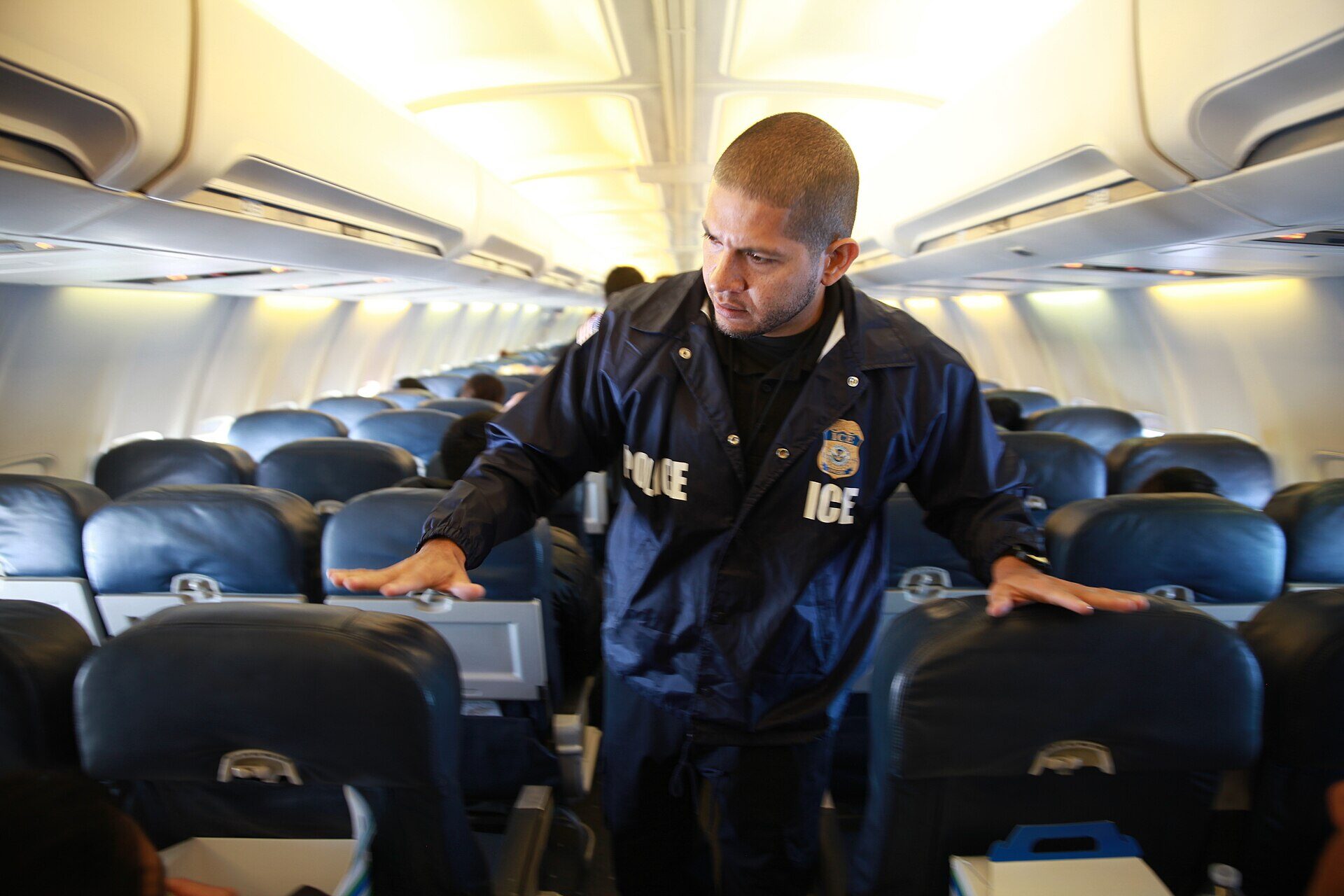
Seventy-two people were put on a plane in the United States on Thursday, Oct. 8, and taken off it at the airport in Cap-Haïtien. Sixty-two of them were men and ten were women.
That is very nearly the whole of what is publicly known about the flight, and it comes from one newsroom. The Haitian outlet Vant Bèf Info published it on Sunday, Oct. 11 — three days after the plane landed — in a piece bylined Moïse François and datelined from Cap-Haïtien. No United States agency has published a passenger list or a manifest. No other newsroom’s account of this flight could be found. HaitiLibre’s own news feed, read directly, carried nothing about it through Saturday. And this page, which has tracked these planes since August, had not recorded a flight to Haiti since Sept. 25.
A plane that carries seventy-two people out of the country is not a small event. The fact that it took three days and one newsroom to surface is the thing worth understanding this week, because it tells you exactly what kind of record exists about where people go — and who is keeping it.
Who is keeping the record
The pattern on this page has been consistent since the first flight in August. The counts come from Haiti’s migration office, from the International Organization for Migration, from reporters standing at the airport in Cap-Haïtien, from Human Rights Watch researchers who interviewed people after they landed, and from families. They do not come from the agency that loaded the plane.
That matters in a practical way, not just a political one. When the count comes from the receiving end, it arrives late, it arrives incomplete, and it arrives without names. A family in Brooklyn or Springfield or Miami who stopped being able to reach someone on Wednesday cannot look up Thursday’s flight and find out whether that person was on it. There is no list to look up.
So treat every number you read about these flights, including the ones on this page, as a floor rather than a roster. Seventy-two is what one newsroom reported. It is not a government figure, it has not been confirmed by a second newsroom, and nobody has published who was aboard.
What you can finish this week: if someone in your family is being held, start a single written log today — a notebook or a notes file. Every time you check on them, write the date, the facility name, and the A-number you were given. A log you kept yourself is the record a lawyer can use. Nobody has to give you permission to keep it.
What waits on the ground
Vant Bèf Info reports that the people who got off Thursday’s plane were taken in hand by Haiti’s migration office, the ONM, working with the national police, the Red Cross, the International Organization for Migration, the social welfare institute, the health ministry and the foreign affairs ministry. It reports that each person was given 25,000 gourdes, that meals, drinks and water were handed out, and that medical care, psychological support, transport and lodging were offered.
The same article also says that several local outlets, which it does not name, report that some of the people returned on these flights are sleeping in the streets of Cap-Haïtien, because they have no relatives in the city who can take them in.
Those two accounts do not agree, and this page is not going to pick between them. Both are printed here because a family deciding what to do needs to know that the official description of what waits at the airport and the reported reality of the week afterward are not the same description. No Haitian or United States agency has said anything about the people sleeping outside.
The money is worth looking at plainly. Twenty-five thousand gourdes is the same per-person figure this page carried for the Sept. 24 flight, worth roughly 190 U.S. dollars at that week’s rate. Set it beside something else this page has reported: the road from Cap-Haïtien onward to Les Cayes, for someone whose family is in the south, cost about 220 dollars on its own. Arrival money is not a resettlement plan. It does not cover the journey home, and it is not a reason to go.
What you can finish this week: if you are sending money to someone who has been returned, ask them first what the road to their family actually costs, before deciding the amount. The gap between the arrival payment and the fare is where people get stranded.
If you are looking for someone
A blank screen is not an answer.
This page reported on Sept. 30 that ICE removed about 16,000 names from its online detainee locator. That is a documented change to the system, which means a search that returns nothing now tells you something about the database and nothing at all about the person. Do not read it as good news and do not read it as bad news. Read it as a reason to keep searching.
Check daily rather than once. Write down the facility and the date every single time, including the times you find nothing, because the pattern of when someone appeared and disappeared from the system is itself evidence. Ask for the A-number and keep it somewhere you will not lose it. Give copies of everything to a lawyer, and not only to an officer.
What you can finish this week: read how to look for someone who has been detained and find free legal help. If you have already been told a facility name, call it and write down who you spoke to and when.
If a judge has already ordered your removal
Losing TPS is not a deportation order. That has been true since July 27 and it is still true today: USCIS’s own page, re-read this week, says the Haiti and Syria designations are terminated, and the agency’s I-9 news index carries nothing for either country dated after July 29. A termination ended a status. It is not a judge telling you personally to leave.
But a smaller group of people do have a removal order from an immigration judge, and for them that order did not go away when TPS ended. If that is you, the flights are a reason to see a lawyer this week rather than next month.
You do not have to take anyone’s word for which group you are in, and you should not. The Executive Office for Immigration Review runs a free automated line, 1-800-898-7180, that will tell you your next hearing date and whether a judge has issued a decision, using your A-number. There is also an online case status page. Two honest limits: the line works in English and Spanish only, and if you have never had an immigration court case, you will find nothing — which is itself an answer worth having.
What you can finish this week: make that call. It costs nothing and it replaces a rumour with a fact about your own case.
If your household is deciding what to do
This is not a prediction about you. Seventy-two people were on one plane on one Thursday, out of a community of hundreds of thousands, and nothing about that flight was addressed to your family.
What the flight should change is not whether you leave but how prepared you are if something happens. Decide now, while nothing is urgent, who collects the children, who holds copies of the documents, and who has the lawyer’s number. A plan made on a quiet Sunday is worth more than any decision made in a hurry at a door.
And if the flights have you thinking about leaving on your own — for Canada, or back to Haiti ahead of anyone making you — read what this page has already published about that first. The Safe Third Country Agreement limits who may ask Canada for asylum at the border. Leaving the United States can affect whether you are able to return. That is a question for a lawyer before it is a question about a ticket, and nobody may charge you a fee to sign you up for a programme that does not exist.
What you can finish this week: make a family plan and know your rights at the door. Both are free, both take an evening, and neither requires anyone’s permission.
Sources
- Vant Bèf Info, Oct. 11, 2026 — 'Déportation : 72 migrants haïtiens renvoyés des États-Unis au Cap-Haïtien,' by Moïse François, datelined 'Cap-Haïtien, 11 octobre 2026,' RSS pubDate Sun, 11 Oct 2026 11:48:26 +0000. Read in full from the outlet's own feed. The source for the Oct. 8 flight, the 72 people, the 62 men and 10 women, the reception by the ONM and its partner institutions, the 25,000 gourdes paid to each person, and the report that some people returned on these flights are sleeping in the streets of Cap-Haïtien
- HaitiLibre — the outlet's own news feed, read directly on Oct. 11 and carrying nothing about this flight through its newest item of Saturday, Oct. 10 at 11:08. Recorded here as a verified negative, not as a judgement about the outlet
- USCIS — Temporary Protected Status. Re-fetched this run: page stamp 09/09/2026, 'The Haiti TPS designation is terminated, effective July 27, 2026' and 'The Syria TPS designation is terminated, effective July 27, 2026,' citing 90 Fed. Reg. 54733 and 90 Fed. Reg. 45398
- USCIS I-9 Central, Form I-9 related news — re-fetched this run. The newest Haiti item remains 'Update on Termination of Temporary Protected Status for Haiti (Release: July 29, 2026)'; there is no Haiti or Syria item dated after July 2026, so no work-permit extension exists for either country
- Executive Office for Immigration Review — the automated case information line, 1-800-898-7180, and the online case status page: the free way to check whether an immigration judge has ever ordered anything in your own case
Community discussion
Comments are moderated before they appear. Never share your A-number, address, or case details here, and never trust legal advice from comments — talk to a licensed attorney (free help here). Comments are provided by GraphComment (EU-hosted, GDPR-compliant) and are optional.