What Is Still Open
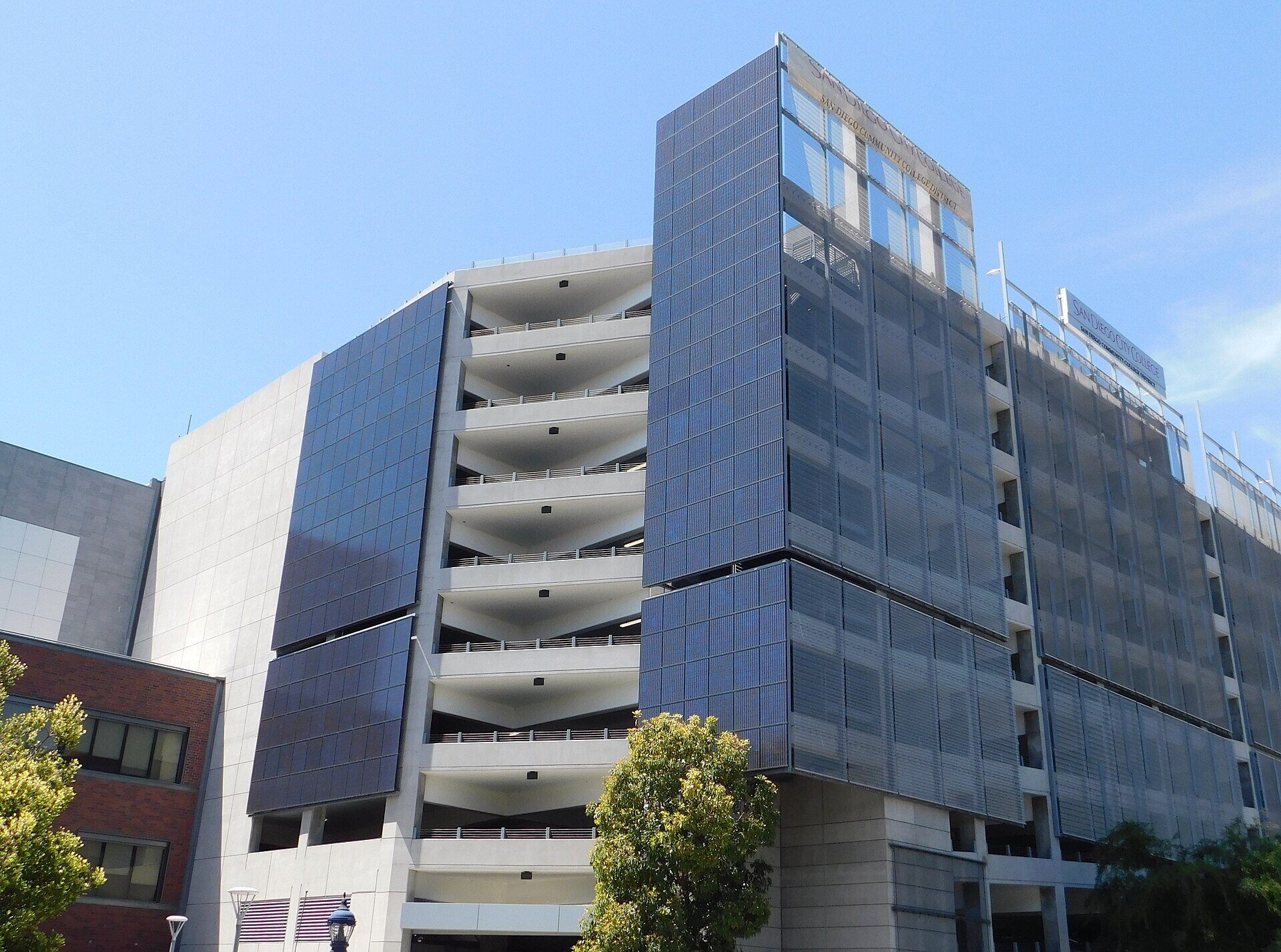
On Friday morning, in a sparsely filled twelfth-floor courtroom in downtown San Diego, a lawyer spent a few minutes arguing a single question: whether the government may hold his client indefinitely. The court agreed with him. Renatho Kemsley Casseus, 20, a student at San Diego City College who was arrested on Sept. 8 on his way to class and had been held at the Otay Mesa Detention Center ever since, was ordered released.
This page has carried his case since September — the arrest, the rally, and then the bond hearing on Sept. 17 at which an immigration judge refused him release and ruled the court had no jurisdiction to set bond at all. That refusal was the end of one road. It was not the end of every road, and that is the part worth reading carefully, because it is the only part of Friday that belongs to anyone other than him.
One order about one person does not change anyone else’s case. A judge did not rule that Haitians may not be detained, or that the end of TPS was unlawful, or anything at all about your situation. What crossed over from his case to everyone else’s is smaller and more useful than that: a map of where the doors are.
The person who was refused bond
A bond hearing happens in immigration court, which is part of the Justice Department. A habeas corpus petition is something different. It is filed in a federal district court, and it asks that court one narrow question — whether the detention is lawful — rather than asking for a favour.
Two practical things follow, and they are worth writing down whether or not anyone in your family is detained today.
The first is that a refusal in immigration court does not automatically close the federal courthouse. Casseus was denied bond in September and released on a habeas petition in October. That sequence is not a promise that it will work; most of what determines the outcome is the particular facts of a case, and this page is not able to tell you what yours are. It is a reason to ask a lawyer the question rather than assume it has already been answered.
The second is about geography. A habeas petition is filed in the district where the person is being held — not where the family lives, not where the arrest happened. A transfer to another state moves the courthouse with it. That is why the single most valuable thing a family can do is boring: every time you check the online detainee locator, write down the facility name, the city and the date, on paper, and keep the list. When a lawyer asks where your relative is being held, the answer decides which court can hear the case, and a list of dates shows when they were moved.
What the government said about Casseus, and what his lawyer said back, also stays unresolved, and this page is not going to resolve it. A Homeland Security spokesperson had told KPBS that he entered the United States on May 12, 2023 through El Paso and was in the country illegally. His lawyer, Wismick Saint-Jean, says the date is right and the word is wrong, and that his client came in with a CBP One appointment and an I-94 parole document. Nobody has said publicly whether Casseus ever held TPS. Both accounts are on the record, and the instruction that holds either way is the same: get your own entry documents, your I-94 and any appointment record, photographed and copied, and give the copies to a lawyer and to one person you trust — not only to an officer.
This week, from this section: start the paper list. Facility, city, date, every time you check.
The young person who stopped going out
The second thing that reached this page this week is quieter and harder to photograph.
The Haitian Times reported on Friday that educators and service providers are watching Haitian students withdraw. At one high school on Long Island, it says 17 Haitian graduates who had won scholarships are not attending college, because they are afraid to leave the house. A college graduate in Brooklyn had a job offer withdrawn when his status ended over the summer; one of his friends is thinking about going back to Haiti, and another is driving deliveries. Some are moving their lives onto a screen — webinars, support groups, classes taken remotely.
“The fear is real for them,” Dr. Frantz Dorsainvil, an education consultant, told the paper. “But normalcy will return, as a country, where people will not have fear.” Yolette Williams, executive director of the Haitian American Alliance of New York, said that after the initial shock many young people are looking for ways to keep studying, and that groups like hers are connecting them with attorneys who can give immigration and education advice.
Research commissioned by the Presidents’ Alliance on Higher Education and Immigration counts 19,000 undocumented students from Haiti among 525,000 nationally in 2025. Those are the group’s own figures from its own research, not a government count, and they describe a population, not a prediction about you.
The practical point inside all of this is one most families never think to use. A staff member at Flanbwayan, a Haitian youth education organization in Brooklyn, told the paper that campuses are holding money that nobody asks for — grants and scholarships funded by donors specifically for students in this position. “Sometimes people just don’t know what to ask.”
This week, from this section: send one email to the financial-aid office of the college you or your child attends or applied to, asking in writing what aid it has for students without immigration status, and whether any courses can be taken remotely. Keep the reply.
The family deciding about November
There is one dated channel worth knowing about now, and it comes with hard edges that a list in a news story will not give you.
TheDream.US, a national scholarship fund, says on its own site that its application round for the 2027–2028 school year opens Nov. 1, 2026 and closes Feb. 28, 2027, with decisions in late April 2027. This page read those criteria on the organization’s own page this week rather than taking them from anywhere else, because the details are what decide whether applying is worth an afternoon.
In its own words, the scholarship is for a first-generation immigrant student who “came to the United States before November 1, 2021,” has lived here continuously since, and “must navigate immigration status barriers as a Dreamer (for example, you are undocumented, have or had DACA or TPS, or have a pending immigration application).” A separate line says the student must have “Entered the United States before the age of 16.”
Those two sentences are the whole thing. The first is the reason this is in front of you at all: a person who had TPS is named, in the fund’s own words, as someone who may apply. The second and third are why many readers of this page will not be eligible — a family that arrived in 2022 or 2023, or a student who arrived at 17, is outside the criteria no matter how much the first sentence sounds like an invitation.
The fund also asks for a U.S. high school diploma or a GED, a 2.5 grade point average, and full-time enrolment at one of its partner colleges, and it says plainly that “International students and students in temporary, non-immigrant statuses are ineligible.” The award is up to $18,000 for an associate degree and up to $36,000 for a bachelor’s, plus up to $6,000 for books and supplies.
This page cannot tell you which of those lists you are on, and neither can anyone who asks you for money. Applying is free. Nobody may charge you a fee to sign you up for a scholarship, and anyone who offers to is telling you something about themselves.
This week, from this section: find the two dates in your own family’s paperwork — the date of entry and the age at entry — before Nov. 1, so the question is already answered when the round opens.
What has not changed
TPS for Haiti and Syria is terminated, effective July 27, 2026, and the work permits expired the same day. USCIS still says so on its own page, re-read this week, where Haiti and Syria sit under “Countries Previously Designated.” No court has given that status back.
Losing TPS is still not a deportation order. That sentence is the most important one on this page and it has not moved. If a judge has already ordered your removal — a minority of people, but a real one — that order did not go away when TPS ended, and it is the reason to see a lawyer this week rather than next month. If you have never had an immigration court case, the free automated line at 1-800-898-7180 will find nothing for you, which is itself an answer worth having.
And one deadline that arrived on Friday and stays arrived: the new USCIS filing fees took effect Oct. 16, and USCIS says a benefit request postmarked on or after that date without the proper fee will be rejected. Check the fee for your form on the USCIS fee schedule before you mail anything, and keep a copy of what you send.
None of this is a prediction about you. It is a list of the doors that were open this week, and the dates written on them.
Sources
- KPBS, Jacob Aere, 'San Diego City College student Renatho Casseus to be released from ICE detention,' published Oct. 16, 2026 at 5:13 p.m. PDT. Read in full this run from the station's own page, served whole to a Googlebot user agent; the URL came from KPBS's own news sitemap and was not constructed. The source for the habeas hearing, for Judge Cynthia Bashant granting the petition, for the Sept. 8 arrest and Otay Mesa detention, for the DHS statement and for Wismick Saint-Jean's answer to it
- The Haitian Times, Macollvie J. Neel, 'Holding on: How to help Haitian youngsters in limbo after TPS,' published Oct. 16, 2026. Read in full this run from the outlet's own WordPress feed, which returned the complete article body where the article page has refused automated reading on previous runs. The source for the 17 Long Island graduates, for the Brooklyn graduate whose job offer was withdrawn, for Dr. Frantz Dorsainvil and Yolette Williams, and for the Presidents' Alliance and Migration Policy Institute research figures
- TheDream.US — National Scholarship. Read raw this run from the organization's own site, reached from the nav on its scholarships page rather than by a constructed address. The source for every eligibility sentence quoted here, for the Nov. 1, 2026 opening and Feb. 28, 2027 close, and for the award amounts. The figures and the two cutoffs in this article come from this page and not from any list printed elsewhere
- USCIS — Temporary Protected Status. Re-fetched this run: page stamp 09/09/2026, 'The Haiti TPS designation is terminated, effective July 27, 2026' and the same sentence for Syria, both under Countries Previously Designated. The list of countries currently designated is unchanged: El Salvador, Lebanon, Sudan, Ukraine, Venezuela
- USCIS Fee Schedule, Form G-1055, and Federal Register document 2026-20187, 'Fiscal Year 2027 Inflation Adjustment to H.R. 1 Immigration Fees.' The source for the fees that took effect Friday, Oct. 16, 2026 and for a benefit request postmarked on or after that date without the proper fee being rejected. The Federal Register API was re-queried this run and returned no Temporary Protected Status document newer than 2026-21024 (Oct. 14)
- Executive Office for Immigration Review — the free automated case information line, 1-800-898-7180, and the online case status page. English and Spanish only, and it holds nothing for a person who has never had an immigration court case
Community discussion
Comments are moderated before they appear. Never share your A-number, address, or case details here, and never trust legal advice from comments — talk to a licensed attorney (free help here). Comments are provided by GraphComment (EU-hosted, GDPR-compliant) and are optional.