Where The Letter Goes
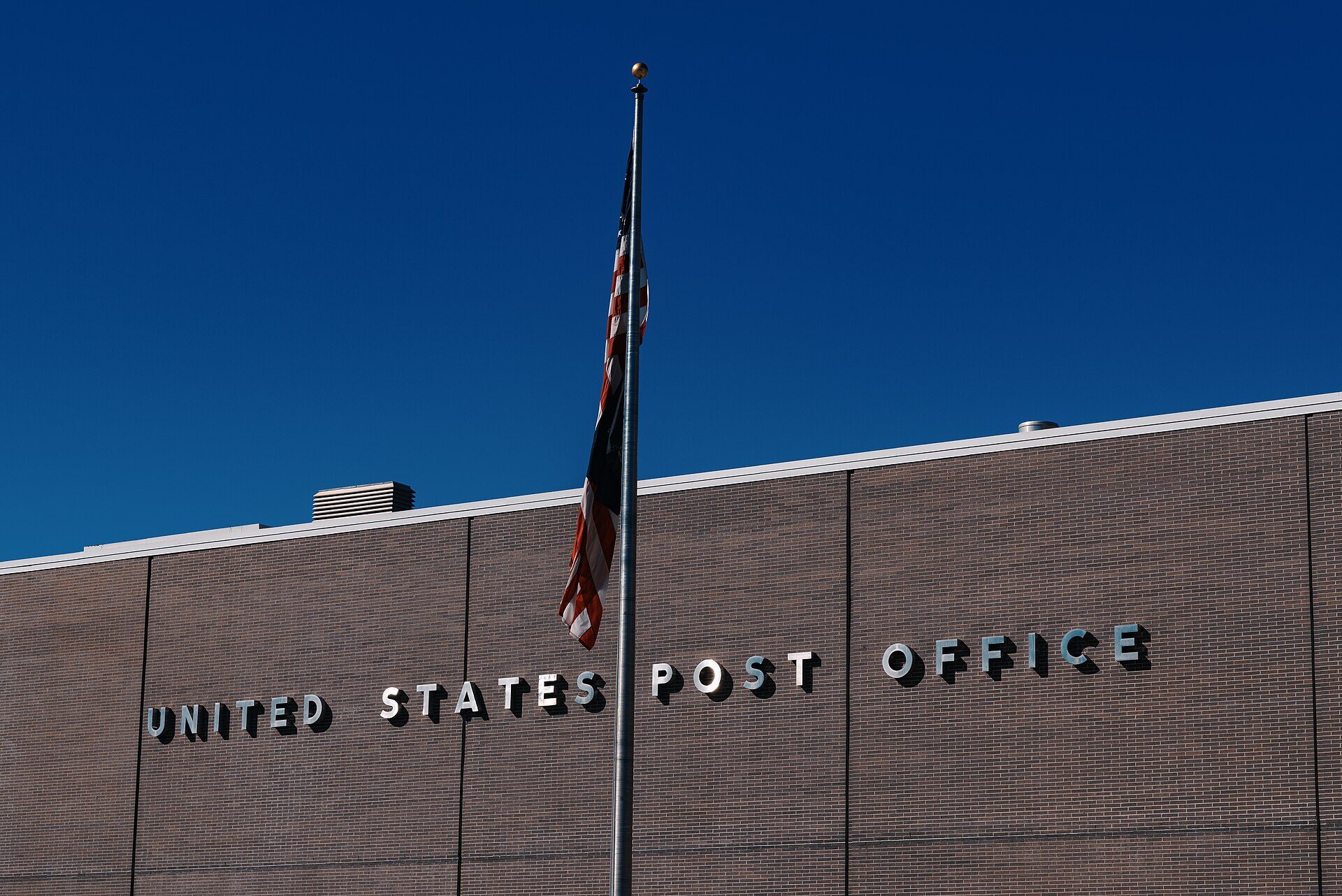
Almost everything that can go wrong on this page arrives in an envelope.
A hearing notice. A decision. A request for evidence with a date counted from the day it was printed. None of it is hand-delivered, and none of it chases you. It goes to an address somebody wrote down once, and it is treated as delivered whether or not you were still living there.
This autumn a lot of people on this page have moved. Some left a city where the work dried up. Some gave up an apartment when a work permit ended and a bank closed the accounts behind it. Some moved in with a cousin for a few months and meant to sort the paperwork later. If that is your household, there are two deadlines waiting for you that almost nobody is told about — and they are not the same deadline.
What has not changed
TPS for Haiti and Syria is terminated, effective July 27, 2026, and work permits expired the same day. USCIS still says so on its own page, checked again this week.
Losing TPS is not a deportation order. That remains the most important sentence on this site. A small number of people do hold an order of removal already signed by an immigration judge — if that is you, that order did not go away, and you should see a lawyer this week. For everyone else: this is not a prediction about you. It is paperwork, it is free or nearly free, and it is one of the few things in this whole situation you can finish yourself without anyone’s permission.
Two deadlines, two offices, two forms
USCIS: ten days. The regulation is short enough to quote whole. 8 C.F.R. 265.1 says: “Except for those exempted by section 263(b) of the Act, all aliens in the United States required to register under section 262 of the Act must report each change of address and new address within 10 days of such change in accordance with instructions provided by USCIS.”
USCIS says the same thing in plainer words on its own change-of-address page: “all aliens in the United States must report a change of address to USCIS within 10 days of moving.” The agency says it strongly encourages people to do it through a USCIS online account rather than on paper. The paper version is Form AR-11, the Alien’s Change of Address Card.
The immigration court: five days. This is the part that catches people, because it is a different agency with a different clock. If you have a case in immigration court, 8 C.F.R. 1003.15(d)(2) says: “Within five days of any change of address, the alien must provide written notice of the change of address on Form EOIR-33 to the Immigration Court where the charging document has been filed, or if venue has been changed, to the Immigration Court to which venue has been changed.”
Five days, not ten. A different form. A different place to send it. Telling USCIS does not tell the court, and the court is the one that can hold a hearing without you.
The regulation does not leave that implied. The same section, at 1003.15(b)(7), requires that the charging document itself contain a statement that the person must keep the court informed of their current address and telephone number, and “a statement that failure to provide such information may result in an in absentia hearing.” An in absentia hearing is a hearing that happens whether or not you are in the room.
The post office cannot do this for you
This is the single most common and most expensive misunderstanding, and USCIS states the answer flatly on its own page: “Changing your address with the U.S. Postal Service (USPS) will not change your address with USCIS.” The same page adds: “USPS will not forward your mail from USCIS.”
So a mail-forwarding request — the thing most people do first, and reasonably — moves your electricity bill and your bank statements and does not move the letter that has a deadline printed inside it. You have to tell the agencies separately, in their own systems.
On cost: USCIS’s AR-11 page does not print a fee amount. It points to the agency’s fee schedule, and this page did not resolve the figure at the schedule itself this week, so no number appears here. What is worth saying is the thing that is always true about this kind of paperwork: nobody outside the government can charge you for permission to update your own address, and anyone who offers to “fix your address with immigration” for a cash fee, asks for your passwords, or asks for money by phone transfer is not working from anything USCIS published. The Justice Department’s own list of the scams run on immigration cases is already on this page’s feed, and so is the rule that the forms themselves are free to download.
Who the rule reaches, and who it does not
The regulation keeps two lists, and it is worth printing both rather than telling you which one you are on.
The duty runs to people “required to register under section 262 of the Act.” The exemption runs to “those exempted by section 263(b) of the Act.” That exemption, read in the statute itself, covers only people in the United States as nonimmigrants under 8 U.S.C. 1101(a)(15)(A) or (a)(15)(G) — that is, diplomats and the staff of international organizations — and only “until the alien ceases to be entitled to such a nonimmigrant status.” USCIS puts the same thing in everyday language: the reporting requirement “does not apply to A and G visa holders and visa waiver visitors.”
What the regulation does not do is hand you a ruling about your own case, and neither will this page. If you held TPS and were issued a work permit, your situation is not the diplomat exemption — but whether and how any particular obligation applies to you is a question for a lawyer looking at your actual documents, not for a website. Take this article to one of the free legal clinics on the help page and ask the question in those words: given my papers, what addresses am I required to keep current, and with whom?
The households this already reaches
The feed below carries the moves in detail — a Springfield man whose bank closed his accounts after his work permit ended, a Florida district that counted 715 fewer Haitian children, families who left a neighbourhood after arrests in it. The people most exposed are the ones least likely to be reading a regulation: someone whose case has been quiet for a year, who has no lawyer, who assumes that no news is good news. Silence from an agency is not safety. Silence can simply mean the envelope went to the last address on file.
On the calendar, with dates
Monday, Oct. 19, in Haiti. Public-administration unions have announced a strike beginning that day. If a relative is collecting an identity card, a birth certificate or a passport for you, have them confirm the office is open before they travel, and do not let a deadline here depend on a document arriving from an office whose hours nobody has confirmed.
Monday, Oct. 19, for two other countries. TPS designations for Ukraine and Sudan are set to end that day, under notices this page reported in August. That is those two countries, and it changes nothing about Haiti or Syria, which were ended by published notice back in July. The USCIS I-9 Central news index, checked again this week, carries no newer employment-authorization release for Ukraine or Sudan, and none for Haiti or Syria since July 29.
Five things to finish this week
- Write down every address the government has for you. USCIS, the immigration court if you have a case, your employer, your child’s school, your clinic. A list on one sheet of paper is enough.
- Update USCIS. Online through a USCIS account if you can; Form AR-11 if you cannot. Do it within 10 days of any move, and keep proof of the date you did it.
- If you have a court case, update the court separately, on Form EOIR-33, within five days. If you are not sure whether you have a case, the free automated line at 1-800-898-7180 will tell you from your A-number, 24 hours a day. It is English and Spanish only, and if you have never had an immigration court case you will find nothing there — which is itself an answer.
- Keep a dated copy of everything you send. Give the copies to a lawyer and not only to the office. A filing you cannot prove you made is the part of the record that goes missing.
- Finish the family plan. Who collects the children, who holds the papers, who has the phone numbers. The forms and the checklist are on the tools page, and the know-your-rights page covers what to do if someone comes to the door.
If someone in your household is detained, the locator page explains how to search and what to write down each time. If you see ICE activity, the report page explains what to record and who to give it to.
None of this gives anyone status back, and none of it is a defence against anything. It is smaller than that, and more useful: it keeps the mail arriving where you are, so that the one letter with a date in it does not reach an empty apartment.
Sources
- 8 C.F.R. 265.1, 'Reporting change of address,' read this run as the regulation's own text from the eCFR renderer API. The full sentence is quoted in this article. The authority line for Part 265 is 8 U.S.C. 1103 and 1305
- USCIS, 'Change of Address.' Read this run. The source for the 10-day rule in the agency's own words, for the exemption of A and G visa holders and visa waiver visitors, for the agency's preference for the online account, and for the two sentences about the Postal Service not updating USCIS and not forwarding USCIS mail
- USCIS, Form AR-11, 'Alien's Change of Address Card.' Read this run. It states the 10-day rule and the A/G and visa waiver exemption, and it does not print a fee amount — it refers the reader to the fee schedule. This page did not resolve the amount at the fee schedule this run and prints no figure
- 8 C.F.R. 1003.15, 'Contents of the order to show cause and notice to appear and notification of change of address,' read this run as the regulation's own text from the eCFR renderer API. Subsection (d)(2) is the five-day Form EOIR-33 requirement, quoted in full in this article; subsection (b)(7) is the regulation's own statement that failure to provide the information may result in an in absentia hearing under 8 C.F.R. 1003.26
- 8 U.S.C. 1303 (INA section 263), read this run. Subsection (b) is the exemption the change-of-address regulation points at, and it reaches nonimmigrants under 8 U.S.C. 1101(a)(15)(A) and (a)(15)(G) only
- USCIS — Temporary Protected Status, and the USCIS I-9 Central Form I-9 related news index, both checked this run. The TPS page carries 'The Haiti TPS designation is terminated, effective July 27, 2026' and the same sentence for Syria under Countries Previously Designated. The I-9 Central index carries no Haiti or Syria employment-authorization item newer than July 29, 2026, and no Ukraine or Sudan item newer than Sept. 3, 2026
- Executive Office for Immigration Review — the free automated case information line, 1-800-898-7180, and the online case status page. English and Spanish only, and it holds nothing for a person who has never had an immigration court case
Community discussion
Comments are moderated before they appear. Never share your A-number, address, or case details here, and never trust legal advice from comments — talk to a licensed attorney (free help here). Comments are provided by GraphComment (EU-hosted, GDPR-compliant) and are optional.