Who Is at the Door
Since August this page has printed one sentence more often than any other instruction it carries: you do not have to open your door to ICE without a warrant signed by a judge.
It is still true. Nothing this week changed it. But a story out of Brooklyn this week describes the gap in it, and the gap is not in the law — it is in the moment before the door opens, when the only thing you have to go on is what somebody on the other side of it says they are.
The door on Lenox Road
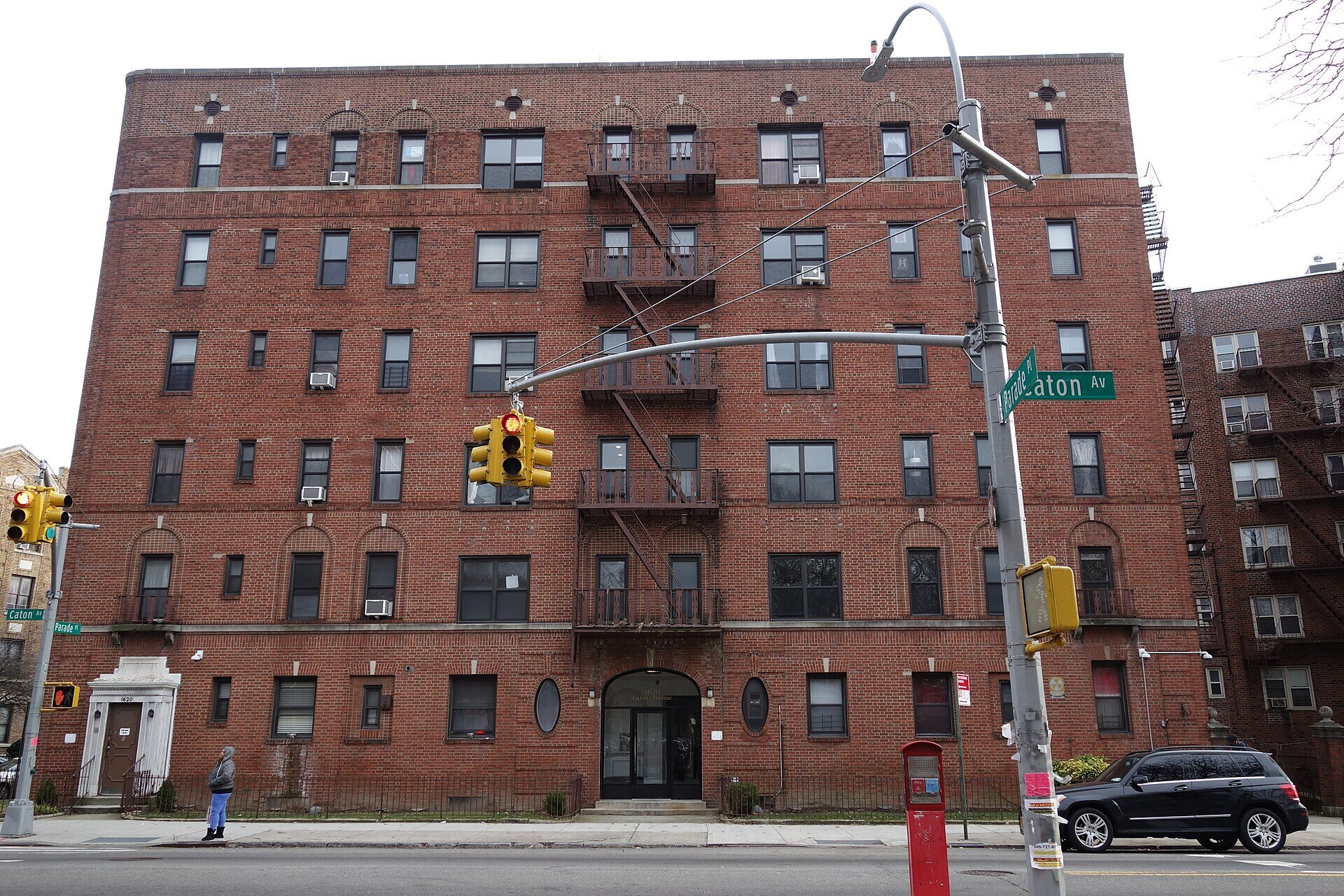
Residents of a building at 75 Lenox Road in Flatbush told amNewYork that several ICE agents identified themselves as NYPD officers to get into the building, and then said the same thing at an apartment door, before taking Roberto Lamour out of his own apartment on Oct. 3 (amNewYork, Dean Moses, Oct. 22).
One of the residents, who gave only her first name, Angelina, described it to the paper: the agents said “they were looking for some individual, and they were demanding to be let in… They were trying to cooperate, and then when they opened the door, they barged in. They asked for Roberto’s ID, and then they took him.”
Hold on to what that is and what it is not. It is the account of people who live in the building, given to a named reporter at a named newsroom, published with his byline. It is not an agency’s account, and no agency has confirmed any part of it. The paper says it asked the New York Police Department for comment and was awaiting a response — it does not say it put the question to ICE, and no federal agency has answered it publicly. Nobody has said whether Lamour held TPS. The paper describes him as a Haitian immigrant and a father; friends say he has no criminal record.
This page reported ICE activity on Lenox Road on Oct. 2, the day before. No source connects the two, and this page is not connecting them either.
The part of the instruction that had not been written down
The instruction has always had two halves, and this site has mostly printed one of them.
The half everyone knows: you do not have to open the door. An administrative warrant — the kind ICE writes for itself, often on a form numbered I-200 or I-205 — is not a judge’s warrant and does not entitle anyone to come inside.
The half this week puts in front of you: the decision about the door gets made while it is still shut, on the strength of a claim you cannot check. So make the checking part of the routine, before the lock turns.
Ask them to hold the warrant up to the window, or to pass it under the door. Look for two things on it: a judge’s signature, and a court’s name. Ask for a name and a badge number through the door and write it down while they are saying it. If you are told it is the police and you are not sure, you are allowed to take the time to be sure — nobody has to open a door on the word of a voice in a hallway. And if the door does open and people come in anyway, you still do not have to answer questions, sign anything, or hand over any document other than what the law requires; say you want a lawyer and then stop talking.
Write down afterwards what you saw, with the date, the time and the floor. A neighbour’s dated note is the kind of record a lawyer can actually use, and in this story it is the neighbours’ notes that are the record.
If someone is taken, the precinct is the wrong building
The most useful detail in the whole Brooklyn story is also the quietest one.
Lamour’s wife, Darchnee Lamour, believed the police had taken her husband. She went to the local precinct to demand his release. She learned he was in ICE custody only when the officers there told her he was not with them — hours, by the paper’s account, after he was gone.
That is a wrong turn anyone would make, and it costs the hours that matter most. If someone is taken and you are told it was the police, check the ICE detainee locator anyway, the same day, and keep checking. You need their full name as it appears on their documents, their date of birth and their country of birth; their A-number, if the family has it, is faster and more reliable than a name.
Write down the facility and the date every single time you check, because the entry moves. The paper says Lamour was first taken to Delaney Hall and then moved to a detention centre in Mississippi, which it does not name. A transfer is not a formality: it changes which facility holds a person and which court a lawyer has to file in, and a family that has not written down the sequence cannot tell a lawyer what happened.
The other doors already on the record
The Brooklyn account is one account, and one account is not a pattern. But it joins a list this page has been keeping since the summer, and the list is the point.
People have been taken at traffic stops, at scheduled ICE check-ins, outside workplaces and school gates, at a fixed highway checkpoint in California, in the car park of a dentist’s office in Springfield, in the hallways and parking lots of state courthouses, and inside and just outside federal buildings minutes after a judge ordered a release. Those are separate places, separately verified, and the counts attached to them must never be added together.
What that list is for is not fear. It is this: there is no doorway on it that comes with a warning, and there is no doorway that is covered by a rule about a different doorway. An order about immigration courthouses does not reach a traffic court. A city rule about city property does not reach the private lot next to it. And a page that says arrests happen outside homes should not be read as a promise about the inside of one.
So the family plan is the thing to finish this week, and it is the one thing on this page nobody needs anyone’s permission to do. Decide who is allowed to collect your child from school, tell the school that name, and write it down. Put your papers where somebody else can reach them. Give a trusted person a copy and a phone number for a lawyer.
What has not changed
TPS for Haiti and Syria is terminated, effective July 27, 2026, and the work permits expired the same day. USCIS’s own page, read again this morning, still says exactly that and nothing softer.
One document published today will be described this week as though it changed something. USCIS proposed a revision to Form I-131, the travel and parole application, and the list of who uses that form still includes “noncitizens with pending Temporary Protected Status (TPS) applications and granted TPS.” That is a description of a form’s users, not an extension and not a status; no rule took effect, and nobody may charge you a fee to put you on a programme it does not create. The feed entry above this article carries the notice in full.
Losing TPS is still not a deportation order. That sentence is the one most worth keeping straight, because almost everything else this week was somebody describing your situation to you — an agent at a door, a form, a headline. If a judge has already ordered your removal, that order did not go away, and that is a small minority of people who need a lawyer this week rather than next.
You can check your own case for free without asking any of them. The Executive Office for Immigration Review runs an automated line, 1-800-898-7180, that will tell you your next hearing date and the judge’s decision from your A-number, around the clock. It is in English and Spanish only, and if you have never had an immigration court case, it will have nothing for you — which is itself an answer.
Know your rights · Find someone detained · Report ICE activity · Free legal help · Tools and checklists
Sources
- amNewYork, 'ICE agents posed as NYPD officers to arrest Haitian migrant in his Brooklyn home, neighbors say', by Dean Moses, published Oct. 22, 2026 at 21:05 UTC. Read in full from the paper's own RSS feed, which carries the complete article body. The source for the residents' accounts, the quotes from the resident who gave her first name as Angelina, the wife's trip to the precinct, the transfer to Mississippi, and the Oct. 22 rally
- Federal Register, 'Agency Information Collection Activities; Revision of a Currently Approved Collection: Application for Travel Documents, Parole Documents, and Arrival/Departure Records', document 2026-21684, OMB control number 1615-0013, published Oct. 23, 2026. Read in full as published, on the Government Publishing Office's own site. The source for every sentence about Form I-131, the comment deadline and the affected-public list
- The Haitian Times, 'Pilgrimage demanding ICE stop using ankle monitors kicks off in Ohio | PHOTOS', by Wedly Cazy, published Oct. 22, 2026 at 20:26 UTC. Read in full from the paper's own RSS feed. The fourth newsroom on the walk, and the second to place the closing rally at West Bank Park
- USCIS — Temporary Protected Status. Read again this run. Haiti and Syria each appear only in an alert reading 'terminated, effective July 27, 2026'; the designated list holds El Salvador, Lebanon, Sudan and Ukraine. The page is stamped Last Reviewed/Updated 10/20/2026
- Executive Office for Immigration Review — the free automated case information line, 1-800-898-7180, and the online case status page. English and Spanish only, and it holds nothing for a person who has never had an immigration court case
Community discussion
Comments are moderated before they appear. Never share your A-number, address, or case details here, and never trust legal advice from comments — talk to a licensed attorney (free help here). Comments are provided by GraphComment (EU-hosted, GDPR-compliant) and are optional.