Ordered to Appear
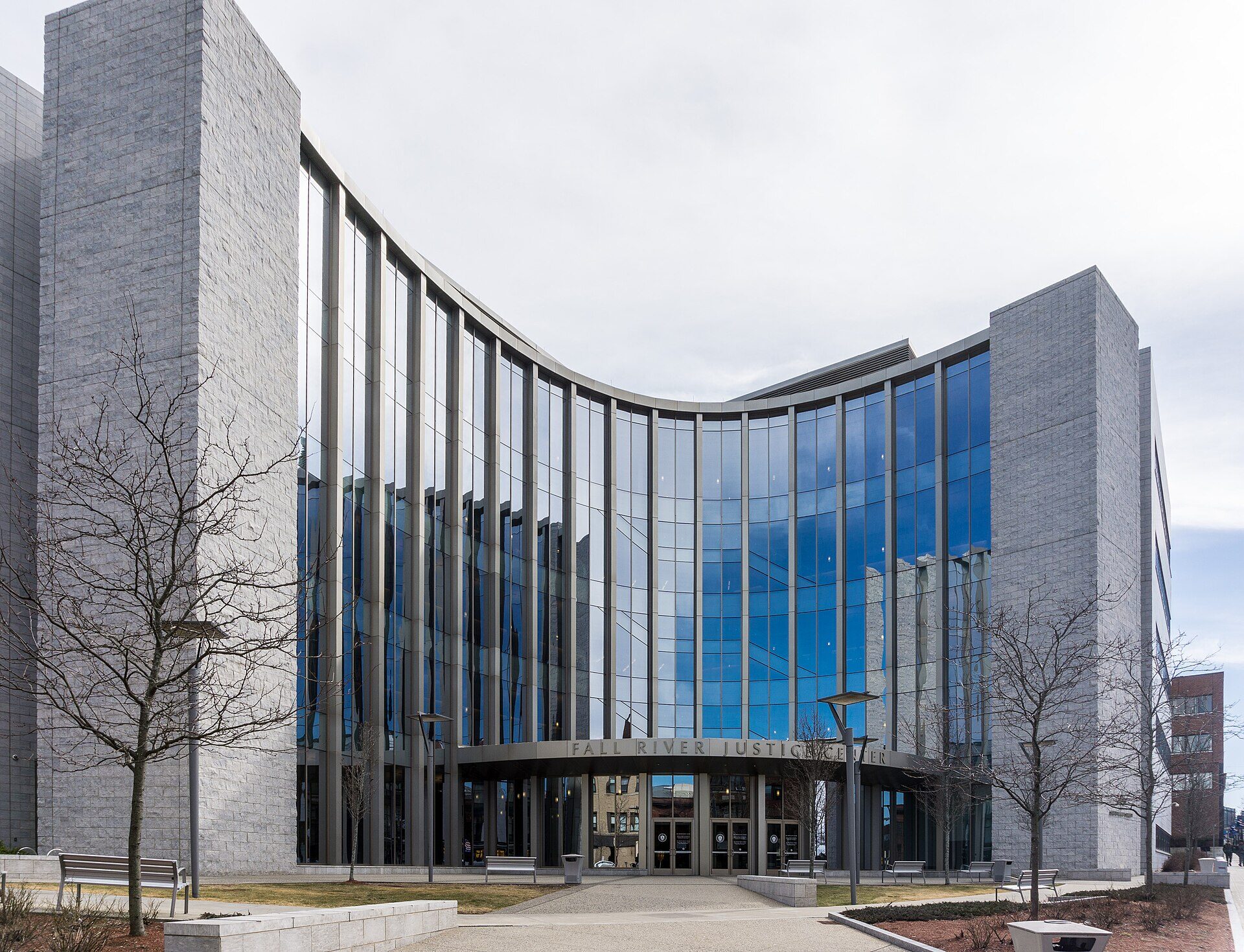
At about twenty to one on Friday afternoon, a reporter for The New Bedford Light watched several federal agents carry a man into an elevator inside the Fall River Justice Center, shouting at him to stop resisting. He had been in a courtroom that morning. A judge had released him a short time earlier.
The man’s wife told the Light he is Johnson Joseph, 29, of Fall River, and that she had been sponsoring him for legal permanent residency after he lost Temporary Protected Status over the summer — the same termination that reached several hundred thousand Haitians on July 27. She said she called 911 at 12:43, and that the officer who came told her there was nothing they could do. She said an agent told her he was being taken to Burlington, where Immigration and Customs Enforcement keeps a field office.
Nothing in any of that changed anyone’s immigration status. That has to be said first, because this is the kind of news a family reads at night and then makes a decision from — and the decision it pushes people toward is the one decision that reliably makes things worse. So before anything else: if you have a court date, go to it.
Which building this was
A great deal turns on the word courthouse, because it names three different places and only one of them is in this story.
The Fall River Justice Center is a Massachusetts state courthouse. The district court sits there and hears criminal and civil cases — assaults, traffic matters, landlord and tenant, restraining orders. That is where Friday’s arrest happened.
An immigration court is a different building run by a different arm of the federal government, where a judge decides whether someone may stay. Nothing in Friday’s story is about one.
An ICE check-in is a third thing again: an appointment at an ICE office, often in a federal building, sometimes in a room upstairs from other offices entirely. No rule about courthouses covers a check-in, and this page has carried arrest after arrest that happened at one.
Keep those three apart when you hear this story repeated, because a rule written for one of them is not protection in another, and someone will tell you it is.
What the state law says, and what it has not done
Massachusetts passed the PROTECT Act and the governor signed it on Aug. 5. It restricts warrantless civil immigration arrests at courthouses, public schools, child care centres and health care facilities, and bars local police from holding anyone on an ICE detainer alone. Its courthouse provisions took effect on Nov. 3: inside a state courthouse, a civil immigration arrest requires a warrant signed by a judge and verified by a judge on the premises.
The Light reports that this is the first arrest in a Bristol County courthouse it has confirmed since that date. It also reports the part that explains how such an arrest can happen in a building full of court officers: the guidance those officers were given forbids them from aiding such an arrest and from interfering in it. They are to write it down. Enforcement is at the attorney general’s discretion and would arrive as a civil case, not as anything that stops an arrest while it is happening.
The Light quotes Peter Margulies, a law professor at Roger Williams University who specialises in immigration law, saying the provisions are “more symbolic than real” and “likely unconstitutional under the U.S. Constitution.” That is one law professor, quoted by one newsroom. This page found no report of any court having ruled on those provisions.
What you can do with that this week: if you are due in a Massachusetts state court, ask your defence lawyer — or the lawyer of the day at that courthouse — what the court’s own policy is on immigration arrests in that building, and ask for the answer in writing or in an email. A written answer is worth keeping whether or not it protects you.
Friday was not the first. GBH News reported on Nov. 18 that the LUCE Immigrant Justice Network of MA and other advocates count at least 26 arrests by the Department of Homeland Security on courthouse property since the law took effect, and that the state’s own trial court system puts the figure at 28 — two different counters over the same period, not to be added, and neither one a roster of everyone it happened to. Who said what, in which towns, and what the attorney general’s office and the Department of Homeland Security each answered are set out in full in the feed entry below.
The doorway list, as this page has verified it
Friday adds a doorway to a list this page keeps from its own verified record, and the list is the point: arrests are happening one at a time, at ordinary places people have to be.
A traffic stop over a light and an expired inspection. A scheduled ICE check-in — including, in one case this page carried, a person who had only come along with somebody else to theirs. The door of a federal building or a detention centre, including after a judge had ordered a release. Inside a home. An ambulance entrance at a Los Angeles hospital. A sheriff’s office a man walked into for help after he was mugged, where he was arrested on his way out of the jail. An airport, on a trip inside the United States. And now the lobby of a state courthouse, after a hearing.
What that list does not include is a door-to-door sweep. That is not reassurance; it is a description of where to expect this, so that a household can plan for the places it cannot avoid.
Why you still go
Montañez told the rally there is “a great deal of fear among many immigrant communities and families about whether or not they should even attend their court dates.” That fear is reasonable. Acting on it is not, and here is why.
Missing a criminal court date can bring a warrant for failing to appear — which turns a case you were managing into a reason for any officer to hold you. Missing an immigration hearing can bring a removal order decided without you in the room, and an order entered in your absence is the hardest thing in this entire system to undo. The thing people skip court to avoid is the thing skipping court most reliably produces.
Going is not surrender. It is the version of the day in which you still have a case, a lawyer and a record.
Four things a household can finish this week
One. Write down your A-number and your next date. The number, the court or office, the address, the time. Put it where somebody else in the house can find it without you.
Two. Leave copies with somebody here. Passports, birth certificates, any notice you have received, the front and back. Give a set to someone you trust in this country, not only to a lawyer, and not only on a phone that could be taken with you.
Three. Agree who collects the children. Decide it now, name the person out loud to them, and write the name and number beside your papers. A U.S.-citizen child cannot be deported, but a parent may have very little time to decide what happens next, and deciding it beforehand with a lawyer is the whole difference.
Four. Put a lawyer’s number in your pocket, on paper. Free help exists and nobody may charge you a fee to “sign you up” for anything described on this page (find free legal help · family plan and checklists · know your rights).
If you watch an arrest happen, write down the date, the time, the exact building and floor, what you saw and whether anyone showed a warrant signed by a judge, and give that to a lawyer rather than only posting it (report an ICE sighting). If someone of yours has been taken, get their A-number and check the locator every day, writing down the facility and the date each time (find someone detained).
What has not changed
In Haiti, police put Friday’s toll at Martissant 2A at more than 20 dead among people they present as gang members, and the paper of record puts arrests and fighting well beyond that one road; the entry below carries both, with what neither says. Nobody has said when Route Nationale 2 reopens. If you have relatives there, ask them about their own street and not about the city, and call again on the day anyone would travel.
The status record is where it was. TPS for Haiti and Syria is terminated, effective July 27, 2026, and those work permits expired the same day. USCIS still lists El Salvador, Lebanon, Sudan and Ukraine as designated and says in its own words that the Haiti designation and the Syria designation are each terminated. Nothing filed in the Federal Register this week changes that.
Losing TPS is still not a judge ordering you personally to leave. Most people who lost it have no such order. But if a judge has already ordered your removal, that order did not go away, and it needs a lawyer this week — not a notario, not a fee, and not a decision made at night from a story about a courthouse.
This is not a prediction about you.
Sources
- The New Bedford Light, “ICE arrests Haitian man in Fall River courthouse,” by Kevin G. Andrade with Grace Ferguson, datePublished 2026-11-20T21:52:31+00:00, dateModified 2026-11-20T21:56:08+00:00, read whole on the outlet's own page. The real URL was taken from the paper's own news-sitemap, where the item carries news:publication_date 2026-11-20T21:52:31Z, and from its homepage link list — never constructed. Source for what the reporter watched, for the time of the arrest, for the wife's account and identification, for the court records on the arraignment, the release on personal recognizance, the April 15 detainer and the June 29 hearing, for the PROTECT Act courthouse provision and the guidance given to court officers, and for the quotation from Peter Margulies
- GBH News, “Advocates call on Campbell, Healey to investigate PROTECT Act violations,” by Sarah Betancourt, dated November 18, 2026, read whole on the station's own page. Source for the advocates' count of at least 26 arrests on courthouse property since Nov. 3, for Leela Ramachandran on warrants not being presented, for the state trial court system's own figure of 28, for Molly McGlynn's statement for the attorney general's office, for Governor Healey's office referring questions, for the Department of Homeland Security's refusal and its spokesperson's statement, and for Daniel Montañez on fear of attending court dates
- Vant Bèf Info, “Haïti / Sécurité : plus de 20 membres de gangs tués lors d'une opération à Martissant 2A,” by Ronald André, datelined Port-au-Prince, Nov. 20, 2026, pubDate Sat, 21 Nov 2026 03:00:10 +0000 — which is ten o'clock on Friday night in Haiti — read whole from the outlet's own feed. Source for the police communications directorate's figure of more than 20 dead at Martissant 2A on Friday and for what that directorate did not say
- Le Nouvelliste, “La PNH, la FRG, la Task force et les Salvadoriens passent à l'offensive,” Google News pubDate Sat, 21 Nov 2026 03:27:17 GMT, URL taken from the paper's own homepage link list. Only the opening paragraphs, which the paper leaves outside its free-registration wall, were read; they are the source for the places named and for the description of drones, automatic weapons and helicopters
- U.S. Citizenship and Immigration Services, Temporary Protected Status page, read Saturday, Nov. 21, 2026, carrying the stamp “Last Reviewed/Updated: 10/20/2026.” It lists El Salvador, Lebanon, Sudan and Ukraine as currently designated, and says “The Haiti TPS designation is terminated, effective July 27, 2026” and the same for Syria
- Federal Register API, documents search for the quoted phrase “Temporary Protected Status” and the public inspection list, both read Saturday, Nov. 21, 2026. The newest document returned is still 2026-23003 (Housing and Urban Development, Nov. 12), already covered here. Nothing on the day's public inspection list comes from USCIS, Immigration and Customs Enforcement or the immigration courts. Recorded as a verified negative, not as a change
Community discussion
Comments are moderated before they appear. Never share your A-number, address, or case details here, and never trust legal advice from comments — talk to a licensed attorney (free help here). Comments are provided by GraphComment (EU-hosted, GDPR-compliant) and are optional.