The Children in the Record
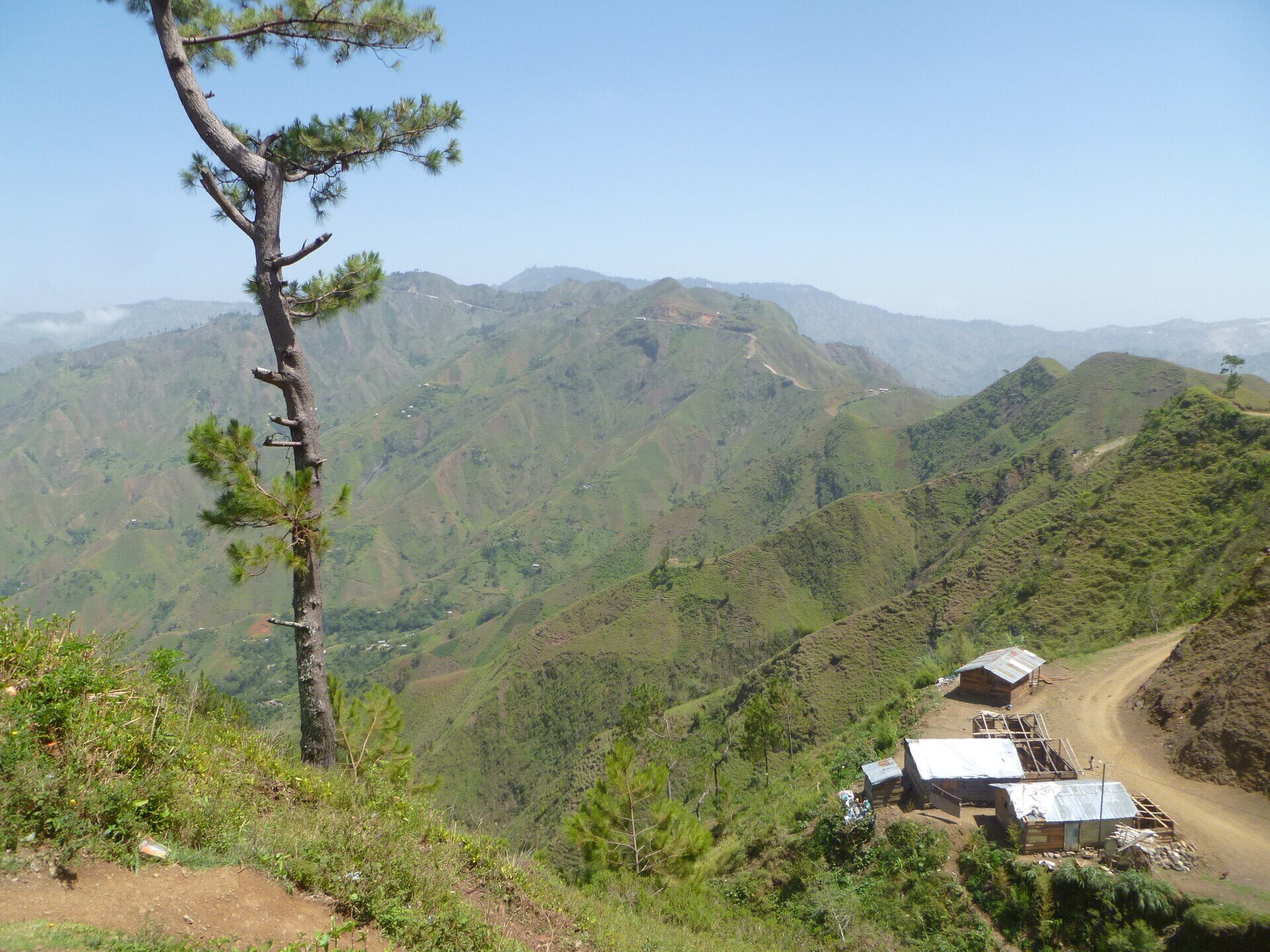
Today is World Children’s Day. Amnesty International timed a piece of research to it, published on Thursday, and it is about children in a Haitian commune most readers of this page can name: Kenscoff, in the mountains above Port-au-Prince, where the gangs came in January 2025 and have come back since.
Three things were published about Haiti this week. They are not the same kind of thing, and they do not say the same thing. One is an international organisation’s own research into what happened to children in an attack three months ago. One is the United Nations human rights office telling every armed force in the country how it may use lethal force. One is the Haitian police’s own count of 34 people killed in an operation on Thursday.
None of them changes anyone’s immigration status in the United States. That is the first thing to say, because all three are the kind of news a family reads at night and then makes a decision from.
This is not a prediction about you.
What Amnesty International published
The research is dated Thursday, Nov. 19, 2026. Amnesty says it comes from work carried out between September and November, including a visit to Haiti and more than 60 interviews, and that further parts will follow.
Its subject is the attack on Kenscoff on Aug. 23. This page reported that attack on Aug. 24, when the United Nations office in Haiti said at least 47 people had been killed and 22 injured and that its estimate could still change. Amnesty now cites a municipal authority putting the toll at 55 killed and 15 injured, and municipal data recording 67 people abducted, 13 of them children. It cites the United Nations for at least three boys and two girls among the dead, and for 15 women and four girls raped.
Those are later counts, by different counters, of the same night. They are not to be added together, and the earlier figure on this page was published as an estimate its own source said could change.
What Amnesty documented itself is narrower and, for that reason, harder to argue with: the abduction of at least 11 children, three of them very young; abductees tied up and walked for hours in the dark; a room too crowded for everyone to lie down at once; crackers, rice and beans, and untreated water. It says witnesses described gang members asking for money to release people, that some families could not pay, and that at least one family paid close to 700 U.S. dollars for an adolescent girl who was not released. UNICEF reported on Aug. 28 that six children and seven women from among those taken were free. Others, Amnesty says, were held for varying lengths of time, and the whereabouts of some are still unknown.
One finding points directly at this week’s news. Amnesty says people who escaped their captors after security operations were then caught in aerial attacks, including drone strikes, and that one girl said two boys taken with her died after being injured by those strikes. That is an account a survivor gave to Amnesty. No authority has confirmed it, and this page is not treating it as a finding. Amnesty frames it as a reminder to the Haitian security authorities and their partners — it names mercenaries, Salvadoran troops and the U.N.-backed Gang Suppression Force — of the importance of sparing the population during operations.
Amnesty says the authorities are investigating the Kenscoff violence, and that they must be transparent about it and make clear what happened to residents caught up in the operations that followed. It says earlier investigations into gang massacres have not yet produced credible trials.
What the United Nations said three days earlier
On Tuesday, Nov. 17, at a press briefing in Geneva, the U.N. human rights office set out something close to the same warning in its own words. The spokesperson Marta Hurtado said the High Commissioner for Human Rights, Volker Türk, had called on all national and international security forces operating in Haiti — whether under the Gang Suppression Force or outside its framework — to make sure their operations fully comply with international human rights law and to put the protection of the population first. He asked that they strictly limit the use of lethal force to situations where it is unavoidable to protect life from an imminent threat, and as a last resort. He urged the Haitian authorities to strengthen oversight of the forces under their command, to investigate alleged violations including extrajudicial executions, and to make sure there are consequences.
The same briefing carried a number this page had not published: OHCHR has documented 4,595 people killed and 2,050 injured by armed violence between 1 January and 31 October 2026. That is a running total over ten months. The 1,167 killed and 459 injured between July and September that this page published on Nov. 11 sit inside it. Do not add the two together and do not read a direction into either.
The briefing also described what armed groups are doing as operations intensify, and this is the sentence a family here should carry: retaliatory attacks on residents suspected of cooperating with the security forces. Alongside that, targeted kidnappings, more forced recruitment of children and young people, and tighter restrictions on movement.
And what the police said on Thursday night
On Thursday morning the Haitian National Police, backed by the Task Force and with Salvadoran support, ran an operation in Martissant 2, 4 and 23, in the south of Port-au-Prince. By Thursday night the police’s own communications directorate, DICOP, had given a toll: 34 people presented as gang members, fatally wounded. Juno7 and Vant Bèf Info both carried it; Le Nouvelliste carried the figure too.
The police communication does not say how those people died. It does not say whether anyone among the forces involved was killed or injured. No count says who the 34 were, how many were armed, or whether any resident was among them. And nobody — not the police, not the Task Force, not any ministry — has said whether the road through Martissant is open, closed or safe.
Hold that next to the sentence this page published on Thursday from Haiti’s justice minister, who said after visiting a prison in El Salvador that the country’s security climate has improved. This page is not resolving which account of Haiti is right. It is printing both, with their dates and their sources, because a family deciding whether to send someone on a journey is owed both.
What none of this changes
TPS for Haiti and Syria is terminated, effective July 27, 2026, and those work permits expired the same day. The USCIS Temporary Protected Status page, read again on Friday, lists El Salvador, Lebanon, Sudan and Ukraine as designated and says the Haiti and Syria designations are each terminated. No court order and no Federal Register notice has given status back to anyone from either country.
Nobody has to leave. Losing TPS is still not a judge ordering you personally to leave, and most people who lost it have no such order — but if a judge has already ordered your removal, that order did not go away, and that is a reason to see a lawyer this week rather than a reason to pack.
Nobody may charge you a fee over anything in this article. There is nothing to sign up for, and no list anybody can put your name on.
Four things a household can finish this week
If you have relatives in Haiti. Ask about their own street and their own week, not about the city or the country. Agree on one person outside the area whom everyone checks in with, so that nobody in your family decides to travel from a photograph or a video. Write down what you are told, with the date, and keep it. A dated note beside a dated U.N. document or an Amnesty report is the kind of record a lawyer can use; a memory is not. Make a family plan
If someone is weighing a return. Talk to a lawyer before you buy anything or sign anything. Leaving the United States can affect whether you are able to come back, and that turns on your own record, not on anyone’s assessment of the security climate. Free legal help
If you are in New York. The city’s free immigration legal hotline now answers seven days a week — Monday to Friday, 9 a.m. to 8 p.m., and Saturday and Sunday, 9 a.m. to 5 p.m. — and the city’s own page lists Haitian Creole among its languages. Call 1-800-354-0365, or dial 311 and say “Immigration Legal.” Know before you call what it is: the city’s page says the hotline does not provide legal services directly and does not schedule appointments. It is a route to free help, not a lawyer on the telephone.
If someone of yours is detained here. That is a separate matter with a separate route. Check the ICE online detainee locator, and write down the facility and the date each time you check, because “not in the system” is a fact about the records and not about the person. Find someone detained
You can also check your own immigration court case, free, by phone: 1-800-898-7180, open 24 hours, by A-number, in English and Spanish. If you have never had an immigration court case you will find nothing there, and that is not a finding about your status.
Sources
- Amnesty International, “Haiti: Kenscoff violence highlights continued risk of killing, abduction and other abuses against children by gangs – new research,” published on its own site, datePublished 2026-11-19T08:58:39+00:00, dateModified 2026-11-19T12:28:12+00:00. Read whole. Source for the research period and method, for the municipal and U.N. figures it cites, for the abductions it documented itself, for the survivors' accounts of aerial attacks, for the ransom described, for the UNICEF release figure of Aug. 28, and for the quotations from Scott Edwards and Ana Piquer
- UN News, “Haiti: ‘Atrocious abuses’ continue as UN warns anti-gang operations must priortise civilian protection,” pubDate Tue, 17 Nov 2026 12:00:00 +0000, read whole on the United Nations' own site. Source for the Nov. 17 Geneva press briefing, for Marta Hurtado and Volker Türk, for the lethal-force language, for the 4,595 killed and 2,050 injured between 1 January and 31 October 2026, and for what OHCHR says armed groups are now doing. The U.N. human rights office's own press-briefing index at ohchr.org returned HTTP 403 to both of this page's reading tools, so the briefing was read in the United Nations' own news service instead
- Juno7, “Opération à Martissant : la PNH fait état de 34 morts parmi les groupes armés,” by Dimitry Charles, pubDate Thu, 19 Nov 2026 21:44:48 +0000, read whole from the outlet's own feed. Source for the toll being communicated by DICOP, the police's communications directorate, and for the police communication giving neither the circumstances of the deaths nor any losses among the forces involved
- Vant Bèf Info, “Haïti : 34 membres de gangs tués lors d'une opération policière à Martissant,” by Ronald André, pubDate Fri, 20 Nov 2026 02:22:49 +0000, datelined Port-au-Prince, Nov. 19, read whole from the outlet's own feed. Second newsroom for the police announcement, and source for the Salvadoran support, the positions attributed to Ti Lapli, and the explosive drones
- New York City Mayor's Office of Immigrant Affairs, press-release index, listing “Mayor Mamdani Expands Access to Free Immigration Legal Help, Opens City Hotline Seven Days a Week,” dated Nov. 18, 2026; and the city's own Immigration Legal Support Hotline page, read twice on Friday, Nov. 20 through two differently worded requests, both returning the same hours, the same list of 14 languages including Haitian Creole, and the same sentence that the hotline does not provide legal services directly. nyc.gov returned HTTP 403 to bare curl, so both pages were read through this site's other reading tool
- U.S. Citizenship and Immigration Services, Temporary Protected Status page, read Friday, Nov. 20, 2026, carrying the stamp “Last Reviewed/Updated: 10/20/2026.” It lists El Salvador, Lebanon, Sudan and Ukraine as currently designated, and says the Haiti designation and the Syria designation are each terminated, effective July 27, 2026. The USCIS I-9 Central news index, read the same day, still carries nothing on Haiti after July 29, 2026 and nothing on Syria at all
- Federal Register API, documents search for the quoted phrase “Temporary Protected Status” and the public inspection list, both read Friday, Nov. 20, 2026. The newest document returned is still 2026-23003 (Housing and Urban Development, Nov. 12), already covered here; the baseline has not moved for thirteen consecutive runs. Nothing from USCIS, Immigration and Customs Enforcement or the immigration courts appears on the day's public inspection list. Recorded as a verified negative, not as a change
Community discussion
Comments are moderated before they appear. Never share your A-number, address, or case details here, and never trust legal advice from comments — talk to a licensed attorney (free help here). Comments are provided by GraphComment (EU-hosted, GDPR-compliant) and are optional.