The One Door a Judge Closed, and the Ones Still Open
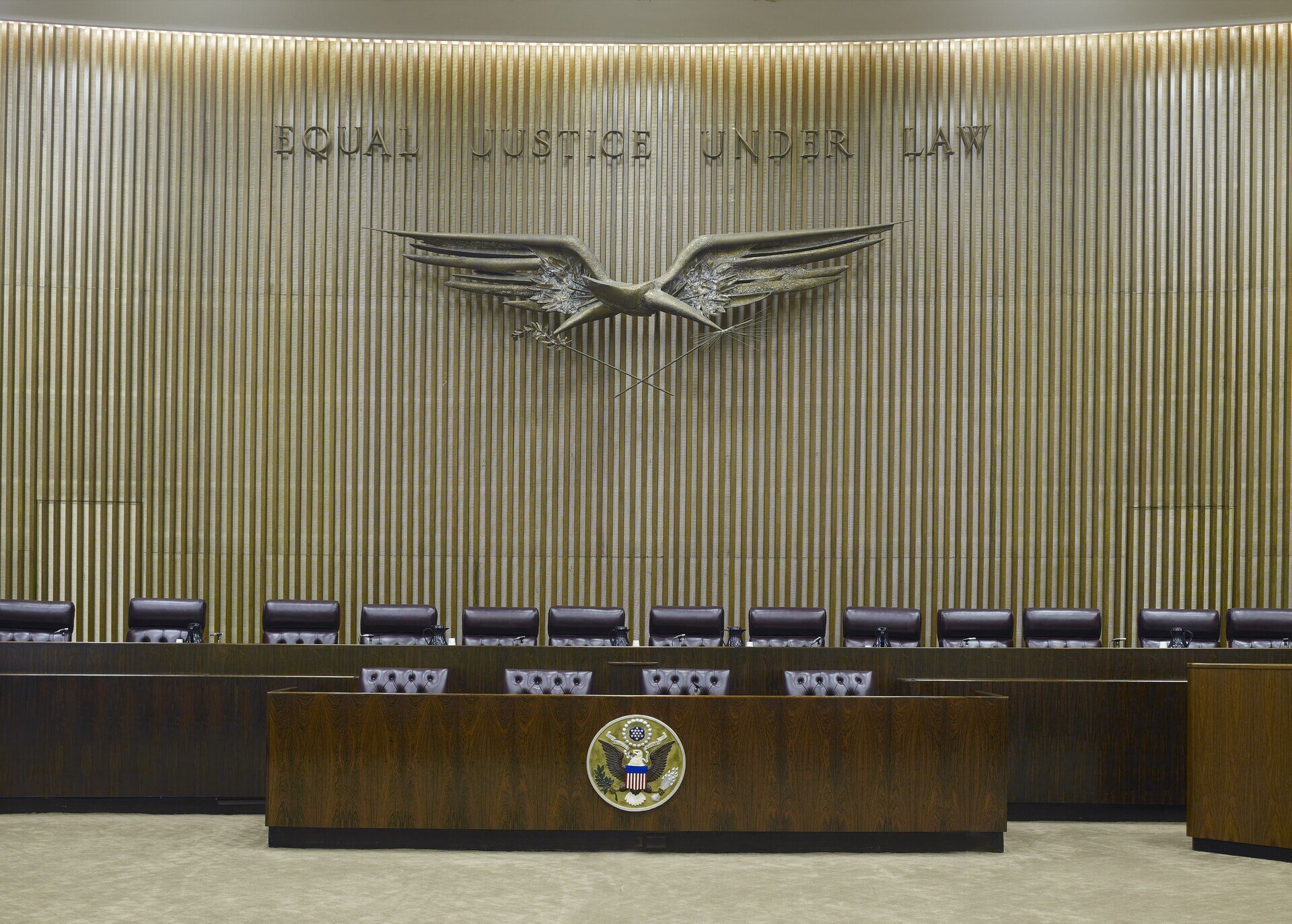
For a year and a half, the most dangerous room in this story has been a waiting room. People went to immigration court because the law told them to, sat through a hearing that was supposed to be routine, and were taken in the hallway outside. It happened often enough in one building in Lower Manhattan that lawyers started describing the floors by number.
Last week a federal judge said that practice was built on nothing, and set it aside.
That is real, and it is worth understanding exactly, because a ruling like this can be read two ways and both of them will hurt someone. It is not the end of arrests at courthouses. It is also not nothing. The difference between those two readings is a doorway, and there are several doorways in a person’s week.
What the judge actually did
On Sept. 30, Judge P. Kevin Castel of the Southern District of New York signed a 36-page opinion and order in a case called African Communities Together and The Door v. Lyons, No. 1:25-cv-06366-PKC. The lawyers who brought it announced it the following afternoon, and the newsrooms reported it that same Thursday, which is why you may have seen it dated Oct. 1.
This page has read the court’s own filing stamp on that document — entry 110, filed 09/30/26, 36 pages. It has not read the opinion’s text. The copy posted by the plaintiffs’ lawyers is a scan with no text a computer can pull out of it, and the public docket system was unreachable from here. So everything below about what the order says comes from two newsrooms that read it: Gothamist, whose reporter Arya Sundaram quotes from the opinion directly, and amNewYork, whose Dean Moses reported the same ruling the same day. Where they agree, this page says so. Where only one of them carries something, this page names which.
What they describe is this. In 2025 ICE adopted a policy that let officers arrest people at courthouses. Both newsrooms report that the government later admitted, in an unusual letter from the U.S. Attorney’s office, that the memo it had been relying on throughout the case did not actually apply to immigration courthouses at all — it applied to criminal ones. The judge found the agency’s resulting practice “arbitrary and capricious” under the Administrative Procedure Act, the law that governs how agencies have to explain themselves. Gothamist quotes him writing that ICE “offered no explanation of why the exercise of unfettered discretion by ICE officers with no guidance whatsoever was a better option” than what came before.
So he set the 2025 policy aside as it applies to immigration courthouses, and the older rules came back. amNewYork reports twice that what is restored is a 2021 policy permitting arrests at or near immigration courts only in limited circumstances. Gothamist describes those earlier limits as exceptional cases — a public-safety or national-security threat, or an imminent risk of violence.
The door that closed
If you have a hearing at an immigration court, the thing that has been happening to people in those hallways is now against the rules the agency has to follow, across the country, and it took effect immediately.
Hold that lightly in one respect. Gothamist reports that Castel himself flagged the reach of his own order: he noted a 2025 Supreme Court decision saying district courts may not issue nationwide injunctions, wrote that it “certainly could be” that setting aside an agency action raises the same concerns, and said he was bound by his circuit’s precedent “as of the date of this Opinion.” That is a judge saying out loud that the nationwide part of this may not survive. No appeal has been reported. A Homeland Security spokesperson did not respond to Gothamist’s request for comment, and this page has seen no statement from the agency about the order at all.
A rule can be correct today and narrower in a month. Plan around what you have to do, not around what a court might still do.
The doors that did not close
This is the part that matters most, because the word “courthouse” is doing a lot of work in the headlines.
Criminal and state courthouses. The order is about immigration courts. The 2025 guidance the government leaned on was written for criminal courthouses in the first place. If you have a traffic case, a county criminal matter, a family court date, a hearing about a licence — this ruling is not about that building.
ICE check-ins. A check-in is not a hearing. amNewYork reports that arrests at 26 Federal Plaza have slowed but have not stopped, that one happened the week before the ruling according to courthouse sources it does not name, and that some have moved to other floors of the same building, including during check-ins, with enforcement increasingly affecting African immigrants in New York. Nothing in this order covers a check-in. Go to yours, and treat it as this page has always said to treat it: know where you are going, tell someone at home the time and the address, and arrange beforehand who collects the children if you are late.
The road, the workplace, the front door. Every doorway this page has written about for two months is still open. The gas station. The school run. The van home from a shift. A memo inside ICE dated the same Sept. 30 told officers not to chase cars that fail to pull over — and the agency’s own answer was that vehicle stops and arrests continue. One rule about one room does not move any of that.
Why you still have to go to your hearing
Here is the part a frightened person gets wrong in the other direction.
Under federal law, a person who does not appear at an immigration hearing can be ordered removed in absentia — ordered deported without being there. amNewYork reports that the opinion itself notes this bind: fear of arrest pushed people toward staying away, and staying away carries its own order. That was the harm the case was about. Missing a hearing because you have heard that courts are dangerous is how a person turns a case they might have won into an order they now have to fight.
So go. And check your own date rather than anyone’s description of it. The immigration court’s automated line is 1-800-898-7180, open 24 hours, and acis.eoir.justice.gov shows the most recent case. Both work from your A-number. Both are in English and Spanish only — there is no Creole option, so if you need one, sit with someone who can listen with you. And if you have never had an immigration court case, you will find nothing there. That is not an error and not a trick; it means the system has no case for you.
Whatever you are told, write it down with the date you called, and give a copy to a lawyer and to someone you trust, not only to yourself. A date you cannot prove you checked is the part of the record that goes missing.
What has not changed
Nothing in this order touches Temporary Protected Status. Haiti and Syria remain terminated, effective July 27, 2026, and those work permits expired the same day. This page re-read both the USCIS status page and its I-9 Central news index on Oct. 3: the most recent Haiti item there is still dated July 29, 2026, there is no Syria item at all, and nothing on either page extends any Haitian or Syrian work permit.
Losing TPS is still not a judge ordering you personally to leave. If a judge has already ordered your removal, that order did not go away, and this is the week to put it in front of a lawyer — the ruling above changes where ICE may arrest, not whether an order exists.
No new law has given anyone their status back. There is nothing to sign up for, and nobody may charge you a fee to put you on a list for any of this.
This week
Three things, and none of them needs anyone’s permission.
Go to every hearing and every check-in you have, and confirm the date yourself on the line above. Write down who is at home and who can collect your children, and leave copies of your documents with that person — the family plan is one page and takes an evening. And if you see an arrest, or one happens to you, record it if you can do so safely, write down the date, the time and the exact place, and get that to a lawyer instead of only posting it.
Know your rights · Find free legal help · Report an ICE sighting · Find someone who has been detained · Ask for your records in writing
A judge closed one door this week. Count the others, and keep going to the appointments that are yours to keep.
Sources
- Gothamist (Arya Sundaram, Oct. 1, 2026, 21:47 UTC) — 'US judge in NY indefinitely blocks ICE from making arrests at immigration courthouses.' Read in full from the outlet's own page; this page's account of what the opinion says comes from this report and from amNewYork
- amNewYork (Dean Moses, Oct. 1, 2026, 21:44 UTC) — 'Federal judge strikes down ICE immigration courthouse arrest policy across the country.' Read in full from the outlet's own page
- The order itself, African Communities Together and The Door v. Lyons, No. 1:25-cv-06366-PKC (S.D.N.Y.), docket entry 110, filed 09/30/26, 36 pages, posted by the plaintiffs' counsel. This page read the court's filing stamp on the document; the opinion's own text is not machine-readable in this copy and this page has not read it
- American Civil Liberties Union and New York Civil Liberties Union, press release, Oct. 1, 2026, 4:30 pm — 'Federal Court Strikes Down ICE's Courthouse Arrest Policy Nationwide.' Counsel for the plaintiffs; primary for what the groups did and said, not for what the order holds
- USCIS — Temporary Protected Status: the Haiti and Syria designations are terminated, effective July 27, 2026. Page stamp 09/09/2026, re-read Oct. 3, 2026 against this site's status record
- USCIS I-9 Central, Form I-9 related news — the dated index of every TPS employment-authorization announcement by country. Its most recent Haiti item is dated July 29, 2026; there is no Syria item on the page, and nothing on it extends any Haitian work permit. Re-read Oct. 3, 2026
Community discussion
Comments are moderated before they appear. Never share your A-number, address, or case details here, and never trust legal advice from comments — talk to a licensed attorney (free help here). Comments are provided by GraphComment (EU-hosted, GDPR-compliant) and are optional.