The Money, the Phone, and the Fee Nobody May Charge
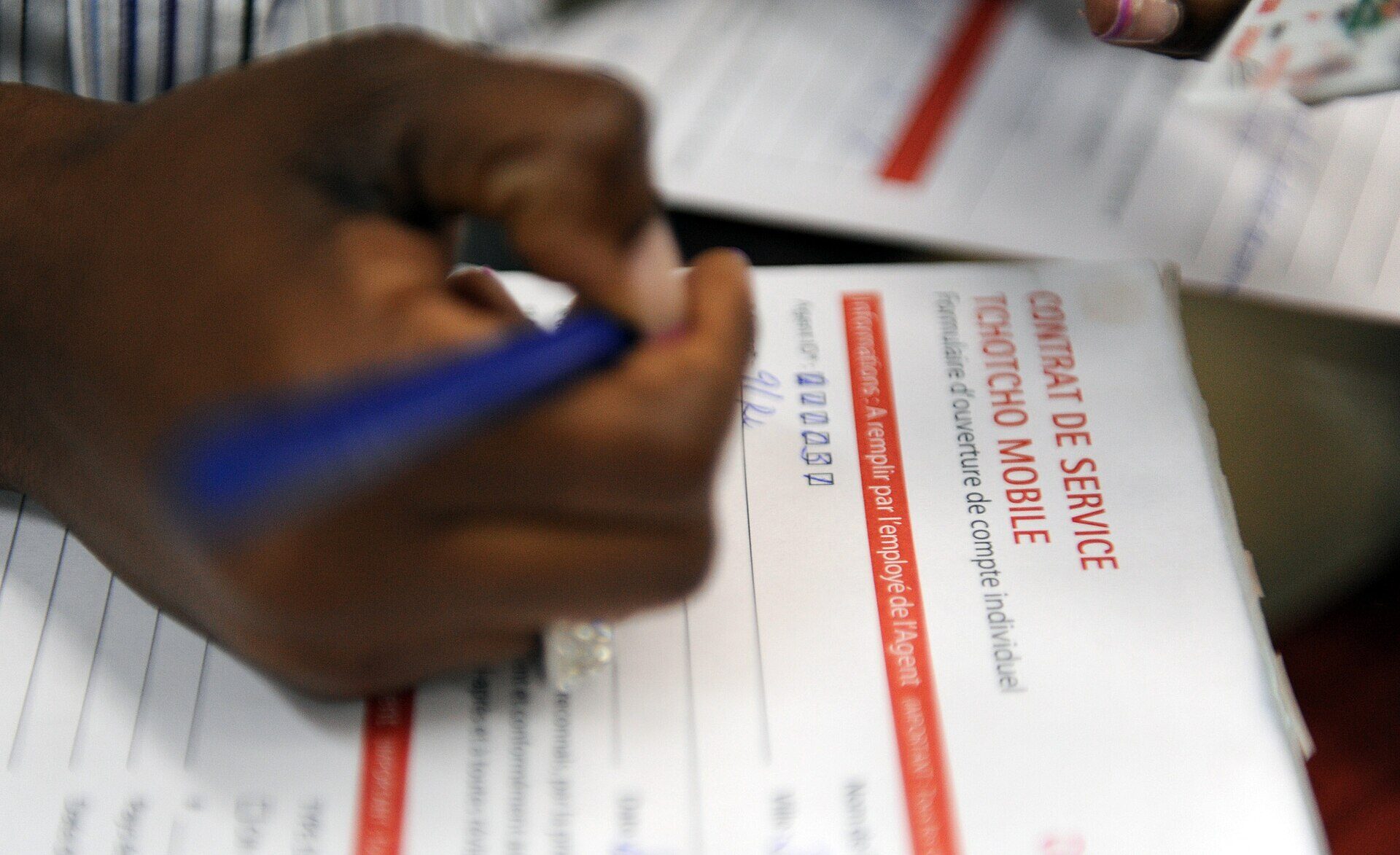
On Monday in Port-au-Prince, the director general of Haiti’s social assistance fund said something at a press conference that has nothing to do with American immigration law and everything to do with how a Haitian family survives a month.
He said the money had started moving. And then he said, in Creole, that nobody from his own agency would ever ask you for your secret code.
Both halves matter. This page is written for people whose Temporary Protected Status ended on July 27, and for the relatives holding those households together. Much of what reaches you this month will be about money — announced, promised, sent, or quietly taken. Here is what moved this week, what did not, and the one sentence worth carrying in both directions.
What happened on Monday
Haiti’s Fonds d’assistance économique et sociale — the FAES — says it has begun paying the school subsidy it announced back in August, and that this first wave reaches 94,084 people: 73,948 parents of schoolchildren and 20,136 families it classes as vulnerable.
The payments do not come as cash at an office. They land in mobile money accounts — 47,707 through NatCash, 46,377 through MonCash — on the phone number registered to each person. Each one is meant to receive 15,000 gourdes net, and the programme covers the withdrawal fee, so an account should show 15,342 gourdes on NatCash or 15,380 on MonCash. The director general, Kesner Romilus, said a second wave of 55,916 people is expected at the end of the week.
That is the whole of what was announced. One newsroom, Vant Bèf Info, carried it; this page found no other, and the FAES’s own website had published nothing about the transfer, its newest posting dated Sept. 28.
If someone in your family is expecting this money: it arrives on their own phone number, not on anyone else’s, and not through a person who offers to collect it. Tell them to check the balance themselves.
The sentence that travels
Here is the part that is worth more than the money.
Romilus warned beneficiaries directly, and the warning is plain enough that it needs no translation into officialese: each person must use their own phone number, never lend that number to anyone and never borrow anyone else’s, and never give their NatCash or MonCash secret code to a single soul — even if that person says they work for FAES, for Natcom, or for Digicel. And, he said, the FAES does not ask anybody for money to be put on the list.
Read that last clause again. It is the same clause this page has printed about half a dozen American things since August, and it is the one that keeps money in your pocket.
Nobody may charge you a fee to put your name on a list. Nobody may charge you to sign you up for a bill in Congress that has not become law. Nobody may charge you to add you to a lawsuit. No government office — not in Haiti, not here — will ever telephone you and ask for the secret code to your phone money or your bank account.
Fraud follows relief programmes the way weather follows a season. The moment a government announces money is moving, somebody starts calling to ask for a fee to make sure you get it. The announcement is real; the fee never is.
This week: if anyone asks you for a payment or a code in order to “register” you for anything at all, you have just identified them. Hang up, and tell the relative who is most likely to get the same call.
Why this page prints no total
The subsidy is real. The total is not something this page is willing to put a number on.
Haiti’s government has now described the size of this programme in three different ways: 140,000 parents in August, 130,000 parents plus 30,000 families in September, and 150,000 families on Monday. Those are not three measurements of one thing. This page does not know which is current, so it prints none of them as a total — and none of them is evidence that a particular household is on the list.
The 15,000 gourdes is about $115, converted at the Banque de la République d’Haïti reference rate for Monday, Oct. 5, which was 130.55 gourdes to the dollar. Neither the fund nor the education ministry has published what a school year actually costs a Haitian family, so that figure is one payment and not a plan.
And there is still nothing to apply for. On Sept. 8 this page said it could not confirm how a family gets onto this list. The channel is now clear — the money arrives by mobile transfer — but the list was drawn up before the school year began, and no office is publicly taking new names. A family that arrived in Haiti last month is almost certainly not on it.
What to do with that: do not send money home on the assumption that a subsidy is coming to a particular household. Ask the household to tell you what actually landed.
Where money did arrive
Two things that did reach people this month are already on this page, and both are worth repeating in the same breath as the fraud warning, because they show what a real channel looks like.
In Springfield, Ohio, a benefit concert raised more than $430,000, earmarked for legal help, food, medication and rent. In the same city and in others, churches have been delivering groceries and helping with rent and utilities, out of their own collections and grant money.
Notice what those have in common. Nobody paid to get on a list. The help came through institutions with names and telephone numbers, and the people running them said out loud what it cannot do: a church is not an immigration lawyer, and no congregation can decide anybody’s case.
That is the test. Real help tells you its limits without being asked. A fee tells you nothing and asks for your code.
This week: if you need food, rent help or a lawyer, go through an organisation that will say its own name and its own limits. Our help page lists the ones this site has verified.
A pause is not a stop
One more thing happened this week that could easily be misread in the comforting direction.
On Sept. 28, at Akron-Canton Regional Airport in Ohio — the airport Ohio’s removal flights leave from — a charter jet taxiing for takeoff clipped the tail of a second jet parked on the tarmac. Both aircraft were grounded for inspection, and immigration flights at that airport stopped for much of the week.
They did not stop. They moved to Youngstown-Warren, about an hour away, and flight-tracking records show them back at Akron-Canton by Friday. The Ohio State Patrol has an open investigation into the collision. ICE has not answered that reporter’s questions about the airport in more than a month.
A hole in one week’s schedule at one airport is not a change in anybody’s case, and it is not time bought. If someone in your family is being held for ICE in an Ohio jail, the days that count are the days before a flight, not the morning of one.
This week: check where that person is every single day, and write down the facility, the date and the A-number each time. If the name is missing from ICE’s online locator, that tells you about the website and not about the person — ICE removed more than 16,000 names from it in September. Keep calling the lawyer. And if you learn someone has been moved out of state, tell a lawyer that day, because a petition challenging a detention is filed where the person is held, and a transfer moves the courthouse.
What has not changed
TPS for Haiti and Syria is terminated, effective July 27, 2026. The USCIS page still says so, stamped Sept. 9 and unmoved, and the agency’s own index of work-permit announcements still shows nothing for Haiti newer than July 29. No court has given anybody their status back, and no bill has become law.
Losing TPS is still not a judge ordering you personally to leave. That remains true for the great majority of people reading this. If a judge has already ordered your removal, that order did not go away, and this is the week to put it in front of a lawyer — and you can check your own case for free, in English or Spanish, by calling the immigration court’s automated line at 1-800-898-7180 with your A-number. If you have never had a case in immigration court, you will find nothing there, and that is an answer too.
This is not a prediction about you.
What you can finish this week, without anyone’s permission and without paying anybody: write down who collects your children if you are not home, and put that person’s name in writing with the school. Copy your documents and leave a set with someone you trust. Memorise one lawyer’s number instead of trusting a phone you might not be holding. And tell every relative on both sides of the water the sentence from Monday’s press conference in Port-au-Prince, because it is the only piece of advice in this article that costs nothing and works in every country: no office will ever ask you for your secret code, and nobody may charge you a fee to be put on a list.
Make a family plan → · Find free legal help · Know your rights · Find someone detained
Sources
- Vant Bèf Info (Ronald André), Oct. 5, 2026 — 'Subvention scolaire : le FAES lance un premier transfert au profit de 94 084 bénéficiaires.' Read in full through the outlet's own RSS content:encoded. The source for the first wave's figures, for the NatCash and MonCash splits, for the 15,000-gourde net payment and the covered withdrawal fee, and for FAES director general Kesner Romilus's fraud warning, which the article quotes in Haitian Creole. This was the only newsroom carrying Monday's announcement that this page could find
- FAES — Fonds d'assistance économique et sociale, the fund's own website and news feed, read Oct. 6, 2026. It confirms Kesner Romilus as director general, but it had published nothing about this transfer: the newest item in its feed is dated Sept. 28, 2026. Recorded here as a verified negative, not as a confirmation
- Juno7, Oct. 5, 2026 — the Banque de la République d'Haïti daily reference rate for Monday, Oct. 5, 2026: 130.55 gourdes to one U.S. dollar. Used for the one currency conversion in this article
- Ideastream Public Media (Doug Oplinger), Oct. 2, 2026 — 'Deportation plane bumps wing of another jet at Akron-Canton.' Read in full at WOSU and WYSO, which carry the same story; the publisher's own copy returns a 404. The source for the Sept. 28 collision, for the move to Youngstown-Warren, for the return of flights on Friday, for the Ohio State Patrol's open investigation, and for ICE not answering the reporter's questions for more than a month
- USCIS — Temporary Protected Status: the Haiti and Syria designations are terminated, effective July 27, 2026. Page stamp 09/09/2026, unmoved; re-read Oct. 6, 2026 against this site's status record
- USCIS I-9 Central, Form I-9 related news — the dated index of every TPS employment-authorization announcement by country. Its most recent Haiti item is still dated July 29, 2026, and nothing on the page extends any Haitian work permit. Re-read Oct. 6, 2026
Community discussion
Comments are moderated before they appear. Never share your A-number, address, or case details here, and never trust legal advice from comments — talk to a licensed attorney (free help here). Comments are provided by GraphComment (EU-hosted, GDPR-compliant) and are optional.