The Paper That Says Who Keeps Your Child
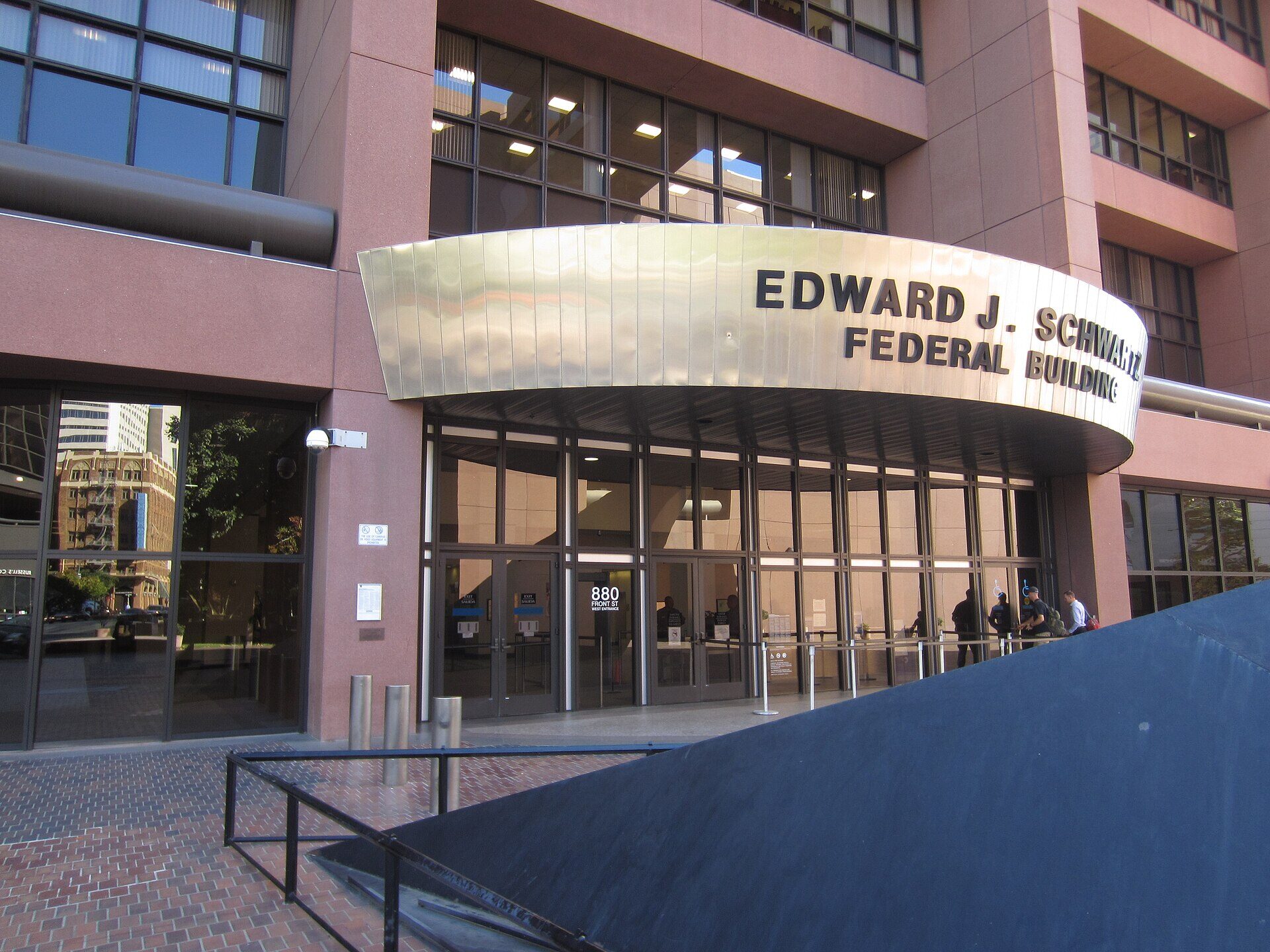
A letter came for an 8-year-old. It told him to come and meet an ICE agent at the federal building in downtown San Diego. His uncle took him there on Wednesday, the school district says, “because he did not want to break the law.”
The child did not come home.
This article is about the piece of paper that decides, inside an office, who is allowed to stand next to a child — and about what a household can put in order this week without anyone’s permission. None of what follows changes anyone’s immigration status. Losing TPS is not a deportation order. That sentence is still the most important one on this page, and nothing this week touched it.
What three newsrooms reported
On Friday, Nov. 6, NBC 7 San Diego, KPBS and ABC 10News each reported that an 8-year-old boy was taken into ICE custody two days earlier, on Wednesday, Nov. 4, at a scheduled immigration check-in.
San Diego Unified School District officials say the boy is a third grader at Fay Elementary School in City Heights, that he had held Temporary Protected Status, and that he had been living with his uncle since his father was deported in March 2025. Wister Gaetan, co-founder of the Haitian Bridge Alliance, told 10News the family had been here with TPS from Haiti.
A volunteer court observer, Karen Pohl of the group Detention Resistance, recorded video at the federal building that day. NBC 7 describes the video as showing three armed federal agents walking the boy away from ICE’s field office and into an elevator. Pohl told KPBS she had never watched a child be detained alone like that.
By Friday the district’s superintendent, school board members, San Diego City Councilmember Sean Elo-Rivera and teachers’ unions had signed a three-page letter to Homeland Security Secretary Markwayne Mullin and Health and Human Services Secretary Robert F. Kennedy Jr., asking that the boy be returned to his uncle and that the agencies change how they place school-aged children taken into federal custody. The school is providing crisis counselors.
Two accounts, and the one this page cannot settle
A Department of Homeland Security spokesperson said the uncle could not establish legal guardianship; that under the Trafficking Victims Protection Reauthorization Act, a 2008 law written to protect trafficking victims, the boy was treated as an unaccompanied minor; and that “out of an abundance of caution and to ensure the child’s safety, ICE determined it was best to remove the child from the household and place him in the care of the Office of Refugee Resettlement.” The same spokesperson told NBC 7 that allegations ICE took a third grader into custody “to be placed in detention” are false.
Cody Petterson, a school board trustee, says the uncle was listed on the school’s own records as an authorized caregiver, and was the person the boy’s father had entrusted him to. “I am not surprised ICE would say just about anything to justify their actions,” he told KPBS. He also said he did not know the full details of who holds legal custody.
Both accounts are printed here as they were given. Nothing has resolved which is right, and this page is not able to say who holds legal custody of this child. What matters for everyone else is narrower and is not in dispute: the reason the government gave, in its own words, was a document — who could prove, at a counter, that they were entitled to have the child with them.
If a child in your house is not legally yours
This is the part of the story that reaches past one family, and it is worth being plain about what it is and is not. It is not a prediction about you. It is not a reason to keep a child away from school or a parent away from a lawyer. And it is not advice about any particular case, because the rules on guardianship are set state by state and this page cannot tell you which one applies to your household.
What it is, is a question worth asking this week: if someone asked you today to prove that you are entitled to be caring for the child who lives in your home, what would you hand them?
Many households in this community are holding children who are not legally theirs — nieces and nephews, a cousin’s child, the child of a friend who was detained, a grandchild. Often the arrangement is real, settled and years old, and there is nothing on paper at all. Sometimes there is a line on a school emergency card, which is what the district says existed here. A school record naming an authorized caregiver is a genuine document and it is worth having. It is not the same thing as a court’s finding on guardianship, and in this case the two were weighed by people who did not agree.
So: ask a lawyer now what form of guardianship, custody or caregiver authority your state recognises, which one fits your family, and what paper proves it. Free legal help this page has checked is listed at /help/. Get whatever you arrange in writing, keep your own copy, and give a copy to a lawyer and to one trusted person — not only to an officer who asks for it. /tools/ has the record-keeping checklists.
If you are the one going to the check-in
The uncle in this story did what this page, and almost every lawyer, tells people to do: he went. That is still the right instruction, and the reason has not changed — missing an appointment or a hearing can produce an order against you that is far harder to undo than anything that happens in the room.
But go with your record in your hand, not only in your memory. Before you go, write down the date and the time of the appointment. Afterwards, write down what you were told, who told you and what you signed, and send that note to your lawyer and to someone you trust the same day. If you are bringing a child, bring whatever paper you have about who cares for that child, and ask your lawyer first whether the child needs to be there at all. /rights/#kyr sets out what you can and cannot be asked to do.
Decide in advance, with a lawyer, who takes your children if you do not come back, and write that down too. A U.S.-citizen child cannot be deported, but a parent who is being removed may have very little time to decide whether the child goes.
Paper does not enforce itself. This page’s entry of Nov. 6, below, reports a federal judge in Colorado summoning ICE’s Denver field office director to court over people being re-arrested after judges ordered them released. The conclusion is not that documents are worthless — it is the opposite. The order, the receipt, the dated note and the copy you kept are what a lawyer later builds on.
Where a child in federal custody actually is
DHS says the boy was placed in the care of the Office of Refugee Resettlement. That office is part of Health and Human Services. It is not the same system as ICE detention, and that distinction matters when a family starts making calls.
Nobody has said publicly where he is. Petterson said officials were “not entirely clear,” and believed the boy might be in Los Angeles. 10News says it asked the Office of Refugee Resettlement directly and had not heard back. This page could not confirm his whereabouts either.
If a child you care for is taken, the paperwork an adult has to complete to ask to take in a child who is in government custody is the subject of this page’s entry of Nov. 5, which sets out what that form asks for. For adults in immigration detention, /find-someone-detained/ is the page to work from, and the instruction there has not changed: check daily, and write down the facility and the date every single time.
What has not changed
TPS for Haiti and Syria is terminated, effective July 27, 2026, and those work permits expired the same day. Checked again today: USCIS still shows both designations terminated, and the Federal Register still carries no new TPS notice for any country. There is nothing new to apply for, and nobody may charge you a fee to sign you up for anything — not for a bill, not for a court case, and not to “fix” a custody problem.
Losing TPS is still not a judge ordering you personally to leave, and most people who lost it have no such order. If a judge has already ordered your removal, that order did not go away, and you should see a lawyer this week.
In Haiti, the Associated Press reported on Friday that one of the country’s most powerful gangs says it has approached the state disarmament commission asking for talks. The commission told the AP that it must follow the government’s own roadmap for any dialogue with armed groups. No talks have been announced, the fighting did not stop, and no authority has said any road, neighbourhood or airport there is safe. Nobody has to leave. If you are weighing a return, talk to a lawyer first, because leaving can affect whether you can come back.
And if a child in your home is not legally yours, the single thing worth finishing this week is the paper that says who keeps them.
Sources
- NBC 7 San Diego, 'ICE takes 8-year-old Haitian boy into custody at San Diego check-in', by Shelby Bremer, published Nov. 6, 2026 at 20:01 Pacific time, read in full
- KPBS, 'Haitian boy, 8, detained during scheduled immigration appointment', by Alexander Nguyen, dated Nov. 6, 2026 in the article's own URL path, read in full
- ABC 10News San Diego (KGTV), 'San Diego leaders demand answers after ICE detains 8-year-old boy during immigration check-in', by Laura Acevedo, published Nov. 6, 2026 at 16:32 Pacific time, read in full. The station discloses that the piece was reported on air and converted to text with the assistance of AI, and says its editorial team verifies the reporting
- Colorado Politics, 'Federal judge explores breakdowns at Colorado ICE, U.S. attorney offices', by Michael Karlik, published Nov. 6, 2026, read in full
- The Associated Press, 'Powerful Haitian gang reaches out to state disarmament group as gunfights persist', dateline San Juan, Puerto Rico, published Nov. 6, 2026, read in full through ABC News, which carries the AP wire
- USCIS, 'Temporary Protected Status', read Nov. 7, 2026. It lists El Salvador, Lebanon, Sudan and Ukraine as designated, says the Haiti TPS designation and the Syria TPS designation are each terminated effective July 27, 2026, and carries its own last-updated stamp of 10/20/2026
- Federal Register, quoted-phrase query for "Temporary Protected Status", read Nov. 7, 2026, HTTP 200. The newest document numbers are unchanged from the Oct. 23 baseline — 2026-21684, 2026-21024, 2026-20955 — so there is still no new TPS notice for any country. The public-inspection list carried no USCIS, State or EOIR item touching this readership
- This page's own feed record, for every fact attributed below to an earlier dated entry: the Nov. 5 entry on what the federal form asks of an adult who offers to take in a child in government custody; the Nov. 3 entry on the letter to the United Nations; and the Nov. 2 entry on people being re-arrested after a court ordered them released. Each is cited at its own published date and none of it is presented as new today
Community discussion
Comments are moderated before they appear. Never share your A-number, address, or case details here, and never trust legal advice from comments — talk to a licensed attorney (free help here). Comments are provided by GraphComment (EU-hosted, GDPR-compliant) and are optional.