The Water You Carry to Work
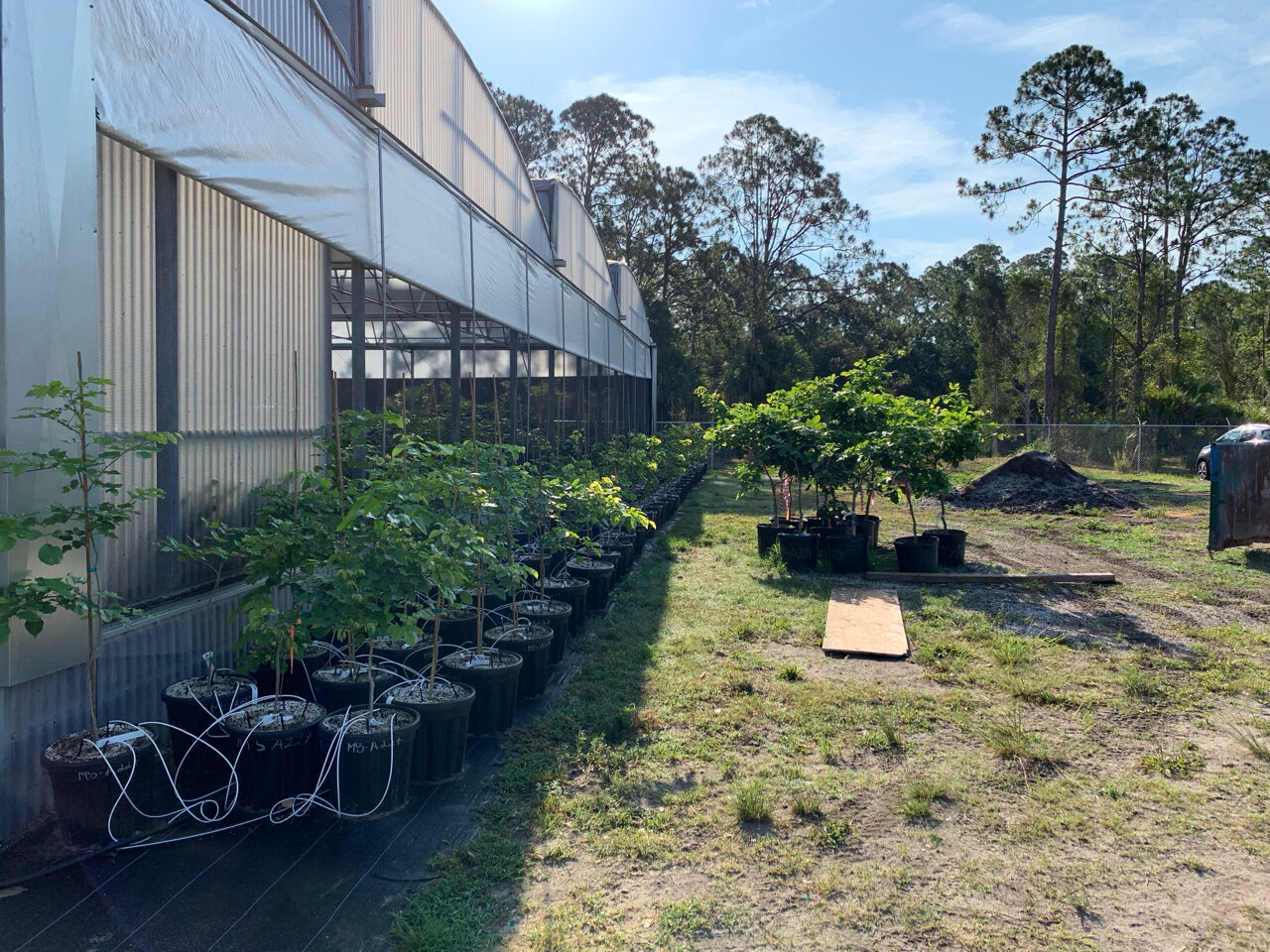
A newspaper spent the summer in the plant nurseries of South Florida, and on Thursday, Nov. 5 it published what it found. Most of what is in that story is not about immigration at all. It is about water, and shade, and whether a person is allowed to stop for fifteen minutes.
But one of the two workers the Miami Herald follows through the piece is a Haitian woman, and that is why it is on this page. She is Shelda Joseph, 34. The paper says she fled violence in Haiti three years ago, that she had been a journalist there and kept a small grocery store, and that she now sows, trims, weeds and carries plants for eight hours a day, five and sometimes six days a week, at a large nursery in Homestead, for $14 an hour. She has a ten-year-old daughter. What is left at the end of the month goes to her mother, who is ill and still in Haiti.
Nobody in that reporting says whether she holds, or ever held, Temporary Protected Status. This page is not going to guess, and it cannot tell you what her position is or what yours is. What it can do is separate the parts of a working day that a government decides from the parts that you still decide — because those are not the same parts, and this week they are worth pulling apart.
The permit and the job are two different papers
Start with what has not moved. Checked again this morning, Monday, Nov. 9: no notice about Temporary Protected Status has been published in the Federal Register for any country since the election, and the newest one on the record is still dated Oct. 23. USCIS still lists El Salvador, Lebanon, Sudan and Ukraine as designated, and still says in its own words that the Haiti and Syria designations are terminated, effective July 27, 2026. The agency’s own employment-authorization news index still carries no permit extension for any country.
So the permit position is what it has been since July. That is a hard thing to read, and it is not the whole of what you are carrying.
It is worth being exact about the difference, because the two get collapsed and people make decisions on the mush. Whether you may lawfully be employed is one question, and it is a question for a lawyer who knows your file — not for an employer, not for a neighbour, and not for anyone who offers to sort it out for a fee. Whether the place you work owes you clean drinking water is a different question, with a different answer, decided by different people. The Herald reports that OSHA requires nurseries to provide clean drinking water. It also reports that OSHA told the paper it has 22 inspectors covering Miami-Dade, Broward, Monroe and Palm Beach counties, which the paper works out to roughly one inspector for every 151,810 workers.
This page cannot tell you whether to make a complaint to a federal agency, or what would happen to you if you did. It does not know, and inventing an answer in either direction would be worse than saying so. Put that question to a lawyer or to a workers’ organisation before you act on it. Do not put it to your employer.
What the paper found in the rows
The scale explains why nobody notices: Florida has more than 4,200 registered nurseries, growing roughly 60% of this country’s houseplants. The paper’s figures for the heat, the county’s heat advisories and the national death toll are set out in full in this page’s Nov. 5 entry, below.
Joseph told the paper that the water her employer provides “is not safe drinking water,” that it tastes of cleaning chemicals and that there is not enough of it, so she brings her own from home. The other worker the paper follows, Natividad Chaman, 31, is from Guatemala; she carries a cooler with a dozen bottles in it.
The paper also reports what is not coming. Miami-Dade County came close in 2023 to requiring clean water, shaded breaks and heat training; industry lobbyists weakened the measure, and the Florida Legislature then barred local governments from passing worker heat protections at all. A federal heat standard drafted under the previous administration was shelved. “No government help is coming,” the paper writes, in its own voice.
That sentence is the reason this article exists. When the help is not coming, the things you can do yourself stop being small.
The water, the shade and the fifteen minutes
Dr. Cheryl Holder, an internist who directs Florida Clinicians for Climate Action, told the paper that someone sweating in that heat needs to drink “around the clock” — at least every fifteen minutes — and needs a shaded place to rest, ideally with a fan, because without one it is close to impossible to cool down.
She also described what going past dehydration looks like from the outside, and this is the part to know before you need it. The brain begins to malfunction. The person may slur their words or stumble. They may have a seizure or lose consciousness.
So: carry your own water if what you are given is not safe to drink, and drink it before you are thirsty. Find where the shade is on your site before the day you need it. And if the person beside you starts slurring or stumbling, get them into shade and call for help rather than waiting. None of that requires anyone’s permission, and none of it depends on anybody’s paperwork.
The road to work
The other half of a working day is getting there, and that is where this site’s own record has most to say. The arrests this page has verified since September have not come as door-to-door sweeps. They have come one at a time: at traffic stops, at scheduled ICE appointments, at the door of a federal building. On the Massachusetts South Coast in September, agents stopped cars across New Bedford and the towns beside it on Monday and Tuesday, Sept. 21 and 22, taking people on their way to work, with no notice to the local police; by the end of that week the arrests were being counted across New Bedford, Dartmouth and Fall River.
That is a pattern, not a forecast. This is not a prediction about you, or about your road, or about your town. It is the shape of what has actually happened, which is the only honest basis for deciding what to carry and who to tell.
The step that fits in a week: decide now who gets the phone call if you do not arrive, and make sure that person has the name of your workplace, the road you take and a way to reach a lawyer. Write it down rather than keeping it in your head. Our family plan tools are built for exactly that, and Know your rights covers what to do and not do at a stop.
The paper you keep
Every part of this comes back to the same unglamorous habit, and it is the one thing on this page that works the same whatever your status is.
Write down the date, the time, what happened and who saw it. If you were made to work through a heat illness, write that down. If you were docked pay for drinking water, write that down. If you were stopped on the road, write down where, when, how long, and what was said. Keep your own copy. Give a copy to a lawyer or to somebody you trust — not only to a supervisor, and not only to an officer.
A record you kept at the time is worth more later than a clear memory is, and the Herald’s story shows why the record usually does not exist: the paper agreed not to name either woman’s workplace, because both of them fear retaliation. Fear is a reasonable response. It is also exactly the thing that leaves nothing on paper. Your own notebook is the version of the record that nobody has to approve.
If there are children in your house who are not legally yours, this week is a good week to ask a lawyer what guardianship or caregiver authority your state recognises, and to ask your child’s school in writing who is on file as the authorized caregiver. This page’s entries of Nov. 5 and Nov. 6 go through what that paperwork asks and what happened to one family in San Diego that did not have it.
What has not changed
Losing TPS is still not a judge ordering you personally to leave. Most people who lost it have no such order. If a judge has already ordered your removal, that order did not go away, and you should see a lawyer this week — but that is a minority, and the sentence most readers should take from this page is the first one in this paragraph.
Nobody may charge you a fee to “sign you up” for a workers’ campaign, for a heat complaint, for anything a new Congress might do, or for anything at all that does not exist yet. If someone is selling it, that is the information you needed about them.
And the water is still yours to carry. That is a small thing to be left with. On a day when no government help is coming, it is also not nothing.
Free legal help · Keep your own records · Know your rights · Report an ICE sighting
Sources
- Miami Herald, “‘The nursery is like hell’: Here’s what it costs to grow your houseplants”, by Max Klaver and Ashley Miznazi, published Thursday, Nov. 5, 2026 (Google News RSS pubDate Thu, 05 Nov 2026 10:00:00 GMT; the originating date was resolved there, not at the republisher). Supported by the Pulitzer Center. Read in full from the whole body The Haitian Times republished in its own feed on Nov. 8 in `content:encoded`. Every figure below — 4,200-plus registered nurseries, roughly 60% of domestically grown houseplants, a 108-degree heat index, 37 heat advisories, 582 heat deaths from 2011 to 2024, 22 OSHA inspectors, one per 151,810 workers — is the paper's, in the paper's own sentences
- USCIS, “Temporary Protected Status”, read Monday, Nov. 9, 2026. It lists El Salvador, Lebanon, Sudan and Ukraine as currently designated, and states that the Haiti and the Syria designations are each terminated, effective July 27, 2026. Its own last-reviewed stamp reads 10/20/2026
- USCIS, “Form I-9 Related News”, read Monday, Nov. 9, 2026. The newest Haiti item remains the July 29, 2026 update on the termination of TPS for Haiti; there is no Syria item at all; and no employment-authorization extension has been posted for any country since Oct. 1, 2026
- Federal Register, quoted-phrase query for "Temporary Protected Status", read Monday, Nov. 9, 2026, HTTP 200. The newest document number is unchanged at 2026-21684, dated Oct. 23, 2026, so no TPS notice of any kind has been published for any country since the election
- This page's own feed record, for every fact attributed below to an earlier dated entry: the Nov. 5 entry on the nursery investigation; the Nov. 6 entry on the 8-year-old taken at a San Diego check-in and the Nov. 5 entry on the form an adult files to take in a child in federal custody; and the enforcement card's record of arrests on the way to work in New Bedford, Dartmouth and Fall River on Sept. 21 and 22, as reported by The New Bedford Light and the Fall River Reporter. Each is cited at its own published date and none of it is presented as new today
Community discussion
Comments are moderated before they appear. Never share your A-number, address, or case details here, and never trust legal advice from comments — talk to a licensed attorney (free help here). Comments are provided by GraphComment (EU-hosted, GDPR-compliant) and are optional.