What Tuesday Asks of Your Household
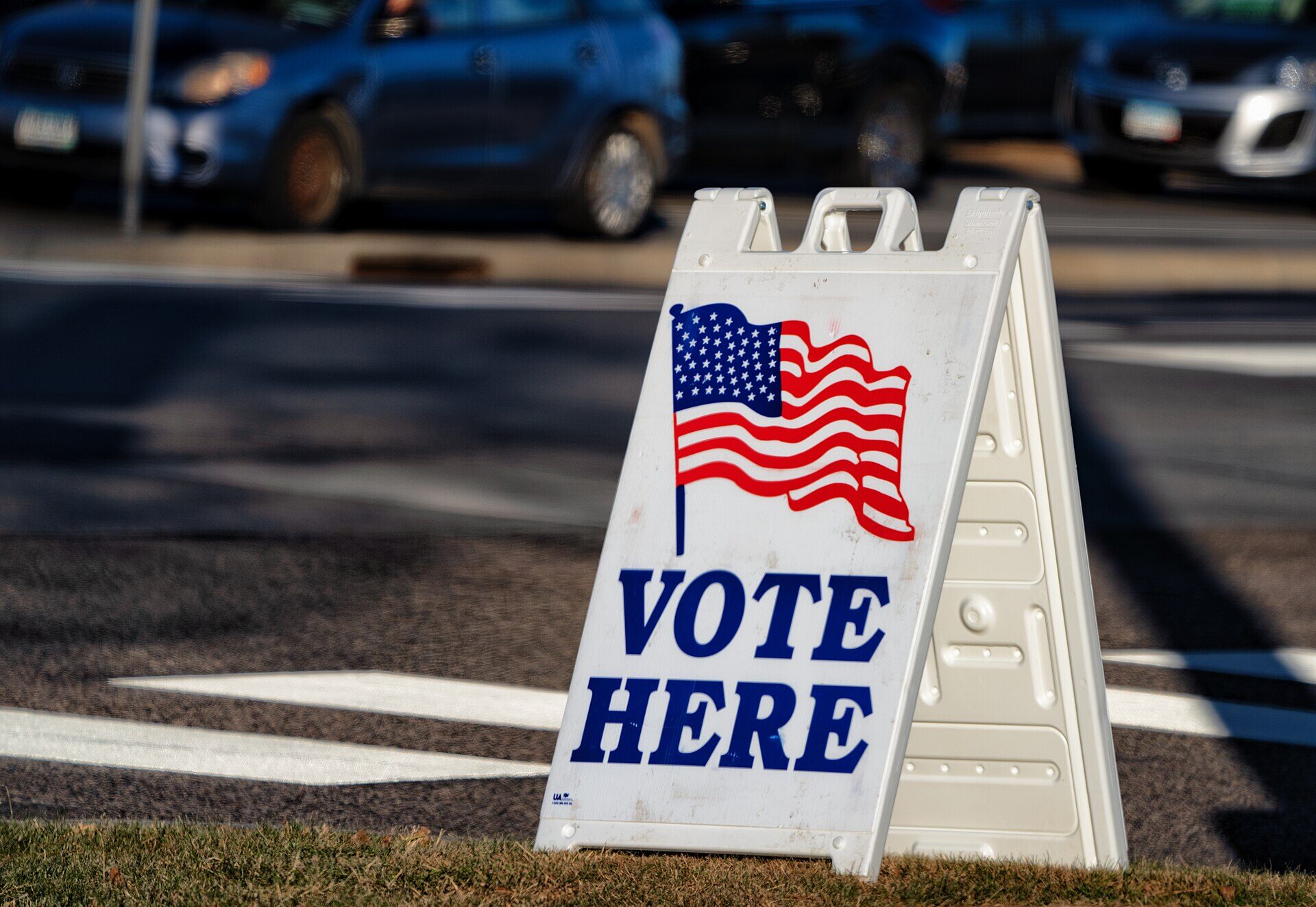
Tuesday, Nov. 3 is election day in the United States. For a lot of the households this page is written for, that sentence raises a question nobody has put plainly: who in this house can vote, and what happens to the people who cannot?
This is not a prediction about you. It is a description of a rule, and of what the government says it is now doing about that rule, set down in one place because the cost of getting it wrong runs in both directions at once. A person who is not a citizen and votes anyway has done the thing the Department of Homeland Security says it will prosecute and deport people for. A person who is a citizen and stays home out of fear has given up something nobody can hand back. Both of those are live this week, in the same kitchens.
1. The one line, and both of its halves
Both sides of this week’s loudest argument agree about one thing, and it is the only claim in this article that nobody disputes: voting in a federal election is for United States citizens.
That line has two halves, and they carry the same weight.
If you are not a U.S. citizen — a green-card holder, someone whose TPS ended on July 27, someone with a case pending, someone with no status at all — do not register to vote and do not vote on Tuesday. Not as a test. Not because a form arrived in the post. Not because someone at a folding table outside a shop said that you could.
If you are a U.S. citizen — including a naturalised citizen, including an eighteen-year-old born here to parents who once had TPS — you can vote on Tuesday, and nothing on this page takes that away from you.
One thing to finish this week: say out loud, in your own house, which people are in which half. Most families already know. The households that get hurt are the ones where nobody ever said it.
2. The adult whose work permit ended
On Sunday, Nov. 1, Fox News reported that the Department of Homeland Security’s general counsel, James Percival, said during a television appearance: “Our message now is, whether it’s now or later, if you illegally cast a vote, we will find you, we will charge you, and we will deport you.” The same report says Percival put the number of people charged in connection with noncitizen voter fraud at more than 200. It also quotes a DHS press release issued on Wednesday, Oct. 28, in which Secretary Markwayne Mullin said ICE “has arrested dozens of noncitizens who illegally voted in American elections” and that “American elections are for Americans only.”
But the figure that should actually change how a household behaves came from somewhere else. On the same Sunday, NBC News published a review of these cases under four reporters’ bylines, and reported more than 200 voting-related federal prosecutions among the 174 million registered voters in the United States. About three-quarters of them, it said, were against lawful permanent residents.
Three-quarters of the people being prosecuted held green cards — people who were lawfully in the United States, who had sat through an interview and a background check, who were here legally on the day they are alleged to have voted. Having a status did not keep them out of these cases.
So if you held TPS and it ended in July, you are not standing in a stronger place than a green-card holder. You are standing in a weaker one. (This page could read only that article’s summary line and its opening paragraph; the rest sits behind the outlet’s subscription wall, and nothing else here is drawn from it.)
One thing to finish this week: nothing at all, which is precisely the point. Do not register, do not vote, and do not walk into an office to ask about it in person.
3. The citizen in the same house
Here is the half that the alarming version of this story leaves out.
Washington’s Secretary of State, Steve Hobbs, publicly challenged Justice Department findings that investigators had identified more than 400 noncitizens illegally registered to vote in his state. “This list includes United States citizens and is not reliable,” he said. “Without individualized proof of ineligibility, it would be both irresponsible and illegal for election officials to decline to process a registered voter’s ballot.” He added that a significant number of the people on the federal list are not currently registered at all, or are inactive.
One side of that is a federal agency’s account. The other is a state’s chief election officer saying the agency’s list has citizens on it. Nobody has published a finding that settles the argument, and this page is not choosing a side in it.
What follows from the disagreement is the same under either version, though, and it is worth saying plainly: a citizen’s vote does not become unsafe because a federal list might be wrong. The people who decide whether a ballot gets processed are election officials, not immigration officers — and in the one state whose chief election officer has spoken on the record, he said that refusing a registered voter’s ballot without individual proof would itself be unlawful.
One thing to finish this week: if you are a citizen and you intend to vote, take your identification and go. If you are turned away, ask for the reason in writing and for the name of the person who told you, and write down the date and the time yourself before you leave. Keep your own records.
4. The person who is not sure what they signed
The hardest person in a mixed household is the one who does not know. A form at a motor-vehicle office. A clipboard outside a supermarket. A volunteer who was friendly and fast and never asked about status.
If that is you, two things are true at the same time. Registering is not the same act as voting, and nothing this page can tell you settles what your particular form said or did. And Tuesday is not the day to find out.
One thing to finish this week: talk to a lawyer before Tuesday rather than after it — free legal help is listed here. Do not go to a polling place to discover whether you are registered, and do not cast a ballot in order to test the answer. Ask for a copy of anything you signed, and keep it. And nobody may charge you a fee for any part of this: not to check a registration, not to take a name off one, not to “fix” a record. There is no list anyone can add you to for money, and anyone who says otherwise is selling something that does not exist.
5. The family on Route Nationale 1
Separately, and for the households whose week is really about Haiti rather than about a ballot: two counts of the dead at Arcahaie were published over the weekend and they are far apart — a provisional local toll of 43, and a named lawyer’s account of four. They are different counts by different counters, no authority has published a figure at all, and this page is neither adding them together nor choosing between them. The attribution for each is set out in full in the Arcahaie entry on the front page, and is not repeated here.
What is not in dispute in that reporting is the road: armed groups were still blocking traffic on Route Nationale 1, police remained inside armoured vehicles while armed men operated a few metres away, and residents of Vigner and Bercy fled again overnight into Sunday. And on the same Sunday, Haiti’s police union said something that bears on every instruction this page has ever printed about calling the police there — its coordinator says more than 60% of the force now works as close protection for officials and business figures, leaving six officers once assigned to Marchand-Dessalines for a population of a hundred and fifty thousand. That is a union’s account, not a government figure.
One thing to finish this week: call before anyone travels on Route Nationale 1, and if a journey can wait, let it wait. Agree beforehand where people go, who they call first, and what time they check in — a plan that does not assume a police response will come. Nobody may charge you a fee for information about which roads are open.
What has not changed
TPS for Haiti and Syria is terminated, effective July 27, 2026, and those work permits expired the same day. USCIS’s own page, read again on Nov. 2, still says exactly that, and still lists only El Salvador, Lebanon, Sudan and Ukraine as designated.
Nobody has to leave. Losing TPS is still not a judge ordering you personally to leave, and most people who lost it have no such order — but if a judge has already ordered your removal, that order did not go away, so see a lawyer this week. Know your rights.
None of the above changes that in either direction. Tuesday is one day. The rule about who may vote is older than this administration and it has not moved an inch this week; what has moved is how hard the government says it is now looking. The quietest and safest thing a mixed household can do between now and Wednesday is to be clear about which of its own members that rule is actually about.
Sources
- Fox News, 'DHS official vows to prosecute and deport noncitizens caught illegally voting ahead of midterms', by Max Bacall, datePublished 2026-11-01T14:06:08-05:00. Read in full as a raw page with a plain browser request, and the reporter's paragraphs separated from the photo captions before anything was taken from it. The source for James Percival's quotation, for his 'more than 200' figure, for the Oct. 28 DHS press release quoting Secretary Markwayne Mullin, and for Secretary of State Steve Hobbs's quoted response
- NBC News, 'Majority of noncitizen voters charged by DOJ are lawfully in U.S.', by Tanish Bijur, Ryan J. Reilly, Michael Kosnar and Justin Goldman, published Nov. 1, 2026, 6:00 AM EST. The article is marked isAccessibleForFree false and only its summary line and opening paragraph could be read; those two carry the 'more than 200 voting-related federal prosecutions', the '174 million registered voters' and the 'about three-quarters ... lawful permanent residents'. Nothing else in this article is taken from it. The real URL was taken from NBC's own news sitemap, not constructed
- Rezo Nòdwès, 'Arcahaie : un bilan local non confirmé fait état de 43 morts et 18 blessés après la mort du chef de gang « Galaxy »', pubDate Mon, 02 Nov 2026 01:53:37 +0000, datelined Arcahaie 1er novembre; and 'Arcahaie réveillée sous des détonations : démenti sur l'arrivée de renforts de la PNH', pubDate Sun, 01 Nov 2026 20:45:06 +0000. Both read in full through the paper's own feed. The source for the provisional 43/13/18 toll and its non-confirmation, for the lawyer Pierre Sauvenel Sylvain's account and his dispute of the 'dizaine de citoyens' report, and for the blocking of Route Nationale 1
- Rezo Nòdwès, 'Plus de 60% de l'effectif de la PNH transformé «bodyguard» des officiels, dénonce le SPNH-17', pubDate Sun, 01 Nov 2026 23:48:54 +0000, read in full through the paper's own feed. The source for Inspector Garry Jean-Baptiste's figure and for the Marchand-Dessalines and La Gonâve examples. Three separately worded searches in two languages returned no other newsroom on it
- USCIS — Temporary Protected Status, read Nov. 2, 2026 (page stamped Last Reviewed/Updated 10/20/2026). Haiti and Syria each 'terminated, effective July 27, 2026'; the countries listed as designated are El Salvador, Lebanon, Sudan and Ukraine
- Federal Register, quoted-phrase query for "Temporary Protected Status", read Nov. 2, 2026. The newest document numbers are unchanged from the Oct. 30 – Nov. 1 baseline and there is no TPS termination or extension notice for any country
Community discussion
Comments are moderated before they appear. Never share your A-number, address, or case details here, and never trust legal advice from comments — talk to a licensed attorney (free help here). Comments are provided by GraphComment (EU-hosted, GDPR-compliant) and are optional.