Five Doorways: Where People Were Actually Taken This Month, and What to Do at Each One
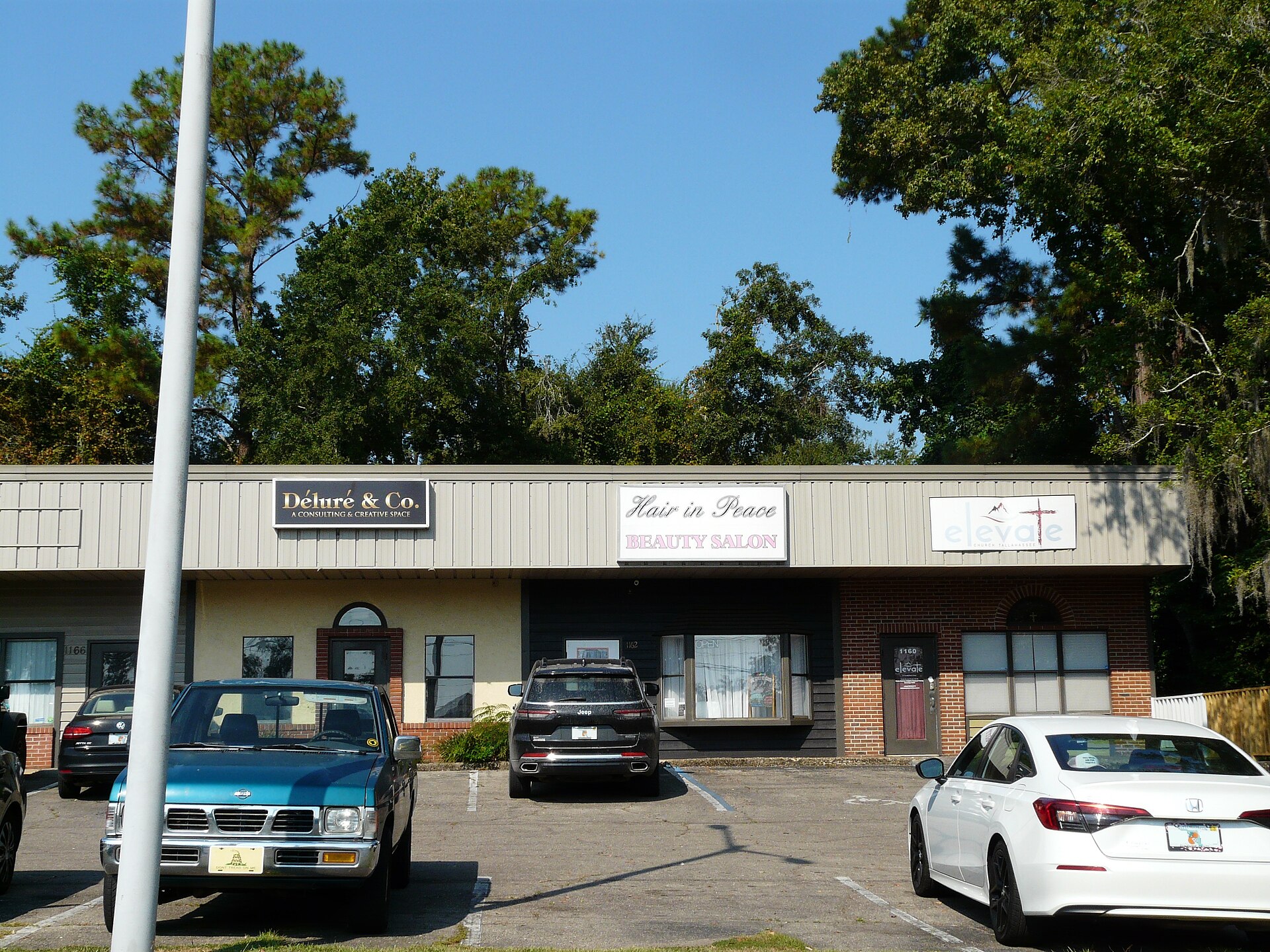
Nobody on this page this month was taken out of a crowd.
Go back through what is verified this month and the arrests happen in five ordinary places: at the back door of a small business, at a check-in window, at a traffic stop, within sight of a school gate, and at the door of an aircraft. Almost everything a household can still decide, it decides at one of them — and it decides better on a quiet Sunday than at nine at night with someone outside.
Temporary Protected Status for Haiti and for Syria was terminated effective July 27, 2026, and the work permits that ran with it expired the same day. Losing that status is still not a judge ordering you personally to leave. A smaller group does hold a removal order signed by an immigration judge, and for them the sentence changes: that order did not go away, and it needs a lawyer this week. This is not a prediction about you. It is a list of places, and of what people found out at each one.
1. The back door of your own business
On Monday, Sept. 14, at about nine in the evening, officers came to the back door of Sirena Prosper’s beauty salon in Pompano Beach, Florida, as she was closing up. Her three youngest children, ages 14, 12 and 10, were outside.
What happened next is disputed. Her niece says the officers would not hand one of the boys back the identity card Prosper had sent out to them and insisted she come to the door for it herself; ICE says its officers were plainly identifiable and that Prosper physically resisted. Both accounts are set out, unresolved, in the entry on this page dated Sept. 24, and this article is not adjudicating between them.
The instruction is the same under either one. You do not have to open your door. You do not have to step outside. You can ask, through a closed door, to be shown a warrant signed by a judge — not an administrative form, a judge’s warrant. And nobody in your household, least of all a child, should be the person who carries your papers out to an officer.
2. The check-in window
Johnny Jules, a Haitian truck driver in Columbus, Ohio, had been reporting to ICE for years. On Sept. 15 he went to a mandatory check-in carrying the documents for the residence petition his U.S.-citizen wife had filed for him. He was taken into custody there, moved to Louisiana, and on Thursday, Sept. 24 he telephoned his wife, Lourdes Miya Dorsonne, to say he had been deported to Haiti. She says his last call from detention dropped mid-sentence and his record then disappeared from ICE’s online detainee locator.
Sirena Prosper’s file shows the same window from the other side: her relatives say she reported in person at Miramar for about twenty years, until the offices told her to report by email instead — which she did, they say, and never got an acknowledgement back.
So if ICE has ever told you to report — in person, by email, or through an app — keep your own dated copy of every message you send and every paper you hand over, and give copies to a lawyer and not only to the officer. A check-in you cannot prove you made is the part of the record that goes missing. Before any appointment, leave your A-number, your lawyer’s name and a copy of every filing with one trusted person who does not live in your house.
3. The traffic stop
Pastor Molis Augustave was stopped in West Manchester Township, Pennsylvania on Sept. 4 for a broken headlight. He was in ICE custody the next day and, his advocates say, on a plane to Haiti on Sept. 24.
Amson Charleston, 26, an IT specialist and youth soccer coach at a York, Pennsylvania charter school, was stopped on Monday, Aug. 24 by a West York police officer; his fiancée and his pastor say it was for a burned-out brake light. But the West York police chief, Matt Millsaps, later told the York Daily Record that the light was not what put Charleston in front of ICE. It was an outstanding state police warrant for an unpaid speeding ticket from March 2025. Without the warrant, the chief said, a burned light would have ended in a warning.
That is a rare thing on this page: a mechanism with something attached you can go and fix. Check whether anyone in your household has an unpaid citation, a missed court date or a fine that has turned into a warrant, and ask a lawyer how to clear it. Replace the bulb. Keep your lawyer’s number on paper in your wallet, not only in a phone an officer may end up holding.
The same doorway catches people who are not driving. In New Bedford, Massachusetts, agents spent two days stopping cars and taking people on their way to jobs in the fish houses, in landscaping and in restaurants. And when an ICE officer shot a delivery driver in Austin, Texas on Sept. 20 — a story that names no Haitian and no Syrian — almost everything known about it came from cameras that were not the agency’s. So if you see an enforcement stop and can record it without putting yourself into it, write down the date, the time and the exact place, keep the original file, and get it to a lawyer rather than only to social media.
4. Within sight of the school gate
A Department of Homeland Security spokesperson told EdSource that “ICE does not target schools” — in a story listing three September arrests within steps of San Diego schools. The district’s superintendent said she had asked federal authorities to stop enforcement near schools at drop-off and pickup, and had received no answer.
The part still entirely in your hands is the pickup list. Name more than one adult you trust, in writing, on your child’s school or day-care emergency card, this week. A U.S.-citizen child cannot be deported; but a parent who is removed may have very little time to decide whether the child goes too, and that is a decision to make with a lawyer beforehand, not on a telephone from Louisiana.
5. The door of the plane, and which country is on the other side
The last doorway is the one people know least about, and this week it produced a real answer.
ICE would not tell The Haitian Times which country Sirena Prosper would be sent to. Her relatives say she was born in Freeport, on Grand Bahama, to Haitian parents, and was brought to Florida when she was six months old — so the country she faced being sent to is one her family says she has never known.
This page read the law behind that question, 8 U.S.C. 1231(b)(2), in the United States Code itself. A person who has already been ordered removed “may designate one country” to be removed to, and the government “shall remove” them there. The same section then gives four grounds for disregarding that choice: the person does not name a country promptly; the named government does not answer within 30 days of being asked; it is unwilling to accept the person; or the Attorney General decides removal there would be prejudicial to the United States. If the choice is set aside, the statute points first to a country of which the person is a citizen, subject or national.
Read plainly: naming a country decides where, not whether. It does not undo an order and does not stop a removal, and this is the text of the law, not advice about anybody’s case. But if a judge has already ordered your removal, it is worth putting to your lawyer this week — what country does my order name, was a designation ever made for me, and can I have my own copy of the order?
What has not changed
The government’s answer in the Haiti TPS lawsuit is due Oct. 16. In the separate third-country removals case at the Supreme Court, the docket read on Sept. 27 still shows only the two entries filed on Sept. 24 — a stay application, and an order asking for a response by 4 p.m. Eastern on Monday, Sept. 28. No stay has been granted and none has been denied, and no new Federal Register notice has appeared for any country. No new law has given anyone their status back, either: the bill that would designate Haiti again passed the House in April and has gone no further, so it is not law, there is nothing to apply for, and nobody may charge you a fee to sign you up for it.
At four of these doorways the decision was made for somebody within a few minutes. At the fifth it is made on paper, in advance, by whoever thought to ask. A relative of Sirena Prosper’s told the newspaper the family had never talked about what to do if this happened — “We did not have a plan,” she said — and her three youngest boys are living with a cousin now while the family looks into guardianship.
That is the argument for spending an hour on it today. Who collects the children. Who holds the copies. Who gets called first. Where the A-numbers are written down. None of it needs anyone’s permission, and none of it can be done at nine at night with someone at the door.
Sources
- The Haitian Times (Macollvie J. Neel, Sept. 24, 2026) — the Sept. 14 arrest at Sirena Prosper's Pompano Beach salon; her niece Marie Prospère's account of the identity card and the door; ICE's emailed response that its officers identified themselves and that Prosper physically resisted; her birth in Freeport, Grand Bahama; the Jan. 9, 2002 removal order; twenty years of in-person check-ins at Miramar that became unacknowledged emails; ICE's refusal to answer which country she would be sent to
- 8 U.S.C. 1231(b)(2) (uscode.house.gov, read in full Sept. 27, 2026) — a person who has been ordered removed may designate one country and the government shall remove them there; the four grounds on which that designation may be disregarded; and the fallback to a country of which the person is a citizen, subject or national
- Supreme Court docket 26A406, Department of Homeland Security v. D.V.D. (read Sept. 27, 2026) — still only two proceedings entries, both dated Sept. 24: the stay application submitted to Justice Jackson, and her order requesting a response by 4 p.m. EDT on Sept. 28. No stay has been granted and none has been denied
- Federal Register documents API, quoted phrase, re-checked Sept. 27, 2026 — the newest items mentioning Temporary Protected Status are still the Sept. 14 USCIS information collections 2026-18711 and 2026-18692, so there is no new TPS notice in either direction for any country
- York Daily Record (Mike Argento, Sept. 2 and Sept. 4, 2026) — Amson Charleston's Aug. 24 traffic stop in West York, Pennsylvania, and Chief Matt Millsaps's account that what put him in front of ICE was an outstanding state police warrant for an unpaid March 2025 speeding ticket
- EdSource (Zaidee Stavely, Sept. 25, 2026) — the Department of Homeland Security's statement that 'ICE does not target schools', against three September arrests within steps of San Diego schools, and Superintendent Fabi Bagula's unanswered request that enforcement stop near schools at drop-off and pickup
- The New Bedford Light (Kevin G. Andrade, Anastasia E. Lennon and Brooke Kushwaha, Sept. 22, 2026) — a second day of stops in New Bedford, Massachusetts and the towns beside it, taking people on their way to work
- USCIS — Temporary Protected Status, read Sept. 26, 2026: Haiti and Syria terminated effective July 27, 2026; page stamp 09/09/2026
Community discussion
Comments are moderated before they appear. Never share your A-number, address, or case details here, and never trust legal advice from comments — talk to a licensed attorney (free help here). Comments are provided by GraphComment (EU-hosted, GDPR-compliant) and are optional.