The Half That Left
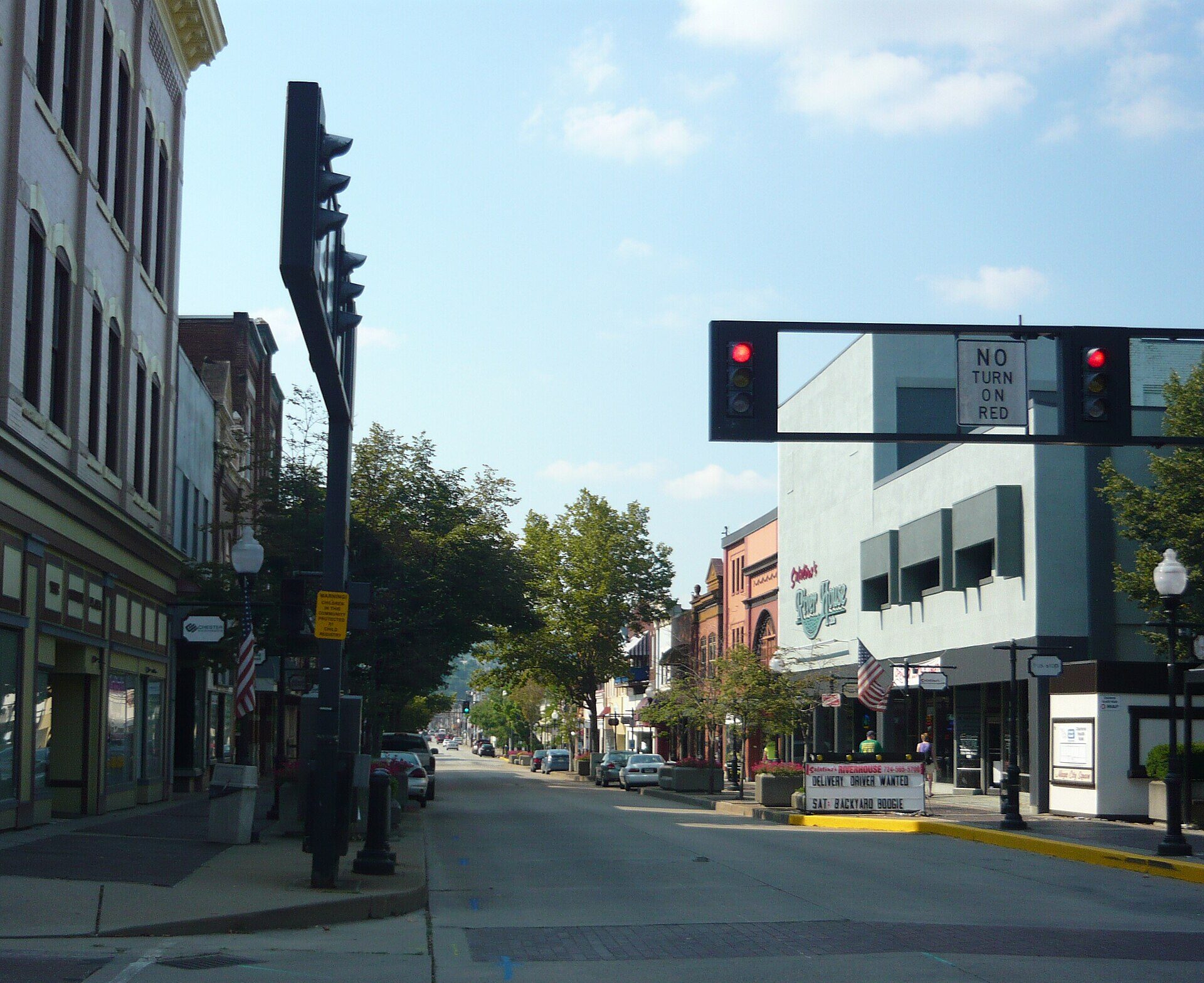
Charleroi is a borough of about 4,200 people on the Monongahela River, south of Pittsburgh. It was built around a glass factory. For years it lost population, like most of the Mon Valley, and then between about 2018 and 2024 it gained some back, much of it Haitian.
On Monday a reporter at Pittsburgh’s Public Source published what the town looks like now. The sentence at the centre of it is this: an attorney who has done work with Charleroi’s immigrant community estimates that around half of the borough’s Haitian population has left.
This article is about that sentence — what it is worth, what it is not, and what it does and does not tell you about your own house.
This is not a prediction about you.
What an estimate is, and what it is not
Joseph Murphy, the attorney in that report, gave the paper two figures. One is that there were around 2,000 beneficiaries of Temporary Protected Status in Charleroi at one point. The other is that around half of the borough’s Haitian population has since left.
Both are estimates, from one person, given to one newsroom. No agency has published a count of who has left Charleroi. There is no list, nobody is keeping a register of departures, and this page is not going to turn an estimate into a count by repeating it with more confidence than the person who made it.
That matters for a practical reason. A number like “half” travels fast, and it arrives in a group chat stripped of the word “estimates”. Someone reads it as proof that everyone is going, and treats their own leaving as already decided. It is not decided, and the number does not say it is.
The one figure in that town that is countable
There is a figure in the same report that is not an estimate, because a school district has to write it down.
The Charleroi Area School District, which covers the borough and those around it, enrolled 33 English Language Learner students in the 2022–2023 school year. Six of them were native Haitian Creole speakers. By 2024–2025 the district had 218 such students, and 127 of them were native Haitian Creole speakers. After the 2024 election, the report says, the total fell to 198.
Read that carefully, because it is easy to over-read. It is a count of children enrolled in one district on the days the district counted. It is not a count of people who left town, it says nothing about where any family went, and the fall from 218 to 198 is twenty students, not half a community.
It is still the most solid thing in the story. When you are trying to work out what is happening around you, prefer the number somebody was legally required to write down over the number somebody estimated out loud.
What the people who stayed are doing
The report is not a story about an empty town. It is mostly about people who are still there.
Anide Limage appeared on this page in August, for the mutual-aid group Fanm Vanyan. She closed the clothing store she ran in Charleroi in 2025, after her largely Haitian customers stopped coming in. She has since opened a new boutique on Fallowfield Avenue.
Carmel Dorcely, who leads Fanm Vanyan with her, left a job at a local food processing plant and now runs her own cleaning business; she told the paper one of her biggest clients is her church. She also said she has stayed in touch with the people who remained through WhatsApp and through that group.
This page prints no telephone number or address for Fanm Vanyan, because it has not confirmed one at the group’s own channel. If someone offers you a contact for it, that is worth having — and worth checking with the group itself before you send anyone money or documents.
The monitor, and the appointment
Arjun Rimal, who owns a convenience store at Fallowfield and Fifth avenues, told the paper that after TPS ended he noticed less foot traffic, and some customers wearing ankle monitors.
That is one business owner describing his own shop. Nobody has published a count of monitors in Charleroi, and this page is not supplying one.
But if you are wearing one, two things are worth repeating, because they are the same two things every time:
- Do not try to take the device off yourself. Whatever it costs you to keep wearing it, taking it off costs more.
- Keep going to every appointment. This page reported on Nov. 12 that ankle monitors now come with home visits from officers. A monitor is a change in how people are watched. It is not an end to being watched, and it is not a reason to stop complying.
What the report also describes, and what nobody connects
Three factories in and around the borough closed: the glass plant in April 2025, which took 300 jobs; a frozen food plant, Fourth Street Foods, which employed over 200 people; and before both of those, a pasta plant downtown.
Business owners in the report describe the drop in customers and the factory closures as separate blows that arrived together. No source in that report says the closures were caused by immigration enforcement, and this page is not saying so either.
If you are the one thinking about leaving
Some of what is described in Charleroi is people moving to another town; some of it is people leaving the country. Only one of those is hard to undo.
Moving to another address inside the United States is not the same decision as leaving the country. If you move, tell your lawyer, and keep a dated copy of anything you send to anyone about the move.
Leaving the United States is the one on this list you may not be able to reverse. Talk to an immigration lawyer before you decide, because leaving can affect whether and when you can come back. Nobody can charge you a fee to put you on a list to stay, because there is no such list.
What else is on the record this week
- The road in Haiti. The U.N. humanitarian office published on Nov. 13 that attacks since late October in Arcahaie and Cabaret, north-west of Port-au-Prince, have forced more than 5,900 people from their homes, about 70 per cent of them staying with host families. If someone of yours is on that road, call before anyone travels, and ask someone who has used it this week rather than trusting a schedule read online.
- Medicaid work rules were not delayed for everyone. The federal letter of Nov. 13 keeps the Jan. 1, 2027 start date and makes the grace period through June 30, 2027 optional, state by state, and only with federal approval. Answer every notice, and ask your state in writing what it did.
- The 8-year-old in San Diego. As of Nov. 14, the Haitian Bridge Alliance says the boy is still in federal custody. No agency has confirmed it. A child placed with the federal refugee resettlement office does not appear in the ICE detainee locator at all, so an empty result there is a fact about that system and not about the child.
What has not changed
TPS for Haiti and Syria is terminated, effective July 27, 2026, and those work permits expired the same day. USCIS still says so on its own page, which this page re-read today.
Nobody has to leave. Losing TPS is still not a judge ordering you personally to leave, and most people who lost it have no such order — but if a judge has already ordered your removal, that order did not go away, and you should see a lawyer this week.
What a household can finish this week
None of this requires anyone’s permission, and all of it is easier before you need it.
- Decide who would care for your children if you were detained, and write it down. Give that person a lawyer’s telephone number. Make a family plan.
- Photograph every document you hold — passports, birth certificates, work permits even though they have expired, court notices, any receipt with a number on it — and leave copies with someone who is not in your house. Keep your own records.
- Find out your own case status in one free call. The immigration court line, 1-800-898-7180, runs 24 hours a day and will tell you your next hearing date and any decision by A-number. It is in English and Spanish only, and if you have never had an immigration court case you will find nothing there, which is worth knowing.
- Know what to do at the door before anyone knocks. Know your rights · If ICE comes.
- If someone of yours has already been taken, get their A-number and check the locator the same day and every day after, writing down the facility and date each time. Find someone detained.
If you need a lawyer and cannot pay for one, start at free legal help.
Half the people may have left Charleroi. The other half did not, and the ones who stayed opened a boutique, started a cleaning business, and kept a group chat running. That is not a reason to stay and it is not a reason to go. It is a reason to make the decision yourself, with a lawyer, and not because a number reached you in a group chat.
Sources
- Pittsburgh's Public Source, “As Charleroi's Haitians retreat, the Mon Valley town wonders how it will rebound,” by Lucas Dufalla, Southern Communities Reporter, RSS pubDate Mon, 16 Nov 2026 10:30:00 +0000, fact-checked by Octavia Liku. The outlet's own WordPress feed carried the whole body in content:encoded and that is what was read, in full. Source for Joseph Murphy's estimate that around half of the borough's Haitian population has left and that there were around 2,000 TPS beneficiaries in Charleroi at one point; for the Pennsylvania Department of Education English Language Learner figures for the Charleroi Area School District; for Anide Limage closing her clothing store in 2025 and opening a new boutique on Fallowfield Avenue; for Carmel Dorcely leaving a job at a food processing plant and running her own cleaning business, and for her staying in touch through WhatsApp and Fanm Vanyan; for Arjun Rimal's account of less foot traffic and of some customers wearing ankle monitors; and for the three factory closures, including the glass plant in April 2025 with 300 jobs and Fourth Street Foods with over 200 employees
- United Nations Office for the Coordination of Humanitarian Affairs (OCHA), “Latin America & The Caribbean Weekly Situation Update as of 13 November 2026,” published 13 November 2026, read in full on ReliefWeb. Source for the statement that since late October, attacks in the towns of Arcahaie and Cabaret, north-west of Port-au-Prince, have forced more than 5,900 people from their homes, with about 70 per cent staying with host families and the rest in makeshift sites. The same update restates BINUH's count of at least 1,167 killed and 459 injured between July and September and a national displacement total of nearly 1.5 million; both were already published on this page, on Nov. 11 and in October respectively, and neither is treated here as new
- USCIS, “Temporary Protected Status,” read Monday, Nov. 16, 2026. Page stamp “Last Reviewed/Updated: 10/20/2026,” unchanged from the previous run. It lists El Salvador, Lebanon, Sudan and Ukraine as currently designated, and states that “The Haiti TPS designation is terminated, effective July 27, 2026” and “The Syria TPS designation is terminated, effective July 27, 2026.” No employment-authorization sentence was taken from this page
- Federal Register API, documents search for the quoted phrase “Temporary Protected Status” and the public inspection list for the same day, both read Monday, Nov. 16, 2026. The newest document returned is 2026-23003 (Housing and Urban Development, Nov. 12), which this page already covered. No Temporary Protected Status notice for any country has been published since the baseline this page holds, and nothing from Homeland Security, USCIS or Customs and Border Protection stood on public inspection. Recorded as a verified negative for the day, not as a change
- This page's own feed record, for every fact attributed below to an earlier dated entry: the Aug. 28 entry on Charleroi, the Oct. 31, Nov. 1 and Nov. 3 entries on the Arcahaie attacks, the Nov. 11 entry on the BINUH quarterly count, the Nov. 12 entry on ankle monitors and home visits, the Nov. 13 entry on the Medicaid work rules, and the entries since Nov. 6 on the 8-year-old boy taken at a San Diego check-in. Each is cited at its own published date and none of it is presented as new today
Community discussion
Comments are moderated before they appear. Never share your A-number, address, or case details here, and never trust legal advice from comments — talk to a licensed attorney (free help here). Comments are provided by GraphComment (EU-hosted, GDPR-compliant) and are optional.