The Monitor Comes Off, the Watching Does Not: What Springfield Families Are Seeing, and What Each Person in the House Should Do This Week
Nothing was announced this week. No notice about Temporary Protected Status appeared in the Federal Register, in either direction, for any country. The USCIS page that lists which countries are designated still shows Haiti and Syria as terminated, effective July 27, 2026. No court gave anyone their status back.
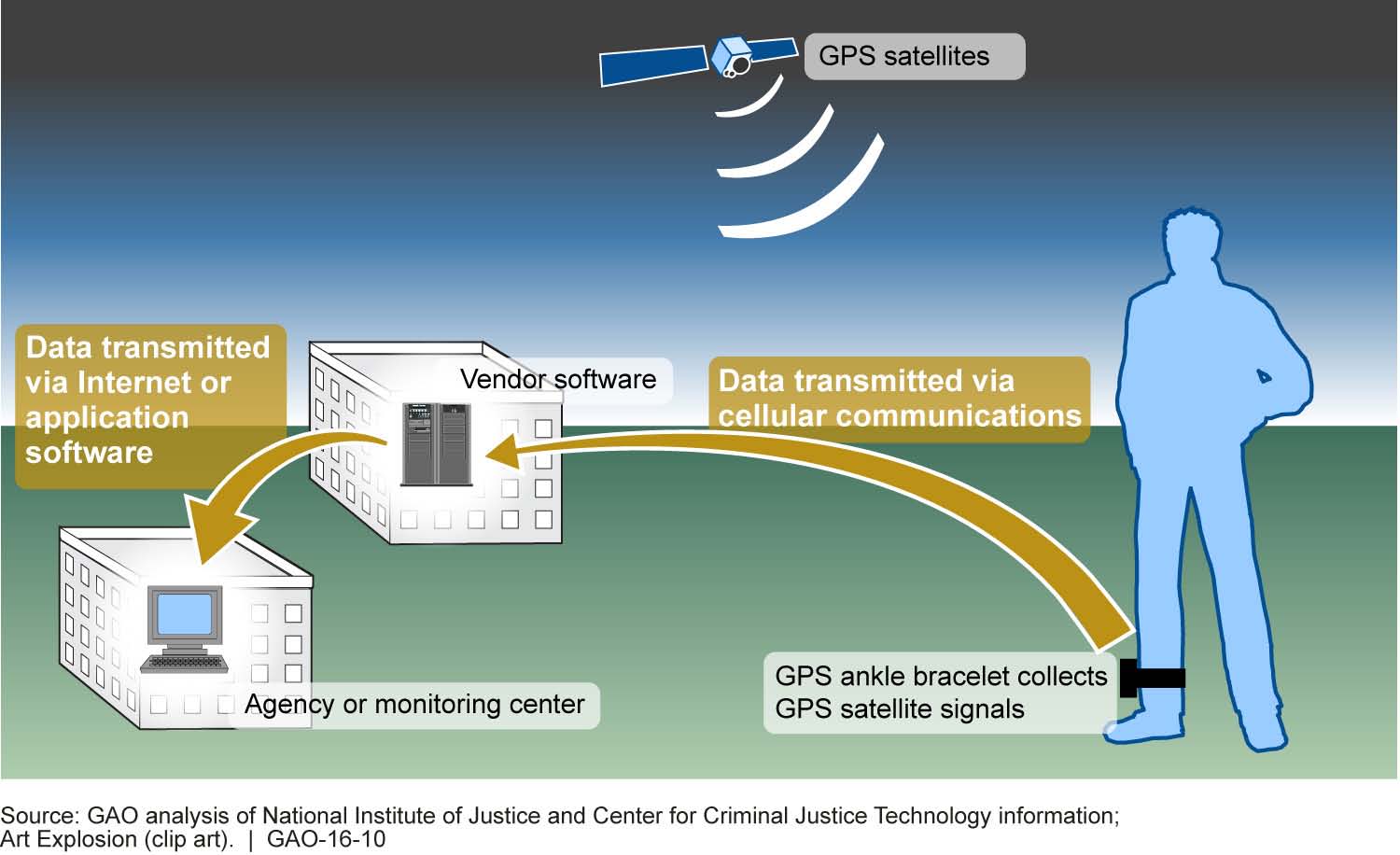
What families in Springfield say they are seeing is something smaller and harder to read: the device is coming off some people’s ankles, and something else is going on in its place. That is worth understanding carefully, because a burden being lifted is the easiest kind of news to misread — and the obligation underneath it has not been lifted at all.
Find the paragraph below that describes someone at your table, and finish the one step at the end of it this week.
The person whose ankle monitor came off
Obed Benjamin Louis, a Haitian interpreter who goes with neighbours to their ICE appointments at the Blue Ash office near Cincinnati, told WYSO that officers “don’t really use the ankle monitor on people anymore. They just use an app on their phone.” He told the Springfield News-Sun he started seeing the shift about three weeks ago, and that many people who asked to have the monitor taken off were approved.
Here is the part that matters more than the removal. The app is called SmartLINK, and the News-Sun reports that it requires a daily photograph, submitted inside a two-hour window on weekdays, which confirms the person’s location by GPS. That is not the end of being supervised. It is the same supervision, carried in a pocket instead of locked to a leg, and it has a deadline attached to it every single weekday.
DHS did not confirm that any policy changed. Asked directly by WYSO whether its ankle-monitor program had changed, the department said ICE “evaluates all individuals on a case-by-case basis to determine what level of electronic monitoring is appropriate,” and that the ICE Enforcement and Removal Operations office with jurisdiction over a case decides which technology is used. That is not a promise about your case, and it is not a schedule. It means the office handling your file can decide one way this month and another way next month.
This week: if you have been moved onto the app, send the photo inside its window every weekday without exception, and keep going to every check-in appointment exactly as before. Write down the window’s start and end time and set two alarms on the phone. If the phone breaks or is lost, treat that as an emergency the same day — call your lawyer, and go to the office rather than waiting to be contacted.
The person still wearing one
Hundreds of people in and around Springfield are still wearing the GPS ankle monitors, fitted at appointments at the Blue Ash office, in Westerville, or after being detained and released. Many have told reporters about pain, swelling, blisters, and the device getting in the way of their work.
None of that is a reason to touch the device yourself. Do not try to take it off, loosen it, or let anyone else remove it, whatever it is doing to your skin. A damaged or removed device becomes a separate problem on top of every problem you already have.
This week: if the monitor is injuring you, see a doctor and ask for a letter that describes the injury and the date. Then give a copy of that letter to your lawyer — not only to the officer at your next check-in. A document handed across a counter can go nowhere. The copy in your lawyer’s file is the one that can still be used later. Keep every paper you are handed at every appointment, in one envelope, with the date written on it.
The person who did not come home
The Springfield News-Sun and Dayton Daily News went through the Butler County Jail roster and ICE’s own records themselves, and found dozens of Haitian people held there on ICE detainers since late July. Four had been moved to the North Lake Processing Center in Baldwin, Michigan — a privately run facility roughly 400 miles and more than a six-hour drive from Springfield. One was moved to the Corrections Center of Northwest Ohio. Every count in this story is a floor rather than a roster, taken by different people counting different things, and they should not be added together.
Two facts from that reporting are worth holding onto. First, a transfer can happen in days, and it moves the courthouse: a habeas petition is filed in the district where a person is actually being held, not where the family lives. Second, on bond, the papers report many detainees are not getting bond hearings at all. The figures they cite come from the Transactional Records Access Clearinghouse at Syracuse University, which found immigration judges granted bond in fewer than a third of the bond hearings held in fiscal year 2026, and from ICE, which had roughly 60,000 people in detention in June and released about 2,000 on bond that month.
Bond is still worth asking a lawyer about. It is decided case by case, and being denied it is not a decision about the rest of the case. Pastor Joubert Adrien, detained on Aug. 20 at the Sunoco on South Limestone Street, came home on bond on Sept. 16 after 27 days.
This week: run the detainee locator for anyone missing, and run it again tomorrow. Write down the facility and the date every single time you check, including the times the search finds nothing — “not in our system” is a fact about ICE’s records, not about where a person is. Get the A-number to a lawyer today. Free legal help in Ohio: Advocates for Basic Legal Equality, 1-800-837-0814 (TTY 1-888-545-9497). More routes are on the help page.
The children, and the papers
The one thing in this whole story that worked, worked because somebody had filled in a form in advance. When a mother was taken, a Head Start centre released her two-year-old to the person she had named as the emergency contact — because the name was already on file.
This week: name that person, in writing, at every school, day care and clinic your children attend, and tell the person you named. Photograph or scan every passport, birth certificate and piece of immigration paperwork in the house, and leave copies with someone you trust here. A U.S.-citizen child cannot be deported. But a parent who is removed may have very little time to decide whether the child goes too, so decide that with a lawyer now, while there is no clock running. The tools and checklists page has a family plan you can finish at the kitchen table tonight, without anyone’s permission and without paying anyone.
The person carrying this alone
The funeral for Pierre Damas Bel, the 20-year-old Springfield High School graduate and Wright State student this page has carried since Sept. 1, is set for 1 p.m. on Saturday, Oct. 3 at St. John’s Missionary Baptist Church, 34 W. Pleasant St. in Springfield. The Springfield News-Sun reports the public is invited, and that organisers expect as many as 1,000 people. Check with the organisers before you travel.
If the last two months have put someone in your house in that kind of pain, you can call 988 today. Press 2 for Spanish. Other languages go through an interpreter line, by voice only — not by text and not by chat — so say the language by name and it connects in about twenty seconds. Haitian Creole is not on the published list, so if you can, have someone sit with you who can help. What this site can tell you about what a call triggers is still limited to New York City’s own published rules; we have not verified the equivalent in Ohio.
This week: if you are the one holding a household together, tell one other adult what you are carrying. Not a professional — a neighbour, a cousin, someone at church. Being the person nobody worries about is its own risk.
What has not changed
TPS for Haiti and Syria is terminated, effective July 27, 2026, and the work permits tied to it expired the same day. Nothing this week moved that, and no lobbyist, bill or petition has given anyone their status back. There is nothing to sign up for, and nobody may charge you a fee to add your name to anything.
Losing TPS is still not a deportation order. That is the sentence to carry out of this page — but if an immigration judge has already ordered your removal, that order did not go away, and you should see a lawyer this week. If you are not sure which of those describes you, the free automated immigration court line, 1-800-898-7180, will tell you your next hearing date and whether a judge has decided anything, using your A-number. It runs 24 hours a day, in English and Spanish only. If you have never had an immigration court case, you will find nothing there — and that, too, is an answer.
The device coming off somebody’s ankle in Springfield is not a prediction about you. Neither is anybody’s arrest. What is true for everyone reading this is narrower and more useful: the papers you copy this week, the emergency contact you name this week, and the lawyer who has your A-number this week are the things that are still entirely yours to decide.
Sources
- Springfield News-Sun and Dayton Daily News (Jessica Orozco, Sept. 17, 2026) — Haitian advocates on the reported phasing out of ankle monitors; the SmartLINK app requires a daily photograph inside a two-hour weekday window and confirms location by GPS
- Springfield News-Sun (Sept. 23, 2026) — funeral set for Oct. 3 at St. John's Missionary Baptist Church, the public invited; more than 70 Haitian immigrants detained in the Springfield area since Aug. 1; ICE's case-by-case statement
- WYSO (Kathryn Mobley, Sept. 23, 2026, 9:26 PM EDT) — Pastor Joubert Adrien home after 27 days; Obed Benjamin Louis of Undivided on the shift to the app; DHS's reply on electronic monitoring
- Springfield News-Sun and Dayton Daily News (Cornelius Frolik, Sept. 21, 2026) — the papers' own count of the Butler County Jail roster and ICE records; four men moved to North Lake in Baldwin, Michigan; TRAC and ICE bond figures
- USCIS — Temporary Protected Status, page as archived Sept. 18, 2026: countries currently designated are El Salvador, Lebanon, Sudan, Ukraine and Venezuela; Haiti and Syria are terminated effective July 27, 2026
- Federal Register — documents and public-inspection APIs, re-checked Sept. 24, 2026: no TPS notice for any country, in either direction, for a fifteenth day
Community discussion
Comments are moderated before they appear. Never share your A-number, address, or case details here, and never trust legal advice from comments — talk to a licensed attorney (free help here). Comments are provided by GraphComment (EU-hosted, GDPR-compliant) and are optional.