The Record Nobody Else Is Keeping
This past week, three different government records about detained people turned out to be missing, incomplete, or deliberately switched off. None of the three was uncovered by a journalist’s investigation. In each case the government’s own filing, website or spokesperson is what said so.
That is a strange kind of news, because nothing in it changes the law and nothing in it changes anyone’s case. What it changes is narrower and more practical: how much weight a family should put on the government’s answer when they ask where someone is. This is not a prediction about you. It is a sorting of one week, so that you can find the part that is actually yours.
The family that searched the locator and found nothing
On Sept. 15, Immigration and Customs Enforcement removed from its online detainee locator the names of people who are under final removal orders. The Associated Press reports the change reaches more than 16,000 of the nearly 69,000 people in ICE custody, and that the agency did not announce it and has not explained it.
This page has told readers to search that locator in two dozen entries since August. That advice still stands, and it is worth being precise about why. Most people in ICE custody are still listed. It is still the first thing to do on the night someone does not come home, and it is free, and it takes minutes.
What was incomplete was the other half of the instruction. If the name is not there, you have not learned anything about the person. You have learned something about a website. A blank result is not a release, not a removal, and not a reason to stop looking.
More than 30 organizations have asked a United Nations working group to call the practice a violation of international law. That petition is not a court order and not a law; nothing in it changes anyone’s case, there is nothing to apply for, and nobody may charge you a fee connected to it. Homeland Security denied that its practices amount to disappearing people, saying detainees “have opportunities to communicate with their family members and lawyers.” Read what that does not say: it does not say the names were kept on, and it does not say they are going back on.
This week: if someone you are looking for does not come up, search anyway, write down the date and time you searched and what it said, and get that to a lawyer — then search again tomorrow. Find someone detained · find free legal help
The person in a cell nobody was counting
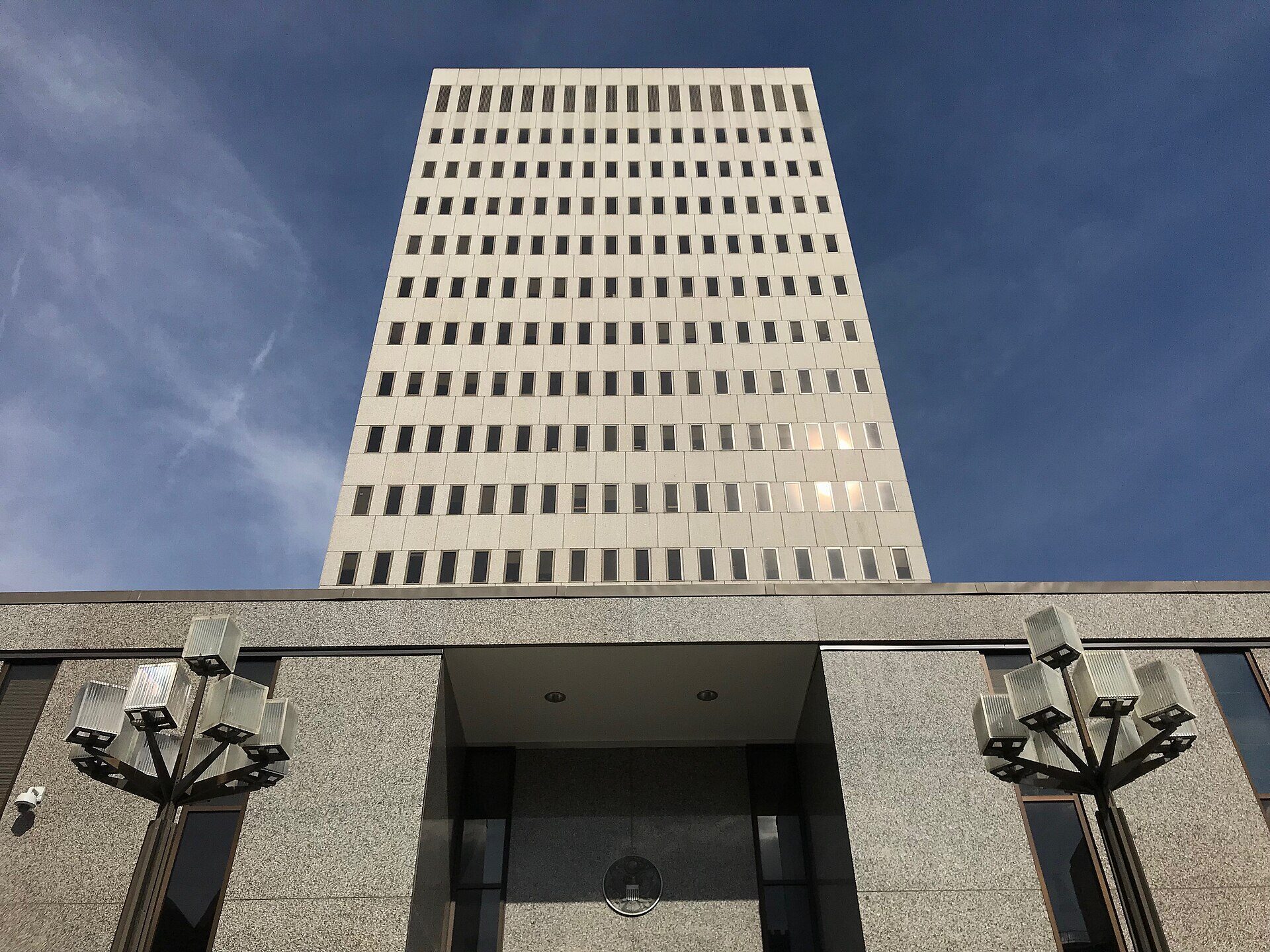
In Baltimore, people arrested anywhere in Maryland are first taken to five cells inside a federal office building on Hopkins Plaza — the building in the photograph above. The Baltimore Banner reports those rooms were built to hold people for no more than 12 hours, long enough to do paperwork and find a bed somewhere else, so they have no beds and nowhere to wash. As arrests rose, the Banner reports, ICE gave facilities like that one an exemption allowing stays of up to 72 hours.
On Monday, Sept. 28, a federal judge found ICE had violated her earlier order limiting crowding there. What she ordered next is the part worth knowing, because it is a record being created where there was not one: ICE must now file a sworn statement every two weeks that it is following her limits, reporting how many people are held in each cell each day, along with detailed information about detainees’ access to medication and their medical evaluations. She also asked for a copy of the notice of rights she had already ordered ICE to hand people when they are booked in, and said she is considering appointing an outside monitor.
No court order stops immigration enforcement. This one is about conditions in named cells in one building, and it grants nobody a release, a status or a delay. It reaches a family anywhere for a different reason: people held in rooms like that are often moved to long-term facilities in distant states, which is exactly when a family loses the thread.
This week: if someone in your family is taken, ask the lawyer about the notice of rights given at booking, and write down the name of every facility you are told, with the date you were told it. Know your rights
The pastor who can count his own empty pews
In north Alabama, Pastor Celeve Izean of the Philadelphia Haitian SDA Mission told WAFF that four members of his church have been detained and are being held at the Etowah County Jail, and that his congregation has thinned out because people are staying home. “As the pastor of the church, the church is like empty now,” he said. Some families have moved in with relatives and are unsure about going back to their own houses. “These people are not criminals,” he said.
The count of four, and the jail, are his own account; no agency has published a list, and ICE did not answer the station’s repeated requests for comment. Set that beside what the government told a federal judge in Massachusetts last week, in sworn filings: Homeland Security Investigations “does not currently maintain tracking” for enforcement at or near churches, schools and similar places, and ICE’s own sensitive-locations spreadsheet records the place of arrest as free text, so an entry “may only list a physical address” without noting what kind of place it was.
Put plainly, a pastor counting his own empty pews is keeping a more specific record of what happened to his congregation than the agencies are. That is not a complaint about the agencies. It is an instruction about who has to write things down.
This week: if you see enforcement at or near a church, a school or a clinic, write down the date, the time and the exact place, and give it to a lawyer rather than only posting it. Report ICE activity
The person with a date and a fee
Two money changes are running alongside all of this, and they are unglamorous in a way that makes them easy to miss. The immigration courts’ own filing fees start today, Thursday, Oct. 1. Separately, anything mailed to U.S. Citizenship and Immigration Services with a postmark of Friday, Oct. 16 or later is rejected unless it carries that agency’s new, higher fee. Two offices, two dates, two sets of money, and the court’s payment portal shows both — which is how people end up paying the wrong one.
These are the government’s published amounts. Anyone quoting you a different price for the same form is quoting their own fee, and there is nothing here that anybody may charge you to sign you up for.
This week: if you have anything due, ask a lawyer which office it goes to and what the exact total is before you mail it, and keep dated proof of the postmark with your own copy of what you sent. Tools and checklists · find free legal help
What has not changed
TPS for Haiti and Syria is terminated, effective July 27, 2026, and the work permits that ran with it expired the same day. We re-read the government’s own pages today: the USCIS status page still says terminated effective July 27, and the I-9 index that lists every work-permit announcement by country still shows nothing for Haiti newer than July 29, 2026. If you are told this week that Haitian work permits have been quietly extended, that is not on either page.
Losing TPS is still not a deportation order. It is not a judge ordering you personally to leave. A minority of people do hold a removal order from a judge — and the locator change at the top of this article reaches exactly that group — so if that is you, that order did not go away, and this is the week to put it in front of a lawyer.
No new law has given anyone their status back. There is a Senate bill that would designate Haiti for TPS again; it sits in committee, it is not law, it changes nothing today, there is nothing to apply for, and nobody may charge you a fee to sign you up for it.
The one record that does not depend on any of this
Every section above ends in the same small act, so here it is on its own. Keep one page, somewhere a second person in your household can find it. On it: each adult’s full legal name as it appears on their papers and their A-number; the name and number of a lawyer; the name and number of one person outside the house; and, if anyone is taken, the date, the time, the exact place, and the name of every facility you are told, each with the day you were told it.
Photograph your documents and leave copies with someone who is not in the same house. Decide now, out loud, who collects the children if one adult does not come back, and tell that person. None of this requires anyone’s permission and none of it costs money.
Three government records failed this week and each one was the government’s own paperwork. Yours is the one that nobody can switch off. Make a family plan · know your rights · find free legal help
Sources
- Associated Press (Ryan J. Foley, Sept. 30, 2026) — 'Human rights groups ask UN panel to help end ICE's effort to hide locations of detainees.' Read in full from a member station's own page
- The Baltimore Banner (Daniel Zawodny, Sept. 29, 2026, 2:44 p.m. EDT) — 'Judge steps up ICE oversight after persistent overcrowding at Baltimore facility.' Read in full from the Banner's own page. This page read the Banner's report and did not read the order or the filings
- WAFF 48, Huntsville (Sept. 30, 2026) — 'North Alabama Haitian community says fear of ICE is keeping people from church, home.' Pastor Celeve Izean of the Philadelphia Haitian SDA Mission. Read in full from the station's own page
- Sworn declarations filed Sept. 25, 2026 in New England Synod, Evangelical Lutheran Church in America v. Department of Homeland Security, No. 4:25-cv-40102 (D. Mass.), in which Homeland Security Investigations stated it 'does not currently maintain tracking' for enforcement at or near protected areas, and ICE stated the place-of-arrest field in its sensitive-locations spreadsheet is free text. Read on the public docket by this page
- USCIS — Temporary Protected Status: the Haiti and Syria designations are terminated, effective July 27, 2026. Page stamp 09/09/2026, re-read Oct. 1, 2026 against this site's status record
- USCIS I-9 Central, Form I-9 related news — the dated index of every TPS employment-authorization announcement by country. Its most recent Haiti and Syria items are both dated July 29, 2026; nothing on it extends any Haitian work permit. Re-read Oct. 1, 2026
Community discussion
Comments are moderated before they appear. Never share your A-number, address, or case details here, and never trust legal advice from comments — talk to a licensed attorney (free help here). Comments are provided by GraphComment (EU-hosted, GDPR-compliant) and are optional.