What the Court Left in Place
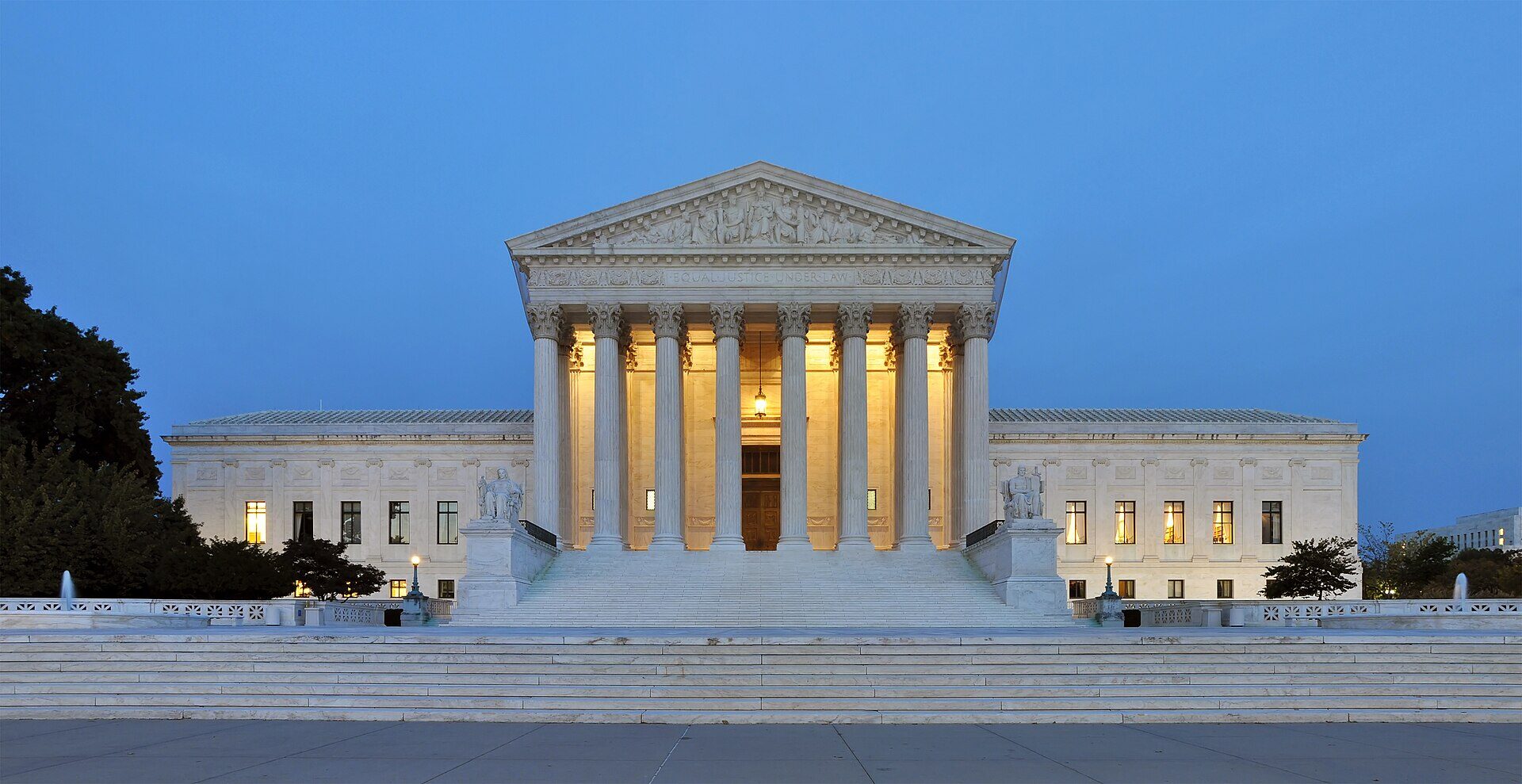
On Tuesday afternoon the Supreme Court entered one sentence about deportation cases, and by the evening it had become several different headlines.
Here is the sentence. On the Court’s own docket, under application number 26A500, dated Oct. 27: “Application (26A500) for stay presented to Justice Alito and by him referred to the Court is denied.”
That is the whole order. There is no opinion attached to it. No reasons are given. It names no person, it mentions no country, and it decides nobody’s case — not yours, not your cousin’s, not the case of anyone whose hearing is next month.
This article is not a prediction about you. It is an explanation of a small thing that happened in Washington, and of the four or five minutes of work it is worth doing this week because of it.
What the rule was, and when it went
In 2024 the Executive Office for Immigration Review — the part of the Justice Department that runs the immigration courts — adopted a regulation providing what lawyers call “administrative closure.” Under it, an immigration judge could suspend some deportation proceedings rather than decide them: for example, to let someone who was the victim or the witness of a crime ask a different agency for relief such as asylum while the clock stopped on their removal case.
In June of this year, Texas sued in federal court in Wichita Falls, arguing that the EOIR had no power to adopt that regulation. A few hours after the case was filed, the Justice Department joined Texas in asking Chief U.S. District Judge Reed O’Connor to enter judgment for the state, throw the rule out entirely, and bar the EOIR from adopting a similar one in future. He granted all of it the same day.
So the rule was gone in June. Keep hold of that date, because it is the one the headlines have lost.
On Aug. 7, three cities with large immigrant populations — Baltimore, New Haven and Columbus — together with Centro Legal de la Raza, a group that provides legal services to immigrants, asked to join the case so that somebody would defend the rule on appeal, since neither Texas nor the federal government intended to. Judge O’Connor refused, holding that they had no legal right to sue. The Fifth Circuit would not block the judgment either. On Oct. 9 they asked the Supreme Court to put the judgment on hold while their appeal goes forward.
That request — a pause, not a ruling on who is right — is what the justices refused on Tuesday, four days after the written arguments closed.
What the headlines said, and what the order says
One headline on Tuesday read “Supreme Court Strips Judges of Power to Pause Trump Deportations.” This page read that headline in a news index, not the article beneath it, and it is quoted here once because it is the sentence a frightened person will see on a phone screen.
The Court did not strip anything on Tuesday. The rule had already been thrown out in Texas four months earlier. What the justices declined to do was press the pause button on that Texas judgment while the cities’ appeal continues. The appeal continues.
The difference matters for one reason only: a person who believes the Supreme Court decided something about deportation on Tuesday may conclude that their own case has been decided too, and act accordingly — stop going to a hearing, stop answering a letter, pay somebody who says they can fix it. Nothing was decided about any individual. The order says so by saying nothing at all.
The government’s own sentence, and what it is worth
There is one line in this fight that reads like reassurance, and it deserves to be printed with its limits attached.
In the brief opposing the cities’ request, U.S. Solicitor General D. John Sauer told the justices that the agreement “does not require cases that have already been administratively closed to be returned to an immigration judge’s calendar.”
That is the government’s position in a court filing. It is not a ruling. It is not a notice. It is not a promise about any particular case, and nobody has published a list of which closed cases stay closed. If a case of yours was administratively closed at some point, the correct response to that sentence is not relief; it is a phone call. Ask a lawyer whether your case has been put back on a calendar, and check the record yourself rather than waiting to be told.
Who in the house this reaches
The person with a hearing date. Nothing about your hearing changed on Tuesday. Go to it. Not appearing at an immigration hearing can bring a removal order entered while you are not in the room, and that is far harder to undo than a hearing that goes badly. Take the notice you were given, write down the date, the time and the courtroom from the paper itself rather than from memory, and keep a copy of everything you hand over.
The person whose case was closed years ago. You are the one the Solicitor General’s sentence is about, and you are the one who should not rely on it. Call the automated line, ask a lawyer, and write down what each of them tells you and on what date.
The person who has never had a case in immigration court. The line will have nothing for you, and that is a fact about the court’s records rather than a fact about you. It does not mean you are safe and it does not mean you are in danger; it means the immigration court has never opened a file in your name. Losing TPS did not open one.
The adult whose work permit ended on July 27. This case is not about TPS and does not touch it. Your situation on Wednesday is the same as it was on Monday.
The person who already has a removal order. Ending TPS was never a judge ordering you personally to leave, and most people who lost it have no such order. If a judge has already ordered your removal, though, that order did not go away this week and it will not go away on its own. See a lawyer this week, and take the order with you.
How to check your own case, free, in four minutes
The immigration court’s automated case information line is 1-800-898-7180. It works 24 hours a day. With your A-number it will read you the date of your next hearing and any decision an immigration judge has made. The online version, at acis.eoir.justice.gov, shows the most recent case only.
Both are in English and Spanish only. There is no Creole option, so if you need Creole, have someone sit with you while you call rather than guessing at what you heard. Write down the date you called and what the line said, in a notebook or a photo of a notebook, and keep it where you keep your papers.
Nobody may charge you a fee for that call, because it is free. There is nothing to apply for in this case, nobody can sell you a place in it, and nobody may charge you a fee to “reopen” a case because of something the Supreme Court did not do.
What has not changed
TPS for Haiti and Syria is terminated, effective July 27, 2026, and those work permits expired the same day. USCIS’s own page, read again on Wednesday, lists El Salvador, Lebanon, Sudan and Ukraine as designated, and Haiti and Syria as terminated. Removal flights to Haiti have continued, and this page has carried each one it could verify.
And the sentence this page will keep repeating for as long as it is true: losing TPS is still not a judge ordering you personally to leave. Most people who lost it do not have such an order. For the minority who do, that order is still live, and a lawyer is the only person who can tell you what to do about it.
Free legal help · Know your rights if ICE comes · Keep your own records · Find someone who has been detained
Sources
- Supreme Court of the United States — the Court's own docket for application 26A500, City of Baltimore, Maryland, et al. Read as JSON on Oct. 28, 2026. The source for every date in the sequence and for the full text of the order entered Oct. 27
- SCOTUSblog, 'Court declines to restore Biden-era regulation allowing some deportation proceedings to be suspended', by Amy Howe, published Oct. 27, 2026 at 12:49 PM EDT (JSON-LD datePublished 2026-10-27T16:49:00.105Z), read in full from the raw article page. The source for what administrative closure did, for the Texas lawsuit and Judge O'Connor's same-day judgment, for the Aug. 7 motion to intervene, and for Solicitor General Sauer's and Texas's quoted arguments
- SCOTUSblog, 'Trump administration and Texas urge court to leave their agreement on deportation proceedings in place', by Amy Howe, published Oct. 22, 2026 at 5:58 PM EDT, read in full. The second read of the government's position, including the sentence about cases already administratively closed
- Executive Office for Immigration Review — the free automated case information line, 1-800-898-7180, and the online case status page. Both answer by A-number, both are English and Spanish only, and neither holds anything for a person who has never had an immigration court case
- USCIS — Temporary Protected Status, read Oct. 28, 2026 (page stamped Last Reviewed/Updated 10/20/2026). The designated list is El Salvador, Lebanon, Sudan and Ukraine; Haiti and Syria are terminated
Community discussion
Comments are moderated before they appear. Never share your A-number, address, or case details here, and never trust legal advice from comments — talk to a licensed attorney (free help here). Comments are provided by GraphComment (EU-hosted, GDPR-compliant) and are optional.