What Waits at the Other End of the Flight: The Money, the Road, and the Plan to Make Before Anyone Gets on a Plane
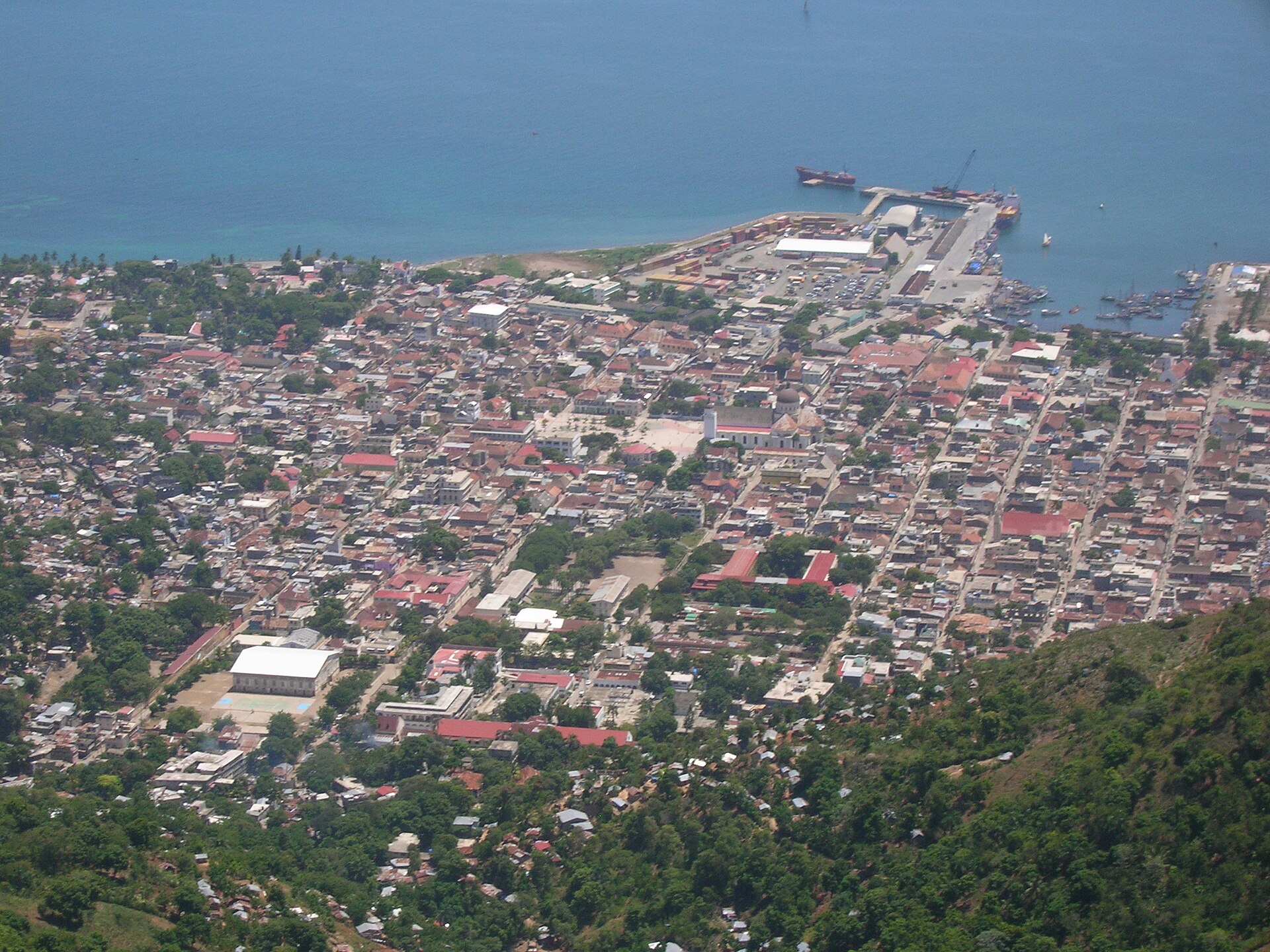
A plane has landed at Cap-Haïtien on three consecutive Thursdays now, and until this week nobody had written down what happens to the people who walk off it. Reporters have now done that. What they found is not an argument about immigration policy. It is a set of numbers a family can plan around — and the first thing to understand about those numbers is that they are far too small to get anybody home.
Nobody has to leave. Losing TPS is not a deportation order, and nothing below changes that. This page exists because a decision this large should be made with the facts in front of you, and because families here are being asked to send money to people who have already gone.
What actually arrives with a person
The New York Times (Frances Robles, Sept. 6) followed people off last Thursday’s flight — the same flight already on this page, not a new one. Her account is specific in a way the earlier reporting was not.
Haitian immigration authorities gave the adults who arrived 10,000 Haitian gourdes, about $80 in U.S. money. Reginald Dorvilma, 36, deported after being arrested in Orlando in July, spent about $20 on a cheap hotel his first night and bought a change of clothes. By the next morning he had under $40 left, and he was sitting outside the Cap-Haïtien police station making phone calls, trying to find a way to Les Cayes, his hometown on the other side of the country.
This page already carries a different figure: the AP reported that on the Aug. 21 arrival, Haitian officials offered deportees a maximum of $65. These are two different flights counted by different people on different days. Do not read them as a trend and do not add them together. Read them as the same fact stated twice: what a person receives on arrival is roughly one night indoors and a change of clothes. It is not a fare home.
Many arrive in the U.S. government-issued sweatpants and T-shirt they were flown in, with their immigration court documents in a pocket. Several people who came off Thursday’s flight told the Times their belongings were missing when their property was handed back — a passport, a phone, a pair of sandals. Natacha Antoine, 42, a former nurse’s aide who lived four years in Indianapolis, said her passport was not returned: “They didn’t give me back my passport, and my passport cost me $600.” Ribeneks Dorvil, 29, who had lived in Indianapolis five years, said his phone was gone.
The Department of Homeland Security told the Times that deportees’ personal property is removed and secured while they are in custody and returned to them on arrival at Cap-Haïtien. Haitian immigration officials did not answer the paper’s questions. Both accounts are on the record and they do not agree; this site cannot resolve them and is not going to pretend otherwise.
The road is the expense, not the ticket
Cap-Haïtien is on the northern coast, about 125 miles from Port-au-Prince — which is where most of the people on these flights are from. The Times reports that the road out of Cap-Haïtien is controlled by gangs who take tolls from drivers and kidnap travellers, and that five police officers who recently tried the trip by bus were killed.
Dorvilma’s own reckoning of what it would cost him to get home: about $220 — a bus to Port-au-Prince, then a motorbike taxi to the seaport to catch a ferry that avoids another gang checkpoint — and that figure does not include cash for a gang “toll” if he is stopped. He had under $40.
Set that beside a fact this page carried last week from an entirely different source. On Sept. 2 the U.S. Federal Aviation Administration extended its ban on U.S. commercial operators and U.S.-registered civilian aircraft flying below 10,000 feet over Port-au-Prince and parts of central Haiti, running until March 2. The United States government re-certified this month that the airspace over Haiti’s capital is too dangerous for American civilian planes — which is part of why the flights land in the north, 125 miles from where the passengers are trying to reach.
What the officials on the ground say
Haitian authorities are not disputing that they are overwhelmed. Luz-Kénez Surfin, head of the judicial police in Cap-Haïtien, said of the arrivals: “Some are outside. They don’t know where to go.” Cap-Haïtien’s mayor, Michel Saint-Croix, told the Times he would have asked for a delay of four to six months to prepare. Haitian officials acknowledged to the paper that some deportees are likely to become homeless in the north.
The Times also notes that among those arriving are a few people who do not speak Creole.
Claimed, and verified
The U.S. government’s message to Haitians here has been consistent, and it is worth setting against the paragraphs above.
On Sept. 4, at a roundtable in Lebanon, Ohio, Homeland Security Secretary Markwayne Mullin urged Haitians who had TPS to go back on their own — “Your country needs you” — and said of people deported rather than leaving voluntarily, “my goal is to make it impossible for you to come back to the country at this point.” ICE has separately advertised a self-deportation program with a payment attached, and the condition the agency itself puts on that payment is “after departure is confirmed.” The amounts quoted for that payment have never matched each other, and this site has never been able to read one on a Homeland Security page, so no dollar figure is printed here. Advocates in Springfield have said they have not met anyone who received the money — that is what they have heard, not proof that nobody has.
And here is the part of Antoine’s account that bears directly on the offer: she said she and several others aboard Thursday’s flight had volunteered to be deported once it was clear they had no legal options left, and that they were shackled anyway. Homeland Security did not answer the Times on shackling, though the U.S. has long defended the practice as a standard safety protocol. Agreeing to go did not change how she travelled.
What has not changed
Losing TPS is not a deportation order. It ended a status. It is not an immigration judge ordering you personally to leave the country, and no article on this site has ever said otherwise.
The necessary exception, because it is real for some readers: if an immigration judge has already ordered your removal, that is a separate thing and it is real. See a lawyer about it this week.
Your rights at your own door have not changed either: you do not have to open it, and you can ask to see a warrant signed by a judge, passed under the door — know your rights walks through the words to use.
And one more thing has not changed, because this site has spent entries saying that paperwork does not protect anyone from a Tuesday morning. That is true and it is only half of it. Your filings still decide your case. A pending application will not keep an officer away from your workplace — and it is still the thing that determines whether you get to stay. Do not stop filing. Do not miss a hearing. Plan for the Tuesday morning separately.
What to do this week
- Make the plan you hope you never use. Decide now who collects your children, who holds your documents, who gets called first, and where the money is. It costs nothing, needs no lawyer and no status, and it is the single most useful hour a family can spend — /tools/ walks through it step by step.
- If someone has already been removed, arrange the onward trip before you send anything else. What the reporting above establishes is that the arrival money covers a night and a change of clothes. The journey out of Cap-Haïtien is the real expense and it is dangerous. Find someone reachable in the north, agree how money will get to them, and settle it before the person is on the ground with a dead phone.
- If someone has stopped answering, start tonight. The jail roster, ICE’s online detainee locator, then calls to relatives and attorneys, in that order — /find-someone-detained/ has the steps. A front desk saying someone is “not in the system” is a fact about that database, not about the person; keep checking daily and write down the facility and the date every time.
- Get free legal help before you decide anything about leaving. Leaving the United States can change whether and when you are able to come back. That is a question for a lawyer and not for this page — /help/ lists free and low-cost options.
- Write down what happened. If ICE contacted you, take notes and keep them: /ice-letter/ explains what a letter means and /report-ice/ is where an enforcement action can be recorded.
The reason to publish any of this is not to frighten anyone into staying or into going. It is that a decision this size is being made right now in kitchens in Springfield and Waterloo and Brooklyn, often on the strength of a rumour about what waits at the other end. What waits, according to the people who have been there this month, is about $80, a road controlled by other people, and a city 125 miles from home doing its best with no notice. Whatever anyone decides, decide it knowing that.
Sources
- The New York Times (Frances Robles) — deportees left broke and stranded in Cap-Haïtien (Sept. 6, 2026), read in the San Juan Daily Star's republication
- The Associated Press — Haitian immigration officials offered deportees a maximum of $65 on arrival (Aug. 21, 2026)
- The Associated Press — the FAA extends its restriction on U.S. civilian aircraft over Port-au-Prince until March 2 (Sept. 2, 2026)
- Cincinnati Enquirer (Scott Wartman and Mia Hilkowitz) — the Homeland Security secretary urges Haitians to leave on their own (Sept. 4, 2026)
- Des Moines Register (Isabelle Foland) — Iowa TPS holders and the workers a Waterloo plant lost when Haiti's TPS ended (Sept. 8, 2026)
Community discussion
Comments are moderated before they appear. Never share your A-number, address, or case details here, and never trust legal advice from comments — talk to a licensed attorney (free help here). Comments are provided by GraphComment (EU-hosted, GDPR-compliant) and are optional.