The Hours Before the Plane: What Can Still Be Filed, Who Can Still Be Called, and What Nobody Can Promise
A burned-out headlight on Sept. 4. A traffic stop in West Manchester Township, Pennsylvania. ICE custody the next day. A detention center in Louisiana, more than a thousand miles from the church in York where Pastor Molis Augustave preached. Then, on Sept. 16, two things happened within hours of each other: his lawyers filed a petition in federal court asking a judge to stop his removal, and he was moved out of that detention center toward Miami, where flights to Haiti leave.
That is the shape of the week this page has been documenting, compressed into twelve days. It is worth walking through slowly, because the hours before a flight are the hours in which families make decisions with almost no information — and because what is actually available in those hours is narrower, and more specific, than the phone calls people spend them on.
What was filed, and where
On Sept. 16, lawyers filed a petition for a writ of habeas corpus in the U.S. District Court for the Western District of Louisiana. The case is Augustave v. Acuna, No. 1:26-cv-03591, assigned to Judge David C. Joseph. This page read the docket directly rather than taking a description of it: as of Thursday morning it showed the petition, a standing order, and the case assignment. No ruling. The York Daily Record, which reported the filing first, wrote that the court was unlikely to consider the request before the departure expected Thursday.
Two details in that paragraph matter more than the name on the case.
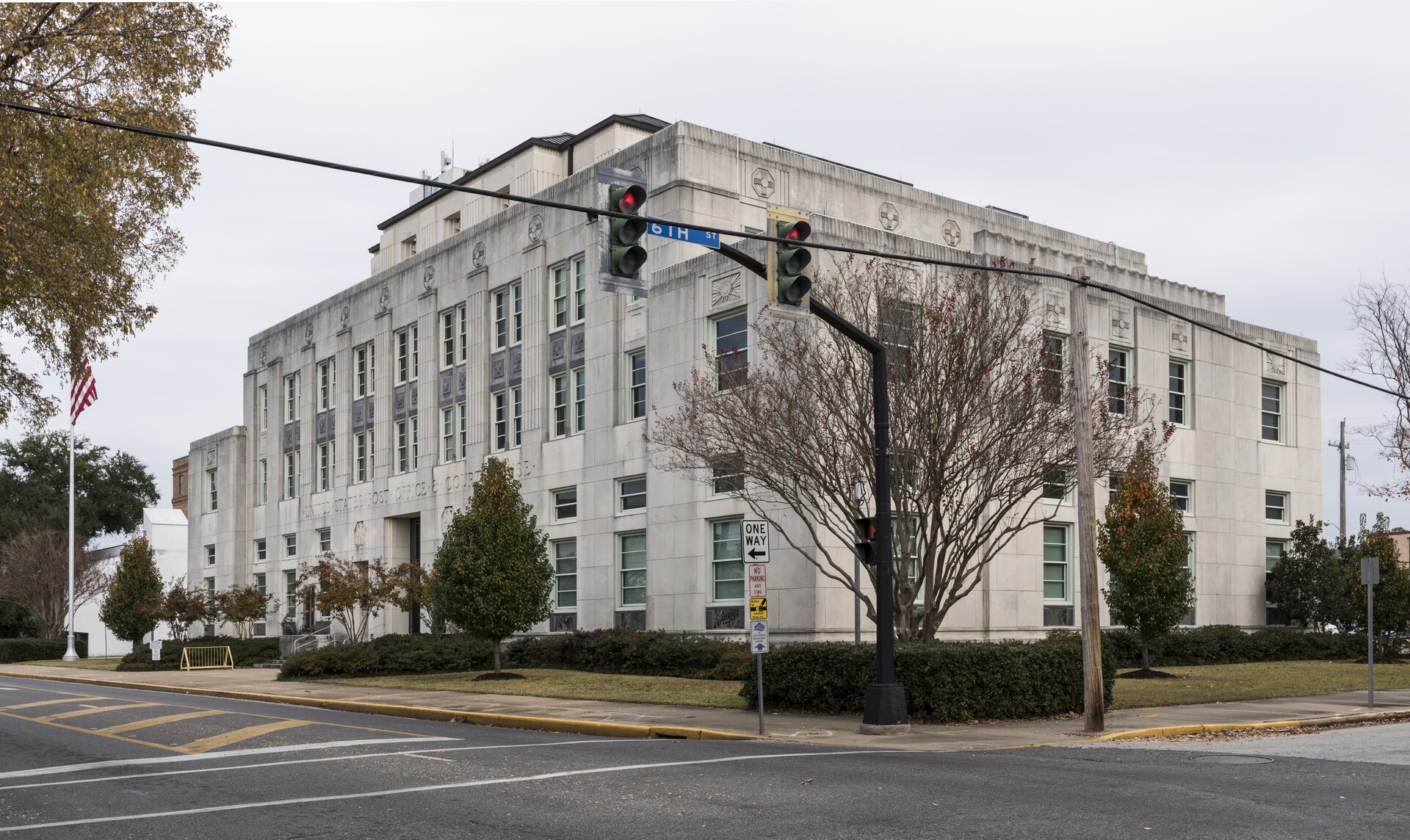
A habeas petition goes to the district where the person is being held. Pastor Augustave lives in York County, Pennsylvania. His congregation is there. His wife, a U.S. citizen, is there. None of that decides where the petition is filed. He was held in central Louisiana, so the petition went to a courthouse in Alexandria, Louisiana — the building at the top of this page. If your relative is arrested in Ohio on Monday and is in Louisiana by Friday, the courthouse that can hear an emergency petition moves with him. This is the practical reason this site says, in every entry, to find out where the person is and write it down: the location is not trivia for the family, it is the jurisdiction.
Filing is not the same as being heard. A petition filed the night before a flight is a request that a judge has not yet read. Nobody — not a lawyer, not an advocate, not this page — can tell you it will be read in time. The honest sentence is the one the York Daily Record printed: the court was not expected to consider it before the plane.
What a pending application does not stop
Pastor Augustave has an application for lawful permanent residence pending through his U.S.-citizen wife. It did not stop the arrest, and it has not stopped the removal process.
Ama Frimpong, the lead lawyer at CASA, gave the reason the paperwork cannot be left to speak for itself: if he is removed, she says, the pending application goes inactive and the process would have to start again from Haiti. That is the cost people do not hear about until it has already been paid.
What makes him removable is not the end of TPS. It is an order an immigration judge signed years ago, after an asylum claim was denied — an order TPS had been holding back. Outlets covering the case do not agree on the year: CASA’s account, carried by this page and by The Keystone Newsroom, says 2020; WITF and the Pennsylvania Capital-Star say 2018. The docket is not public, so this page is not choosing between them. The part that is not in dispute is the part a reader needs: the order predates July 27, and a pending application does not cancel one.
This is the same pattern this page has now recorded more than a dozen times. Four people on this feed in one week had an asylum case pending and were arrested anyway. A man in Springfield has been held a month with a pending case. A father in San Diego was taken minutes after a Head Start drop-off. The filings in their pockets were real. They were simply not the thing standing between them and a detention center.
The doors people knock on in these hours, and what is behind each
A governor. CASA asked Pennsylvania Gov. Josh Shapiro to intervene and to call Homeland Security. The governor’s office told the York Daily Record it was “reviewing” the request. That is the whole of the record: a request made, a review acknowledged. PennLive’s headline went further and said supporters describe the removal proceeding without the governor’s help; this page could not read that story’s body and is not characterizing what the governor’s office said beyond the word it used.
A senator. Advocates also asked Sen. John Fetterman’s office to call the department. A congressional office can ask questions, request a stay of removal, and sometimes get an answer faster than anyone else can. It cannot order ICE to do anything.
The receiving country. Advocates asked the Haitian government to refuse to accept him on arrival. This page has no record of that ever happening, and reports it as what was asked, not as a plan with a track record.
ICE itself. The agency’s answer to WITF was five words long: he “will remain in ICE custody pending removal.”
None of those four doors is nothing. None of them is a stay of removal. The only thing on that list a judge can grant is the one in the courthouse in the photograph.
The door that is not a door
In the same week, CBC News published the numbers behind the other thing people reach for: the drive north. The Canada Border Services Agency told the network that more than 1,100 asylum seekers have been returned to U.S. immigration authorities so far this year under the Safe Third Country Agreement, which generally bars a claim at the land border from someone arriving from the United States. More Haitians are filing at that border than any other nationality, and more than 27,000 Haitians are waiting on decisions.
Viles Dorsainvil, who runs the Haitian Support Center in Springfield, Ohio — the city at the center of this story since August — told CBC he does not encourage people to go, because being turned back at that border can mean being handed directly to U.S. officers. Canada’s immigration department pointed to temporary measures for Haitian nationals that run until October; for people not already in Canada, those are open only to family members of Canadian citizens and permanent residents.
What has not changed
TPS for Haiti and Syria is terminated, effective July 27, 2026. That has not moved, and this page re-checks it against USCIS and the Federal Register every day; nothing new has been published for any country, including El Salvador, whose own date passed on Sept. 9 with no announcement.
Losing TPS is not a deportation order. Most people who held it have never been ordered removed by a judge. Everyone in this country, whatever their status, still has the right to stay silent, the right not to open the door without a judicial warrant signed by a judge, and the right to a lawyer they pay for or find free.
Five things to finish this week
- Write down the three facts that start any search. Full legal name as it appears on immigration paperwork, date of birth, and A-number. Keep them where someone else in the house can find them. Our find someone detained page explains what to do with them in the first hour.
- Ask a lawyer whether an order is already in your file. If you have ever been through immigration court — even years ago, even a case you thought was closed — that is the single most useful question you can ask this week. Find legal help.
- Know what a transfer means. If your relative is moved to another state, the court that can hear an emergency petition moves too. Ask your lawyer where they are now, not where they were arrested.
- Read the rights card out loud at home, once. Children included. It takes four minutes: know your rights.
- If you see an arrest, record what you can and report it. Date, time, place, agency, vehicle, and what was said. Report ICE activity — and keep copies of your own documents in one folder: tools and documents.
This page will say plainly what happens next in this case, including if the answer is that nobody will confirm it.
Sources
- CourtListener RECAP search API, read Sept. 17, 2026 — Augustave v. Acuna, No. 1:26-cv-03591 (W.D. La.): petition for writ of habeas corpus filed Sept. 16, assigned to Judge David C. Joseph, no ruling on the docket
- York Daily Record (Mike Argento, Sept. 16, 2026), read through its Yahoo syndication — the habeas filing, the transfer toward Miami, and the governor's office saying it is reviewing the request
- WITF (Jordan Wilkie, Sept. 16, 2026) — advocates' account of the effort to stop the removal; ICE says he 'will remain in ICE custody pending removal'
- WHP / local21news (Samantha Sobel, Sept. 16, 2026) — CASA's account of the pending residence application and the calls to Pennsylvania officials
- CBC News (Aloysius Wong and Idil Mussa, Sept. 17, 2026) — CBSA says more than 1,100 asylum seekers were returned to U.S. authorities this year under the Safe Third Country Agreement
- USCIS — Temporary Protected Status landing page: Haiti and Syria terminated effective July 27, 2026
- Federal Register — documents and public-inspection APIs, re-checked Sept. 17, 2026: no TPS notice for any country
Community discussion
Comments are moderated before they appear. Never share your A-number, address, or case details here, and never trust legal advice from comments — talk to a licensed attorney (free help here). Comments are provided by GraphComment (EU-hosted, GDPR-compliant) and are optional.