The Money Nobody Explains: What the Government Is Holding, What Thursday Costs, and What a City Just Put Back
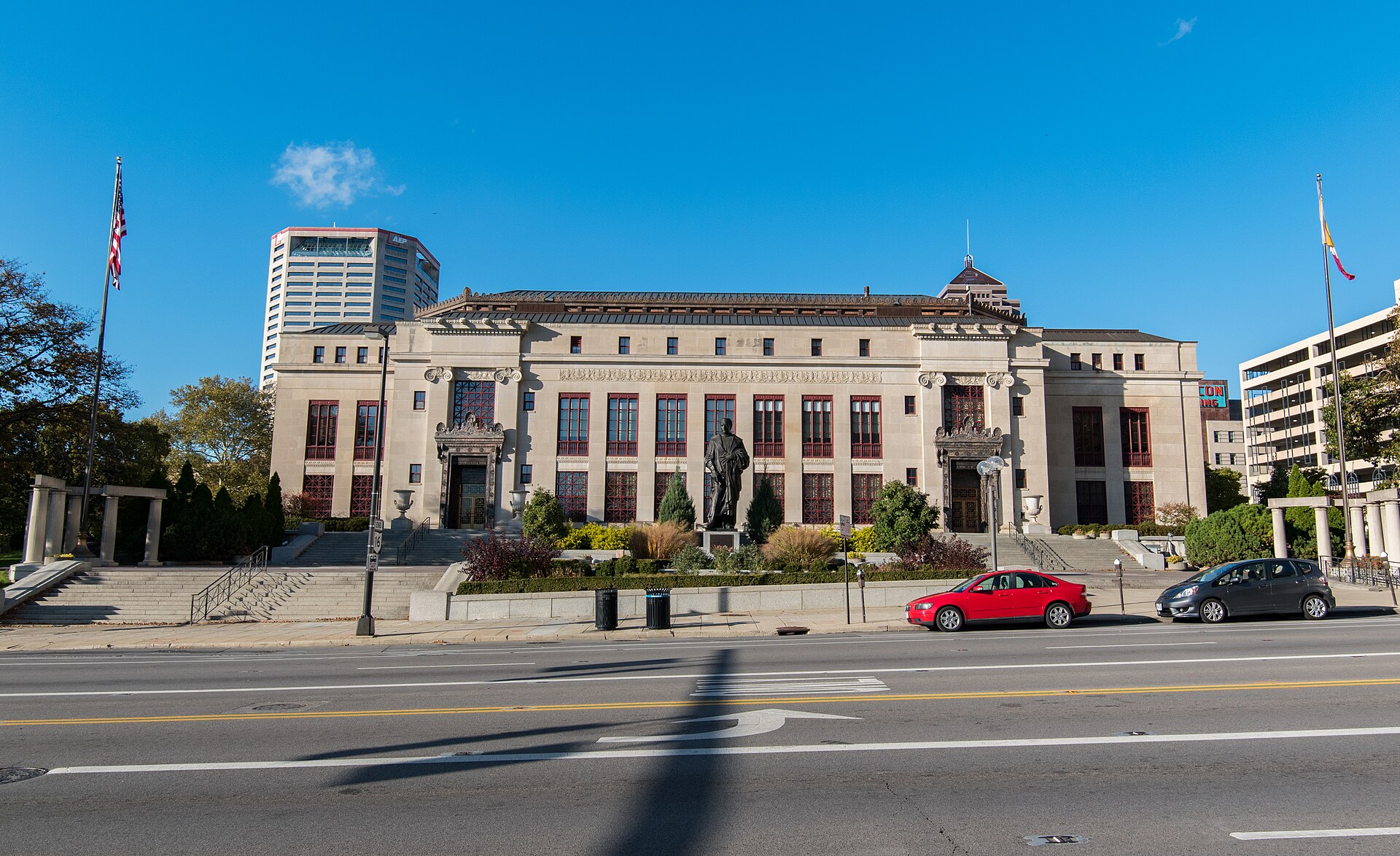
On Tuesday morning the Columbus Dispatch reported that Columbus City Council had voted 9-0 to give $30,000 to HaCoNet, the Haitian Community Network, and that the group is putting the money into food, shelter and mental-health help.
Thirty thousand dollars is not a large sum. It is worth writing about anyway: it is one of the few numbers on this page that moves toward a Haitian family rather than away from one, and the reporting around it names plainly what the last two months have cost.
“Everybody is trying to stay calm, but the fear is loud,” HaCoNet’s executive director, Marc Fequiere, told the paper. “Our businesses are shutting down. People don’t go out anymore. Parents are afraid to send their kids to daycare. A lot of people lost their jobs.” Bernice Louis, the group’s chief operating officer, put it in terms of housing: people who had houses in their own names, she said, are now without a home or sleeping on someone’s couch.
So this article is about money — four kinds of it, in a TPS household right now: money the government already holds, money the immigration court starts asking for on Thursday, money a city just put back, and money nobody is allowed to charge you at all.
This is not a prediction about you. Most of what follows will not apply to your house, and the parts that do are paperwork rather than fate.
1. Money the government is already holding: a bond
If anyone in your family posted a bond to get a relative out of detention, the government is holding that money right now, and almost nobody is ever told how it comes back.
On Tuesday, ICE published a notice in the Federal Register about the two forms that govern exactly that. Read the boundary first: the notice changes nothing. It is an extension of existing paperwork without change, there is no new rule in it, and there is nothing in it to apply for. What makes it worth an article is that its description of the existing mechanism is the clearest one this page has found in a government document.
Every bond posted in an immigration case is executed on Form I-352, the Immigration Bond. In the case of a cash bond, the person who posts it — the notice calls that person the Obligor — deposits the full face value of the bond with ICE. That person may name someone else to receive the money when it is returned, using Form I-312, and may revoke that designation later using Form I-312A. On a properly executed I-312, the notice says, ICE Financial Operations remits to the named person the principal and the interest if the bond is cancelled — and only the interest if the bond is breached.
Two sentences there are worth reading twice. The first is in the notice: “Immigration bonds might remain in place for years.” The second is missing — the notice does not say how long a refund takes, and gives no phone number for asking.
What to do this week. If anyone posted a bond, find the paperwork today and photograph it: the I-352, the receipt for the deposit, and any I-312 that was signed. Keep a copy somewhere that is not your house — with a relative, or in an email to yourself — and give a set to a lawyer, not only to an officer. A payment you cannot prove you made is the part of the record that goes missing. If you want to say something about the paperwork itself, the comment period runs to Oct. 29 at reginfo.gov. And if anyone offers, for a fee, to “get your bond money back,” stop there: these are the government’s own forms and nobody may sell you one.
2. Money the court will start asking for on Thursday
New immigration-court filing fees take effect on Thursday, Oct. 1, adjusted by a 3.4 percent change in the consumer price index. The asylum application itself stays at $100. The annual asylum fee goes from $102 to $105. The waiver of grounds of inadmissibility goes from $1,070 to $1,100. The application to register permanent residence or adjust status goes from $1,540 to $1,590.
Three things about that list matter more than the amounts.
It does not change who may file anything. TPS for Haiti and for Syria is terminated, effective July 27, 2026. The notice’s line for the TPS application — $510 to $520 — is the price of that form where it can still be filed, not an opening for Haiti or Syria.
The real total is higher than the numbers above. These are only the part of the bill the immigration court collects. The notice says the amount shown on the court’s own payment portal is that fee plus a separate Homeland Security fee.
The two asylum fees cannot be waived. The court rejects any filing that arrives without either the correct fee or, in the notice’s own words, a “request for an applicable fee waiver” — and applicable is the word doing the work. The statute behind the asylum application fee and the statute behind the annual asylum fee each carry a subsection headed “No fee waiver”: the fees, they say, “shall not be waived or reduced” (8 U.S.C. 1802(e) and 1808(d)). The statute behind the adjust-status and inadmissibility-waiver fees, 8 U.S.C. 1812, carries no such bar. This page is not going to tell you which of those your own filing is. That is the question for a lawyer, and it is worth asking before Thursday rather than after — because for the asylum fees, sending a waiver request in place of the money is not a way to keep the filing alive.
One blank the notice left is answered by the statute itself: the annual asylum fee is owed “for each calendar year that an alien’s application for asylum remains pending” (8 U.S.C. 1808(a)).
Correction, Sept. 30, 2026: an earlier version of this section was headed “A fee waiver is still allowed” and told readers to ask whether they could request one. That was wrong for the two asylum fees, which the statute bars from being waived or reduced. The section above has been rewritten from the text of the statutes.
These are also the government’s own published amounts, so anyone quoting you a different price for the same filing is quoting their own fee, not the court’s.
3. Money a city just put back
Now the Columbus grant, and what it is not.
It is one payment to an organization. It is not cash for individuals, and nobody at the city is handing out money. What it buys is the capacity of a group already doing the work: HaCoNet says it is focusing on food, shelter and mental-health services for Haitian residents still in the city. Columbus’s Haitian community, the Dispatch reports, is larger than Springfield’s.
Councilmember Lourdes Barroso de Padilla, who introduced the grant, said what it cannot do before she said what it can: the money “does not solve every challenge facing the Haitian community but it helps create a network of support so that when someone is struggling, they don’t have to navigate that struggle alone.”
If you are in Columbus, HaCoNet’s own number is 614-600-5530. Its contact page says it sees people by appointment only, so call before you travel; the office is at 2020 Brice Rd., Suite 185, in Reynoldsburg.
The Dispatch reports that the emphasis on mental health came after the death of Pierre Damas Bel, the 20-year-old Springfield student this page has carried since Sept. 1. If these two months have put someone in your house into that kind of pain, you can call 988 today. Press 2 for Spanish. For another language, say the language by name and an interpreter joins by voice — not by text or chat — in about twenty seconds. Haitian Creole is not on the published list, so if you can, have someone sit with you while you call.
4. Money nobody may charge you
The most dangerous money in an immigration crisis is the money somebody takes from you for something that does not exist.
No new law has given anyone their status back. H.R. 1689 passed the House of Representatives in April 2026 and its Senate companion, S. 4814, has been in committee since June. Neither is law. There is nothing to apply for, nothing to sign up for, and nobody may charge you a fee to put your name on a list for either of them.
Two things that are genuinely free, and that you can do yourself:
- Check your own immigration court case. The automated line, 1-800-898-7180, runs 24 hours a day and reads back your next hearing date and any decision a judge has made, if you have your A-number. The website acis.eoir.justice.gov shows the most recent case only. Both answer in English and Spanish only. If you have never had an immigration court case you will find nothing there — and that does not mean something is being kept from you. It means that system has no case for you.
- Make the family plan. Deciding in advance who can collect your children, and who can make a medical decision for a child if you are not there, costs nothing and needs nobody’s permission. Our tools and checklists walk through it, and free legal help is listed by state.
What has not changed
TPS for Haiti and for Syria is terminated, effective July 27, 2026, and the work permits that ran with it expired the same day. Nothing in this article changes that, and nothing in it is advice about your own case.
Losing TPS is still not a judge ordering you personally to leave. That sentence is the one to hold on to, and it is true for most people reading this. But if a judge has already ordered your removal, that order did not go away — and that is the thing to put in front of a lawyer this week, ahead of anything about fees or forms.
Money is the part of this families are least often told about and most often cheated over. The paperwork you keep, the exact total you ask your lawyer for, and the fee you refuse to pay a stranger stay inside your own control this week.
Sources
- The Columbus Dispatch (Jordan Laird, Sept. 29, 2026) — Columbus City Council's unanimous 9-0 vote for a $30,000 grant to HaCoNet, with quotes from executive director Marc Fequiere, chief operating officer Bernice Louis and Councilmember Lourdes Barroso de Padilla. Read in full through the paper's Yahoo syndication, which carries the reporter's byline and the Dispatch's own dateline
- Federal Register document 2026-19853, U.S. Immigration and Customs Enforcement, 'Designation of Attorney in Fact/Revocation of Attorney in Fact', OMB Control Number 1653-0041, published Tuesday, Sept. 29, 2026 (91 FR 61431). Read in full from the Government Publishing Office's own text, because the Federal Register's raw-text route now answers with a bot wall
- Federal Register document 2026-19841, Executive Office for Immigration Review, 'Inflation Adjustment for EOIR OBBBA Fees for Certain DHS Forms; Fiscal Year 2027', published Sept. 29, 2026 and effective Oct. 1, 2026
- HaCoNet — the Haitian Community Network's own contact page, read Sept. 29, 2026: telephone 614-600-5530, by appointment only, at 2020 Brice Rd. Suite 185, Reynoldsburg, Ohio
- USCIS — Temporary Protected Status: the Haiti designation and the Syria designation are terminated, effective July 27, 2026. Checked against this site's status record on Sept. 29, 2026
Community discussion
Comments are moderated before they appear. Never share your A-number, address, or case details here, and never trust legal advice from comments — talk to a licensed attorney (free help here). Comments are provided by GraphComment (EU-hosted, GDPR-compliant) and are optional.