The Room That Is Supposed to Hold You for Twelve Hours
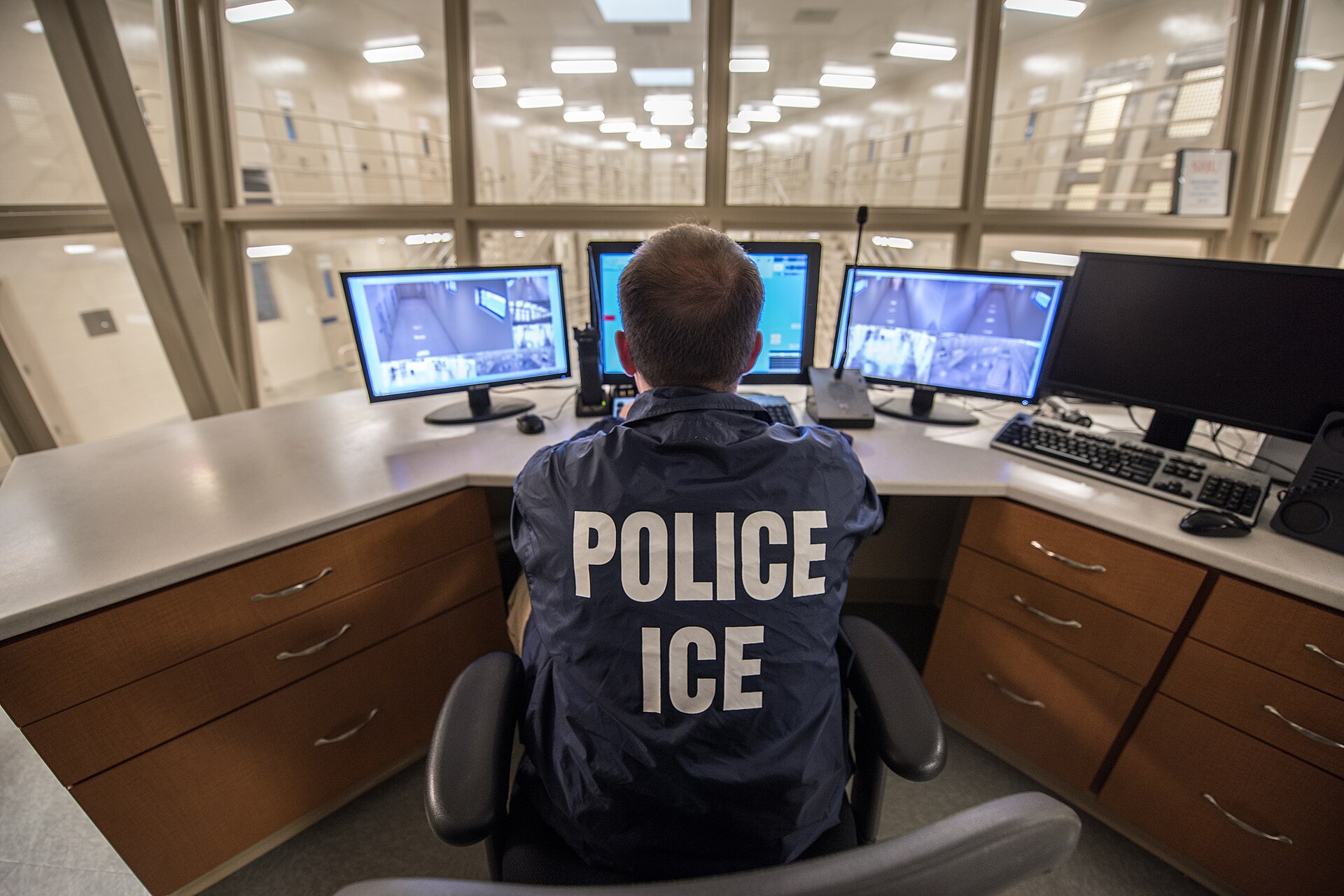
When ICE takes someone, the first place they go is usually not a detention centre.
It is a holding room inside an ICE office: a short-stay room with no beds, meant for the hours it takes to fingerprint a person and decide where to send them next. Almost nobody plans for that room, because almost nobody knows it exists until a relative is inside it.
On Monday, Sept. 21, three ranking Democrats on the House Committee on Oversight and Government Reform — Robert Garcia, Bennie Thompson and Maxwell Frost — wrote to ICE’s acting director, David J. Venturella, and to the Department of Homeland Security’s inspector general, Joseph V. Cuffari, about two of those rooms in Florida: one at the ICE sub-field office in Miramar, in Broward County, and one in Orlando. The members write that confidential disclosures from ICE employees describe people being held in them “for days to weeks in abusive and life-threatening conditions,” in defiance of ICE’s own policy and of a court order from June 2026 that, the members say, limits detention in an ICE holding facility to twelve hours.
This page read that letter and its appendix in full, and read the docket of the case the members rely on. It has not read the order itself, and the newest row on that docket — an appeals-court mandate entered Friday, Sept. 18 — has no text this page could retrieve. So nothing in this article tells you what that order guarantees you today. What follows is what the members say the disclosures say, and what a household can do about it before anyone is in a position to need it.
One more thing about the letter, said plainly: it names no nationality and no Haitian. It is on this page because of where those two rooms are and who has been reporting to them.
Temporary Protected Status for Haiti and for Syria was terminated effective July 27, 2026, and the work permits that ran with it expired the same day. Losing that status is still not a judge ordering you personally to leave. A smaller group does hold a removal order already signed by an immigration judge, and for them the sentence changes: that order did not go away, and it needs a lawyer this week. This is not a prediction about you.
The person who went to a check-in and did not come home
Miramar is not an abstraction on this page. It is the office where Sirena Prosper, the Pompano Beach mother this site has been covering since Sept. 22, reported in person for about twenty years before she was told to report by email instead — emails her family says were never acknowledged. Thousands of people in South Florida keep appointments at an office like that one.
An appointment is the one encounter with ICE that you know about in advance, which makes it the one you can prepare for. Take a copy of every document you hand over, not the original where you can avoid it. Write down the date, the time, the office and the name on the officer’s badge, every single time, and keep that page somewhere other than your own pocket. If your reporting has moved from a counter to an email address or an app, keep a copy of every message you send and of every reply you do not get — a check-in you cannot prove you made is the part of the record that goes missing first. Give the copies to a lawyer, not only to the officer.
There is a letter you can take to a check-in on this site, and a list of free legal help.
The person who gets one phone call, and it is about two minutes long
This is the part of the disclosures that changes what a household should do tonight.
The appendix says that at the Miramar office, people are offered an approximately two-minute phone call when they first enter the facility, and that no additional calls are allowed. It says officers have been instructed not to facilitate calls to attorneys, and that people are told they must wait until after they are transferred out of the facility before they can call one. It says supervisors instructed officers to isolate people who had filed habeas corpus petitions — the legal petition that challenges whether a detention is lawful. At Orlando, it says, calls were limited in the same way; after repeated complaints from staff the facility allowed five-minute calls, but only after business hours, which the members describe as one more barrier to reaching a lawyer. It also says Orlando currently permits calls in certain circumstances, such as calls to obtain documents for voluntary departure.
These are allegations by ICE employees, relayed by three members of Congress. This page found no public answer from ICE to any of them.
But you do not need them to be proven to act on them, because the action costs nothing and is useful either way. Assume one call, about two minutes, made from memory. That means:
- Memorise one phone number. Not the contacts list in a phone you will not be holding. One number, known by heart, by every adult and every teenager in the house. Write it in permanent ink inside a child’s shoe or a school bag as well.
- Decide today who that number belongs to, and tell them. It should be someone who will pick up an unknown number, who is not likely to be in the same room when it happens, and who can then make the calls you will not get to make.
- Tell that person now what to do with two minutes: take down the place and the hour, write down the A-number if it is said, and then call the lawyer and the family themselves, in that order.
- Write the A-number down for every adult in the house and leave it with that same person. Without it, nobody can look anybody up.
There is a family plan and checklist on this site that you can fill in this evening. None of it needs anyone’s permission.
The person whose body needs something on a schedule
The appendix names people it says were held in these rooms far past twelve hours with conditions that do not wait: a woman roughly seven months pregnant held for about three weeks at Miramar before being released on an order of supervision; at Orlando, before the June order, a person with high blood pressure held about seventeen days, a person in their sixties with vascular disorders including high blood pressure and blood clots held about fifteen days, and elderly people with cancer and with HIV/AIDS. It says no medical staff are on site at either facility and that medical screening is not conducted.
If someone in your house takes medicine daily, that is a piece of paper to make this week. The names of the medicines, the doses, the prescribing doctor and the pharmacy, on one page, in the hands of the person who would get the phone call. Nobody in a holding room can look any of that up, and the person who could be asked for it may be the one inside.
The family standing outside, being told “not in our system”
The letter also alleges that management at both facilities took steps to hide conditions from members of Congress, including by transferring people out before visits. Whatever the reason in any one case, transfers are the ordinary experience of families on this page: the Springfield News-Sun and Dayton Daily News found five Springfield-area Haitian detainees who had stopped appearing anywhere in ICE’s detainee database at all, and four others moved roughly four hundred miles to a private facility in Baldwin, Michigan.
“Not in our system” is a fact about a database on a Tuesday. It is not a fact about where a person is, and it is not a finding that they have been released or removed. So: check the detainee locator every day rather than once, and write down the date, the hour and exactly what the screen said each time you look. That written sequence is worth more to a lawyer than any single answer, and it matters for a practical reason — a habeas corpus petition is filed in the district where the person is actually being held, so a transfer moves the courthouse.
What has not changed
No court has changed anything about Haiti or Syria, and there is no new Federal Register notice for any country. At the Supreme Court, the government’s request to restart removals to third countries was still, when this page read the docket this morning, exactly two lines long: the application filed Sept. 24, and Justice Jackson’s order asking the other side to reply by four o’clock this afternoon. Nothing has been granted and nothing denied.
And the twelve-hour figure in the headline is the members’ description of a court order this page has not been able to read. Treat it as what three members of Congress have asserted in writing to the agency, not as a promise anyone has made to you.
What is solid is smaller and entirely yours: one number known by heart, one person who knows what to do with two minutes, one page of medicines, one A-number written down, and a record of every time you checked. If ICE comes to your door, know your rights — you do not have to open it. None of the rest of this can be arranged from inside the room.
Sources
- House Committee on Oversight and Government Reform, Democratic ranking members Robert Garcia, Bennie Thompson and Maxwell Frost — letter dated Sept. 21, 2026 to ICE Acting Director David J. Venturella and DHS Inspector General Joseph V. Cuffari, with Appendix A, 'ICE Whistleblower Disclosures of Unlawful and Inhumane Conditions and Practices at the Orlando Holding Facility & Miramar Holding Facility'. Read in full by this page from the committee's own published PDF
- Pablo Sequen v. Albarran, No. 5:25-cv-06487-PCP (N.D. Cal.), before Judge P. Casey Pitts — docket read Sept. 26 and Sept. 28, 2026 through the CourtListener search API. The newest docket row is a U.S. Court of Appeals mandate entered Sept. 18, 2026 whose text this page could not read
- The Haitian Times (Macollvie J. Neel, Sept. 24, 2026) — the Pompano Beach arrest of Sirena Prosper, and her family's account that she reported in person to the ICE office at Miramar for about twenty years before being told to report by email instead
- Springfield News-Sun and Dayton Daily News (Cornelius Frolik, Sept. 21, 2026) — five Springfield-area Haitian detainees who no longer appear anywhere in ICE's detainee database, and four moved about 400 miles to a privately run facility in Baldwin, Michigan
- USCIS — Temporary Protected Status: the Haiti designation and the Syria designation are terminated, effective July 27, 2026. Checked against this site's status record on Sept. 28, 2026
- Supreme Court docket 26A406, Department of Homeland Security v. D.V.D., read Sept. 28, 2026 — still only two proceedings entries, both dated Sept. 24: the stay application submitted to Justice Jackson, and her order requesting a response by 4 p.m. EDT on Sept. 28. No stay has been granted and none has been denied
Community discussion
Comments are moderated before they appear. Never share your A-number, address, or case details here, and never trust legal advice from comments — talk to a licensed attorney (free help here). Comments are provided by GraphComment (EU-hosted, GDPR-compliant) and are optional.