The Paperwork That Does Not Protect You — and the Paperwork That Still Matters
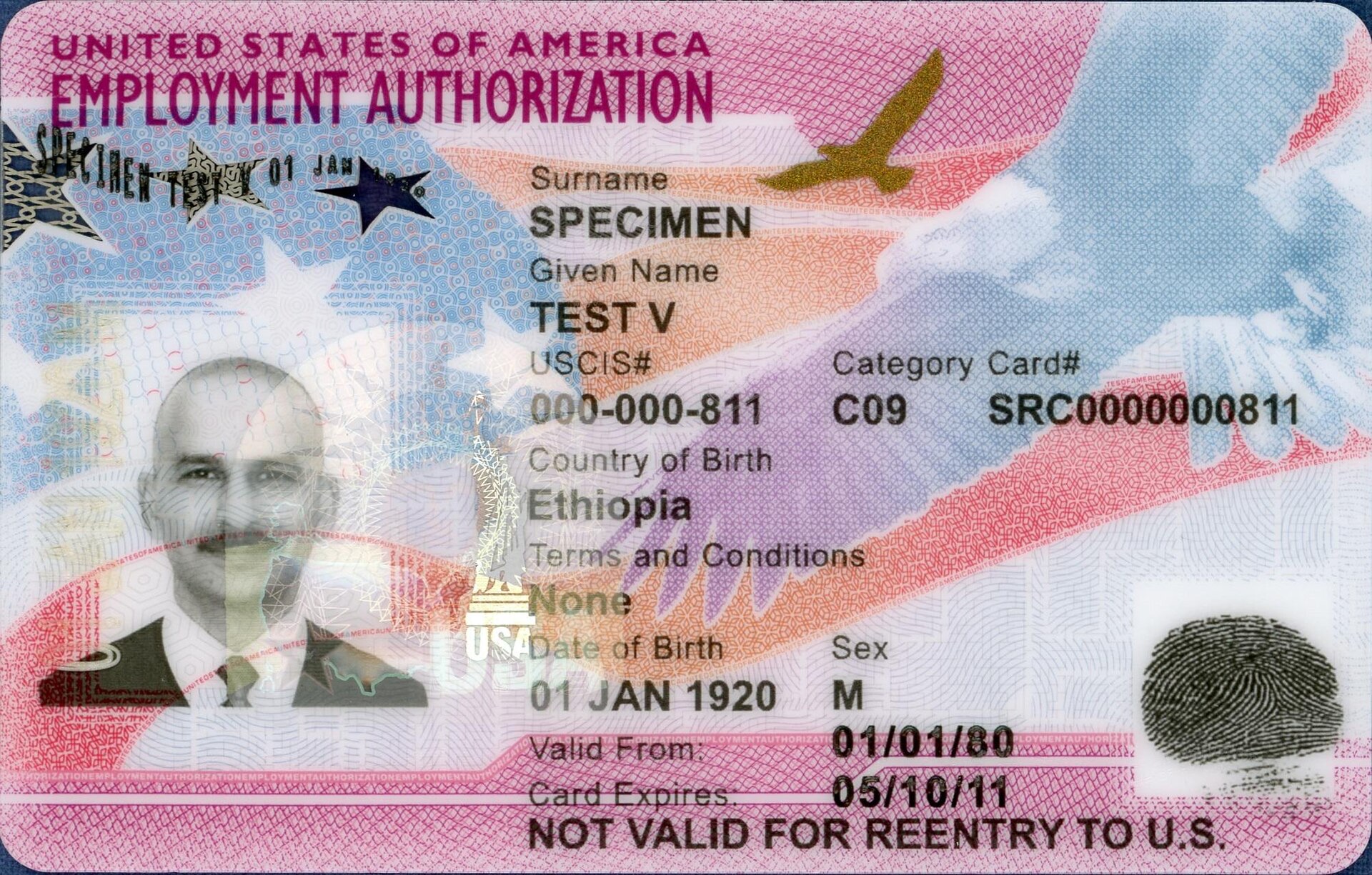
Amson Charleston was driving through York, Pennsylvania, on the morning of Monday, Aug. 24 when a West York police officer stopped him for a burned-out brake light. He is 26, an IT specialist at a charter school and a youth soccer coach. His pastor and his fiancée say he has a work permit, a pending asylum case and no criminal record. By that night he was in a federal processing facility in Clearfield County, three hours away.
He is not an unusual case. He is the pattern.
Over the last six weeks this page has documented, one verified story at a time, what happens to people who did everything the way they were told to do it. It is worth putting them next to each other, because separately each one reads like bad luck, and together they say something a person can actually use.
What the record shows
On Aug. 14 in Springfield, a van was pulled over near a factory at about 7:45 a.m. The driver, Beaubrun Charles Ardouin, is a naturalized U.S. citizen who drives people to and from work. He says the officer called it an “immigration check” and asked for the identification of all five of his passengers. All five said they had pending asylum applications. All five were taken and booked into the Butler County Jail on ICE holds that day. Ardouin himself was never cited for anything — not even for whatever the stop was supposedly about (Springfield News-Sun, Sydney Dawes, Aug. 19).
On Aug. 15, Elisthene Petit Kat, 38, was riding as a passenger in a car on his way to work in Springfield when police pulled it over. He and his partner have an asylum application still waiting for a decision. He was arrested and held at the Butler County Jail on an ICE hold. In that story, the Dayton Daily News and Springfield News-Sun quoted ICE’s own guidance: applying for asylum does not by itself give a person legal status — only an immigration court or USCIS can grant it (Cornelius Frolik, Aug. 21).
On Aug. 20 in Springfield, Joubert Adrien, the Haitian ministry pastor at High Street Church, was in a car with his wife when a vehicle cut in front of them and braked and four more surrounded them. His wife, Denise Adrien Gedeon, told Religion News Service that masked officers asked for IDs and work permits before handcuffing him. The couple have pending asylum cases. Advocates say he has no criminal history and no final order of removal. He is at the Butler County Jail.
On Aug. 22, The New York Times followed Jonas Julien, 35, into his ICE appointment at the Blue Ash office outside Cincinnati. He carried an active asylum petition and a work permit valid until 2029. About 90 minutes later he walked out with a GPS monitor clamped to his left ankle and an order to come back in a few weeks.
On Aug. 30, NPR met a man at a Springfield church who had just come from the same kind of appointment wearing the same kind of monitor. He works at a hospital. He has an active asylum case and a work permit. He asked not to be named because of the case.
In Danbury, Connecticut, this week, Mayor Roberto Alves said the people picked up in his city include a man who has lived there for 30 years, had work authorization, was paying taxes and was working toward permanent residency. “The folks doing it the right way,” the mayor said, “are also getting deported.”
And Pierre Damas Bel, the 20-year-old Springfield honors graduate who died on Interstate 70 on Aug. 31, was in the system exactly as instructed. ICE told the Springfield News-Sun that he applied to enter the United States on March 5, 2024 at a port of entry through a CBP One appointment, was released into the country, and that on July 29 the agency “placed him on alternatives to detention program with an ankle monitor while he continued in his immigration proceedings.” That clause is the government’s own description: the monitor went on a young man whose case had not ended and who had not been ordered to leave by anyone.
What this means — and what it does not
Here is the sentence to take from all of it: a filing in progress is not a shield. A pending asylum application, a work permit, a residency petition somebody filed for you, an appointment you have never missed — none of those stop an officer from stopping a car, and none of them stop an arrest. This page has now reported that from ICE’s own published guidance, from a federal agency’s own statement about a young man who died, and from eight separate verified stories in three states.
Now the part that is just as important, and that a frightened person will skip over. “Your paperwork will not protect you at a traffic stop” is not the same sentence as “your paperwork is worthless.” It is not. Your filings are what your case is. A pending asylum application is the thing a judge will eventually rule on. A residency petition is the thing that may one day change your status. Losing them, letting them lapse, missing a hearing date, or deciding they are pointless because they did not stop an arrest — that is how a person turns a bad week into a permanent problem.
So both things are true at once, and you have to hold both: the paperwork decides your case, and it does not decide your Tuesday morning. Plan for Tuesday morning separately.
The one situation that is genuinely different
Everything above is about people whose cases are still open. There is one group this article is not describing, and they deserve a straight answer rather than being swept into a reassuring paragraph.
If an immigration judge has already ordered your removal, that is a separate thing, it is real, and it is not the same as losing TPS. Losing TPS ended a status. A removal order is a decision by a judge about you personally. If that is your situation, it is worth seeing a lawyer about it this week, not next month.
And you can find out for free which one describes you. The immigration court’s automated line, 1-800-898-7180, is toll-free and runs 24 hours a day; with your A-number it will tell you your next hearing date, whether a judge has issued a decision and when, and appeal information. The same information is at acis.eoir.justice.gov. Three limits, all of which matter: the line is English and Spanish only — there is no Haitian Creole, so have someone sit with you who can; the system shows only your most recent case, and the court’s mailed documents are the only official record; and if you have never had a case in immigration court, you will find nothing there — which is the answer for most people reading this, and it is a good answer, not a frightening one.
What has not changed
Losing TPS is not a deportation order. It is not a judge ordering you to leave. Nobody has to leave the country because a designation ended.
At your door, you do not have to open it. You can ask an officer to show you a warrant signed by a judge — through the window, or under the door — and an administrative form signed by an ICE officer is not that.
In a car, two lawyers quoted in the Springfield van-stop story gave the same short advice: ask the agent for identification, ask whether you are under arrest, and ask whether you are free to leave. A passenger does not have to say where they were born. You can say you do not wish to answer questions and that you want a lawyer.
At work, if your permit expired, your employer may not demand a particular document from you and may not treat you differently because of where you are from. USCIS itself says a voided card can still look valid, because the old cards are never collected — so get the date checked before you quit anything.
What to do this week
- Decide tonight what you will say in a traffic stop, before you are in one. That is the single cheapest thing on this list. Know your rights →
- Find out what your own case actually is. Call 1-800-898-7180 with your A-number, or use the court’s online system, and bring what you learn to a lawyer. Free and low-cost legal help →
- Put your filings, your A-number and your lawyer’s phone number where your family can reach them — not only in your own phone. Checklists and tools →
- If someone has stopped answering their phone, start the search tonight. A transfer out of state can happen in about a day. How to find someone who has been detained →
- If you got a letter telling you to report to an ICE office, talk to a free immigration lawyer before the date on it, not after. Got a report-in letter? →
- If you saw an arrest, write down the date, the place and the plate numbers, and report what you saw. Report an ICE sighting →
That last one is not a small thing this week. On Tuesday the ACLU of Ohio filed suit in federal court on behalf of Sean Moorman, a Springfield man who has spent weeks observing and recording ICE activity in his own city, alleging that seven officers ran a campaign of harassment against him for doing it. “ICE watchers are protected by the First Amendment, which guarantees their right to record and observe law enforcement in public,” said David Carey, the ACLU of Ohio’s managing legal director. A court has not ruled on any of it yet. But the record people are building — dates, places, plate numbers, what was said — is the raw material of every case anyone will ever bring, including yours.
You do not have to leave. You do not have to hide. What you do have to do is stop expecting the papers in your pocket to do a job they were never able to do, and start keeping the record that does.
Sources
- Springfield News-Sun (Jessica Orozco) — Ohio ACLU sues 7 ICE officers, alleging retaliation against a Springfield ICE observer (Sept. 2, 2026)
- Springfield News-Sun (Jessica Orozco) — ICE's own account: the student entered on a CBP One appointment and was placed on alternatives to detention (Sept. 1, 2026)
- Springfield News-Sun / Dayton Daily News (Avery Kreemer) — DeWine: 20-year-old Haitian's suicide a 'horrible, horrible tragedy' (Sept. 1, 2026)
- WYSO (Kathryn Mobley) — Advocates call for end of ICE ankle monitoring: 'You don't have to shame the people' (Sept. 1, 2026)
- WOSU (Allie Vugrincic) — Columbus community remembers Pierre Damas Bel (Sept. 3, 2026)
- U.S. Department of Justice, EOIR — Automated Case Information (check your own immigration court case)
Community discussion
Comments are moderated before they appear. Never share your A-number, address, or case details here, and never trust legal advice from comments — talk to a licensed attorney (free help here). Comments are provided by GraphComment (EU-hosted, GDPR-compliant) and are optional.